Special Collections Catalogs and Catalogers

This post was contributed by Seonyoo Min, Rare Book Cataloging Intern at the Small Special Collections Library.

The Guanhailou Collection is a collection of East Asian rare books formed by Soren Edgren, Editorial Director of the Chinese Rare Book Project at Princeton University and current RBS Instructor. Recently, part of the collection was transferred to the Albert and Shirley Small Special Collections Library. As a Summer 2022 intern at the UVA Library who has a background in East Asian Book History, I was able to get a chance to catalog and process 338 titles of invaluable rare materials, written in Classical Chinese, Modern Chinese, Japanese, Korean, Tibetan, etc. Cataloging records I created this during my Summer 2022 internship will help you to find books from Guanhailou more easily, and help you understand the overall information of the collection quickly.

The Special Collection Library manages diverse materials written in various languages besides English. Catalogers in there always consider the best way to introduce these collections to the community. Through this blog post, I would like to share with you all the new things I learned during my internship.


How do you find a book you are looking for? In my case, I use a library catalog. I visit a library website, and search for a title of the book, or search keywords that I want to explore. And then, I look at a list of catalog records to find a book I want to investigate. In particular, in the case of Special Collections, the place with “closed stacks,” catalog used to be the only medium that made books accessible to me. Sometimes, even if I do not look for books to read, I look at a library catalog when I want to get some information about on books or writers. And then, I use hyperlinks on the list to search for books on related topics or books written by the same author.

Library catalogs can help you when you find books, when you want to get brief book information, or when you need well-organized information about the book you are looking for. In libraries, staff called ‘Cataloger’ makes catalog records every day to connect valuable information to library users who want to use it. Special Collections Library also has wonderful catalogers.

Catalog records of special collections are a bit more special than usual library catalog records that we are familiar with. Most of the materials in Special Collections are old, and they often go through the hands of several owners before they come to the library. Therefore, you can find descriptions about previous owners or history of the material itself: such as notes written by owners, purchase receipts, and photographs in the bookcase. In addition, catalogers sometimes need to catalog materials other than books, such as leaflets, scrolls, sculptures, etc. The charm of the special collections catalog comes from explaining contextual information and some special physical formats. It helps library users to efficiently search for information by allowing them to understand the characteristics of the materials, without physically looking at them.

Guanhailou Collection

Guanhailou (觀海樓) Collection was formed by Dr. James Sören Edgren (or 艾思仁, 1942-), former Editorial Director of the Chinese Rare Books Project at Princeton University. The primary focus of the collection is Chinese rare books, but the collection also includes significant rare materials in East Asian book history outside China, and some sample leaves of early printing in Europe. Overall, the collection gives a chronological overview of the East Asian book history and printing history, spanning the period of the 12thcentury to the 21st century.

Here are some collection highlights of Guanhailou Collection.

Guanhailou A144

十竹齋箋譜 (Shi zhu zhai jian pu), edited by Hu Zhengyan (1584-1674), Beijing: Rong bao zhai, 1934. 1 volume.

Guanhailou A144 is a Chinese stationery paper book. This 1934 copy is a reprint of xylographic polychrome stationery from Ten Bamboo Studio (十竹齋), Ming Dynasty. Every page of the book contains beautiful printing with detailed light and shade. You can also figure out Chinese blind printing technique (拱花, gong hua) through this book. It is a similar concept to blind embossing of Western culture.
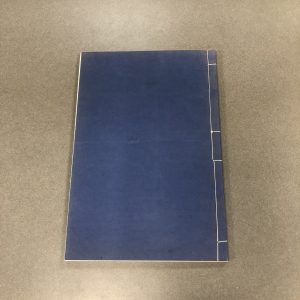
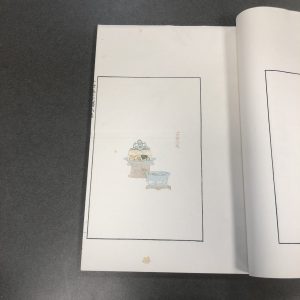
Photo Guanhailou A144 displaying its blue cover and side stab sewing.

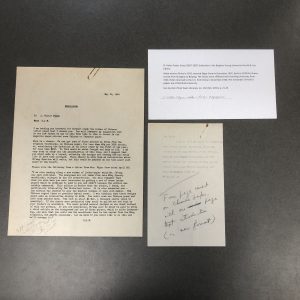
Photo of correspondence.

At the backside, 2 pieces of correspondence are laid in the book (Photo 3). The document on the right side of Photograph 3 is the correspondence from R. J. Walsh (1886-1960) to J. Walter Flynn (1910-1977), regarding the book itself and their plan for a new article. The document indicates that the Guanhailou A144 is a presentation copy (no. 12 of 21) by Zheng Zhenduo (鄭振鐸, 1898-1958) to Nym Wales (Helen Foster Snow, 1907-1997).

Guanhailou A144 not only shows an advanced printing technique of China, but also shows the intellectual communication between China and America in 1930s, regarding Chinese publication history. I am thinking about finding a corresponding article in the ASIA journal in the upcoming days, to satisfy my curiosity.

Guanhailou A175

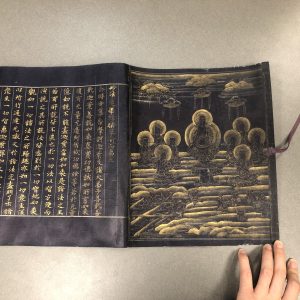
妙法蓮花經卷第三 (Myōhōrengekyō kan dai-3), [Japan], 12th century. 1 roll.

Guanhailou A175 is a Lotus Sūtra (Saddharmapuṇḍarīkasūtra) manuscript, used gold and silver pigment on indigo paper. When you open the scroll, you can find a frontispiece illustration depicting the three chapters of the Lotus sūtra, chapter 5 to 7. I enjoyed finding out which part of the illustration represents each chapter. If this material is used in undergraduate classes or graduate school’s introductory Buddhist studies class, I think it will be a meaningful experience to compare the texts and illustration of the sūtra.
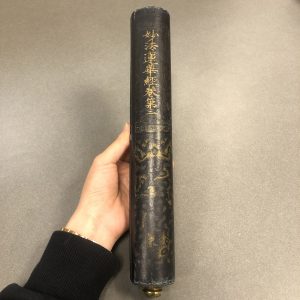
Lotus Sūtra is my favorite Buddhist text, because of the idea of equity in chapter 5, Parable of the Plants, which is in the first part of the Guanhailou A175. In this chapter, Sakyamuni likens the people to plants. Every plant has various heights and leaves size. These differences make each plant’s acceptable amounts of rainwater (wisdom) different. In Sakyamuni’s view, every person has a possibility to become a buddha, so they are equal. He thought if he understood each person and gave them a customized sermon for them, everyone could get enlightenment. This phrase was helpful to me at the time when I just started teaching as a graduate assistant. Thanks to the phrase, I could try to understand each student’s characteristics and their interest more. I hope this sūtra will help someone who is starting a new career in dealing with people.

Guanhailou A095

中說 (Chungsŏl), written by Wang Tong (584-617); annotated by Ruan Yi, [Seoul: Kyosŏgwan], [not before 1484]. 1 volume.

Guanhailou A095 is a canonical work of famous Confucian scholar Wang Tong (王通). Wang’s insights into Confucianism, education, and politics are well described in conversations between Wang and their students.
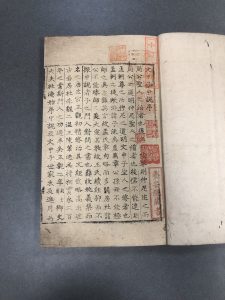
A number of Ex libris stamps on the caption title page, and photographs and documents laid in shows the solid provenance information, from the 16th century to the present.
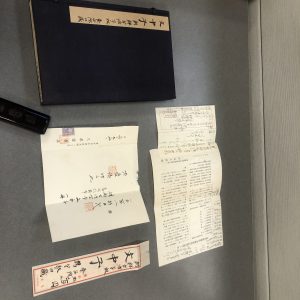
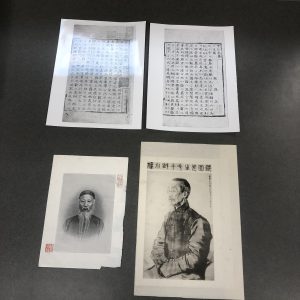
A number of Ex libris stamps on the caption title page, and photographs and documents laid in shows the solid provenance information, from the 16th century to the present.

What makes this book so attractive is the printing style and provenance. This metal movable type printing used Korean metal movable type called Kapchinja (甲辰字). Made by palace in 1484, this movable type is well-known for beauty and its small font size. It was used until just before the Japanese invasions of Korea (1592-1598).

After the war, the book started a long journey outside Korea. A number of Ex libris stamps on the caption title page, and photographs and documents laid in shows the solid provenance information, from the 16th century to the present.

Guanhailou A095 is a wonderful teaching and research resource to study history of Japanese book collectors and the wartime history of East Asia. If there is anyone who is interested in the history of Korea-Japan relationship, they will fall in love with this book.

Cataloging Guanhailou Collection

Making catalogs of the 338 titles of rare books, I realized that this collection has invaluable content and contextual information, showing the long history of intellectual distribution and exchange. I cannot deny that this collection is attractive, but I thought it is quite difficult to access because most of the materials in the collection were written in Chinese characters. As a cataloger, I need to focus on creating catalog records with accurate metadata according to the guidelines. But this ‘language barrier’ made me think more about how to effectively share this information with entire UVA communities. This thought brought out in me the memories when I just started to study East Asian book history.

I was a junior in college, and was learning about East Asian history, but bad at reading Chinese characters. When I first took a glance at East Asian rare book catalog records, I was embarrassed because there was nothing I could read. At that time, I thought it would be wonderful if I could know the topic of the book at least. Also, I wanted to read the Ex Libris seals on the first page of the main text. I simply thought if I knew the previous owners of books, I could more easily figure out the theme and value of the book. However, understanding those decorative engraving seal scripts was impossible for the student who had just begun to memorize regular script Chinese characters.

While cataloging the Guanhailou Collection, I wanted to make a catalog that people like me in the past could read and would like to read. As mentioned earlier, catalog is a search tool that allows library users to find information efficiently. I was convinced that if I could create a catalog that even users who did not know Chinese characters could figure out the title, author, subject, and provenance information of the book, I could reduce the time of information research for users and help users’ decision-making. Let me talk a bit more about subject information and provenance information.

Catalog records of Guanhailou A095, “中設.”
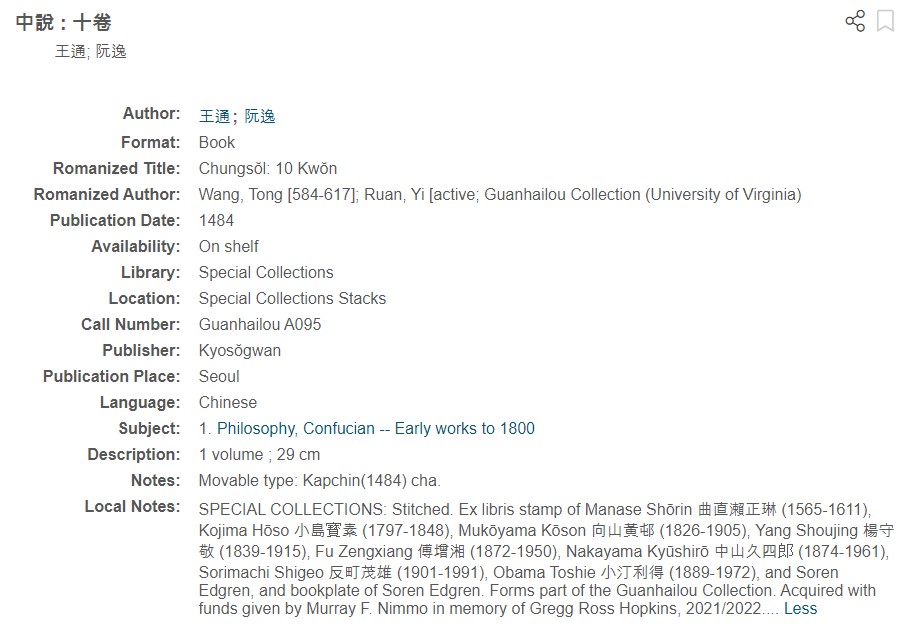
Catalog records of Guanhailou A095, “中設.”

Most catalog records in Virgo use controlled vocabulary called Library of Congress Subject Headings (LCSH). Developed and maintained by the Library of Congress, this thesaurus is one of the most well-known and widely used controlled vocabulary in the library world. Catalogers find or combine the appropriate words in this huge wordbook to describe topics well. If you know LCSH, you can not only understand the topic of the book you are looking for, but also figure out the list of books with the same subject. Catalog records of Guanhailou Collection also contain LCSH. If you click the blue hyperlink at Subject field in Image 10, you can see multiple UVA Library materials with the topic. “Philosophy, Confucian – Early works to 1800.”

Provenance information, information about where the book comes from is in the Local Notes field. As you can see the Image 10, there is a string of the previous owner’s name that can be found in the book. If you know those people and could find a relationship between their interests and the book, you may discover some knowledge that has not been known before.

A Screen you can see when you click “Full Metadata” hyperlink

Currently, the processing for Guanhailou Collection is almost complete. If you search for “Guanhailou” in Virgo, you can explore its catalog records managed by the Special Collections Library. If you want to learn more about the book, please click the “Full metadata” at the bottom of the record, and “FULL RECORD” button. You can read additional information of the material written in some Chinese characters, such as physical description, table of contents, and more subject information.

Finding Your Books

Library resources in foreign languages always makes library users think one step back. They are much harder to find, and even if we find something, it takes more time to figure out if this information is necessary for research. Catalog records of Guanhailou Collection might not give you a complete answer but would assist your decision making at least. I hope my records could help you on your journey to explore our amazing East Asian rare book collection and find some new things that will make you excited.
Nick Biddle and the Commemorative Power of the Carte de Visite

This post contributed by Elizabeth Nosari, Nau Project Archivist at the Albert and Shirley Small Special Collections Library. Her work involves processing the John L. Nau III Civil War History Collection, which includes correspondence, diaries, photographs, military records, currency, and printed materials relating to the American Civil War (1861–65).  

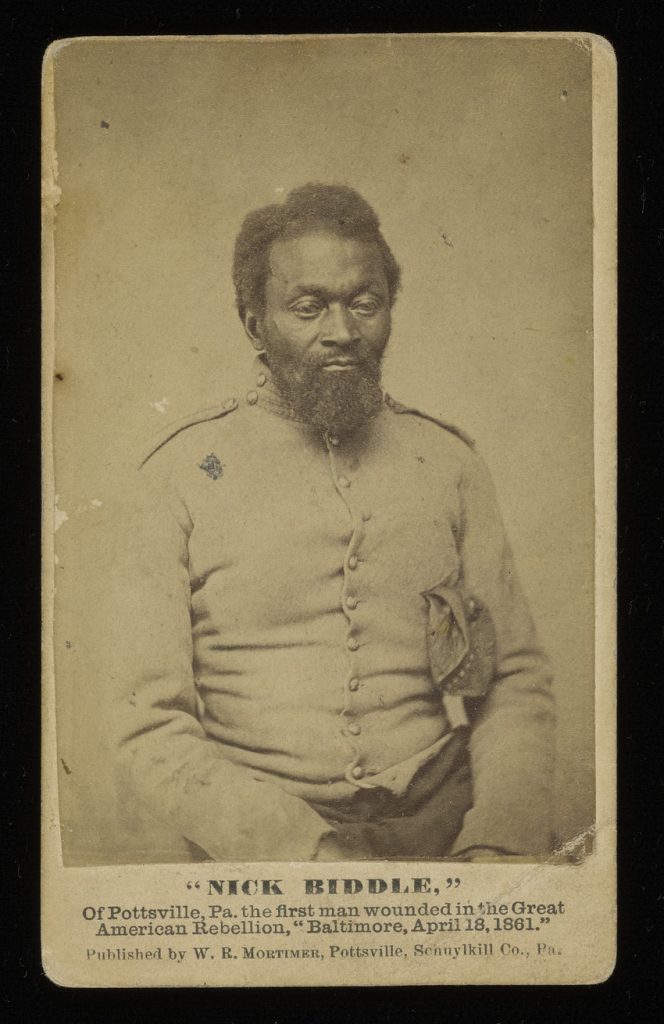
CDV Portrait of African-American Nicholas Biddle. MSS 16459, Gift of John L. Nau III

The Confederates took Fort Sumter following a brief and remarkably bloodless bombardment, April 12–13, 1861, that signaled the beginning of the American Civil War (1861–65). In the aftermath, on April 15, President Lincoln’s call to defend the capital was met by the First Defenders, a group of five volunteer troops from Pennsylvania.1 Among them were the Washington Artillerists from Pottsville, Pennsylvania, which included sixty-five-year-old Nicholas “Nick” Biddle (ca. 1796–1876), who served as the orderly to commanding officer Captain James Wren.2 En route to Washington, D.C., the company arrived in the city of Baltimore in Maryland, a border state, on April 18, 1861. The unarmed soldiers were met by a violent pro-Confederate mob of 2,000 that attacked them with fists, stones, bottles, and “whatever else [the mob] could reach.”3 Biddle was targeted for being a Black man in uniform, and he was reported to have been the first and most violently wounded of the First Defenders.4

When [the mob] saw Nicholas Biddle, an African American in uniform who was treated as an equal by his white comrades…. The mob closed in like “wild wolves,” Captain James Wren, Biddle’s commander, later recorded…. Salvos of bricks pried loose from the streets began to fly through the air. One struck Biddle in the head, knocking him to the ground and leaving a wound that reportedly exposed bone.5

According to historian John D. Hoptak, “Many of the Pennsylvanians present that day believed Biddle was the first man to be struck down by an enemy combatant in the Civil War.”6 Most significantly, however, Biddle, a formerly enslaved person, claimed this distinction for himself and memorialized it by commissioning a carte de visite portrait with W. R. Mortimer (Schuylkill Co., Pa.) in his hometown of Pottsville, Pennsylvania. One of these original photographs, pictured above, is held in the Small Special Collection Library’s John L. Nau III Civil War History Collection. This half-length portrait shows a relatively close-up view of Biddle seated and wearing the uniform of the Washington Artillerists with his kepi hat removed and tucked under his arm. Beneath the image, is the caption, “‘Nick Biddle,’ Of Pottsville, Pa., the first man wounded in the Great American Rebellion, ‘Baltimore, April 18, 1861.” Biddle’s portrait in uniform was radical in many ways—not least because Black men were not legally allowed to enlist in the United States military at the time it was taken in 1861.7
Like many Americans during the Civil War, Biddle chose the carte de visite to make his mark. The advent of photography in the 1840s ushered in the democratization of portraiture, removing it from the sole purview of the elite and the academy. However, early formats like the daguerreotype and ambrotype were still prohibitively expensive for most Americans and limited to a single image developed directly onto a fragile glass plate.8 In contrast, the carte de visite was an accessible, affordable, portable, and easily reproducible aide-mémoire.9 Developed in France by Adolphe-Eugene Disdéri in the 1850s, the format featured an albumen print mounted on a heavier paper the size of a standard business or visiting card.10 By 1860, “cardomania” had arrived and “3,154 Americans earned their living as photographers … [with] at least one in nearly every city and town.”11 Customers, who could purchase multiple prints at a time relatively inexpensively, needed a means of managing and displaying their collections. By 1861, photograph albums also became wildly popular and were filled with portraits of family and friends as well as “mass-produced pictures of … famous people.”12

Americans like Biddle were, for the first time, able to self-consciously create their own identities through photography, “no matter rank or race.”13 As Isidora Stankovic notes, “A single photographic image could reflect an individual’s personality, social standing, intellect—in sum; one’s being—all through the tools of pose, expression, and props.”14 The simple medium of the carte de visite was capable of conveying deeply personal intentions and values, but it was also a form of social currency and a means of commemoration and memory making meant for public consumption, something that, by Stankovic’s account, Biddle seems to have been keenly aware of:

Biddle sold copies of his image at the Great Central Fair in Philadelphia to Americans eager to add his picture to their albums, which were filled with images of the famous and their families. Indeed, a veteran recalled that “‘A photographic album [was] not considered complete in Pottsville without the picture of the man whose blood was first spilled in the beginning of the war.15

The collective importance of photographic images in the nineteenth-century public consciousness cannot be underestimated; and portraits of Black Americans were highly influential, marking a shift in the visual and political culture of the United States. Leading abolitionist and intellectual Frederick Douglass (ca. 1817–1895), a contemporary of Biddle’s, was a forerunner in his use of photographic portraiture to support the abolition movement. Douglass wrote extensively about the democratizing power of photography, and he arguably “defined himself as a free man and citizen as much through his portraits as his words.”16 As Maurice O. Wallace observes, uplifting photographic portraits in the public sphere led the way in introducing Black Americans as a “new national subject” and part of the “imagined body politic.”17 Within this wider trend, according to Wallace, Black soldiering and “the popularity and proliferation of black soldier portraits” like Biddle’s played a key role in “the genesis of African American manhood as a coherent category of civil identity and experience.”18

1 Wikipedia, s.v., “Pennsylvania First Defenders,” https://en.wikipedia.org/wiki/Pennsylvania_First_Defenders, accessed October 11, 2022.
2 John D. Hoptak, “Nicholas Biddle: The Civil War’s First Blood,” HISTORYNET, October 3, 2008, https://www.historynet.com/nicholas-biddle-first-blood/, accessed October 11, 2022.
3 Hoptak, “Nicholas Biddle.”
4 Hoptak, “Nicholas Biddle.”
5 Hoptak, “Nicholas Biddle.”
6 Hoptak, “Nicholas Biddle.”
7 It was not until the Emancipation Proclamation in 1863 and subsequent creation of the segregated United States Colored Troops (USCT) regiments that Black men were legally allowed to fight in the Civil War. See Wikipedia, s.v., “United States Colored Troops,” https://en.wikipedia.org/wiki/United_States_Colored_Troops#The_Confiscation_Act.
8 Michael Fellman, “Foreword,” in Ronald S. Coddington, Faces of the Civil War: An Album of Union Soldiers and Their Stories (Baltimore: Johns Hopkins University Press, 2004), x.
9 My emphasis. Fellman, “Foreword,” xiii.
10 Wikipedia, s.v., “Carte de Visite,” https://en.wikipedia.org/wiki/Carte_de_visite, accessed October 11, 2022.
11 Fellman, “Foreword,” xi.
12 Fellman, “Foreword,” xi.
13 My emphasis. Isidora Stankovic, “Tintype Stares and Regal Airs: Civil War Portrait Photography and Soldier Memorialization,” Military Images 33, no. 4 (Autumn 2015): 55, https://www.jstor.org/stable/24864426.
14 Stankovic, “Tintype Stares and Regal Airs,” 54.
15 Stankovic, “Tintype Stares and Regal Airs,” 56.
16 John Stauffer, “Frederick Douglass, Photography, and Imagination,” in Traveling Traditions: Nineteenth-Century Cultural Concepts and Transatlantic Intellectual Networks, ed., Erik Redling (Berlin/Boston: De Gruyter, Inc., 2016), 115.
17 Maurice O. Wallace, “Framing the Black Soldier: Image, Uplift, and the Duplicity of Pictures,” in Pictures and Progress: Early Photography and the Making of African American Identity, eds. Maurice O. Wallace and Shawn Michelle Smith (Durham, North Carolina: Duke University Press, 2012), 245.
18 My emphasis. Wallace, “Framing the Black Soldier,” 246.

Works Cited

Fellman, Michael. “Foreword.” In Ronald S. Coddington, Faces of the Civil War: An Album of Union Soldiers and Their Stories, ix–xvi. Baltimore: Johns Hopkins University Press, 2004.

Hoptak, John D. “Nicholas Biddle: The Civil War’s First Blood,” HISTORYNET, October 3, 2008.

Stankovic, Isidora. “Tintype Stares and Regal Airs: Civil War Portrait Photography and Soldier Memorialization.” Military Images 33, no. 4 (Autumn 2015): 53–57. .

Stauffer, John. “Frederick Douglass, Photography, and Imagination.” In Traveling Traditions:
Nineteenth-Century Cultural Concepts and Transatlantic Intellectual Networks, edited by Erik Redling, 113–137. Berlin/Boston: De Gruyter, Inc., 2016.

Wallace, Maurice O. “Framing the Black Soldier: Image, Uplift, and the Duplicity of Pictures.” In Pictures and Progress: Early Photography and the Making of African American Identity, edited by Maurice O. Wallace and Shawn Michelle Smith, 244–266. Durham, North Carolina: Duke University Press, 2012.

Wikipedia, s.v., “Carte de Visite.”

Wikipedia, s.v., “Pennsylvania First Defenders.

Wikipedia, s.v., “United States Colored Troops.

Folk Art Herbarium Album

Image

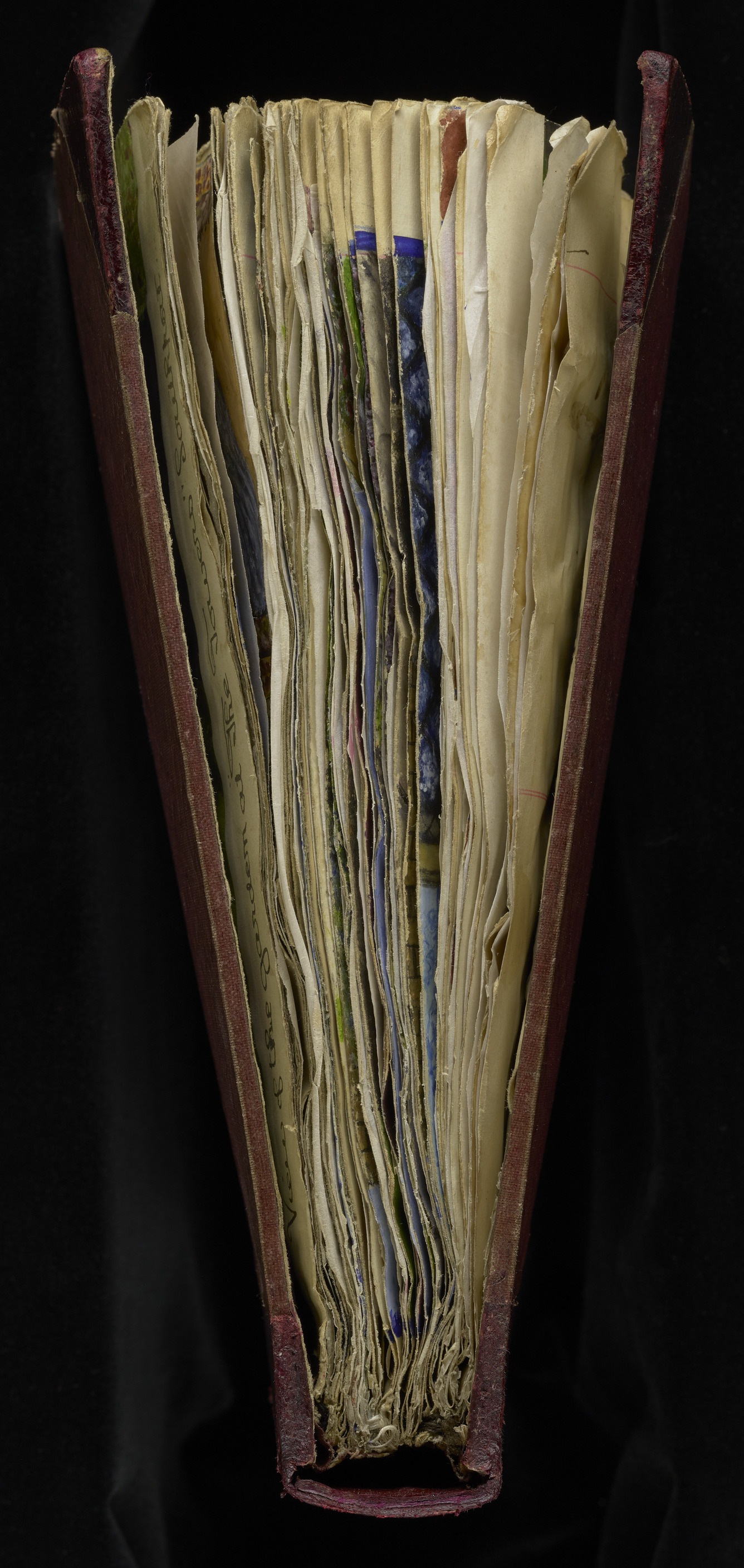
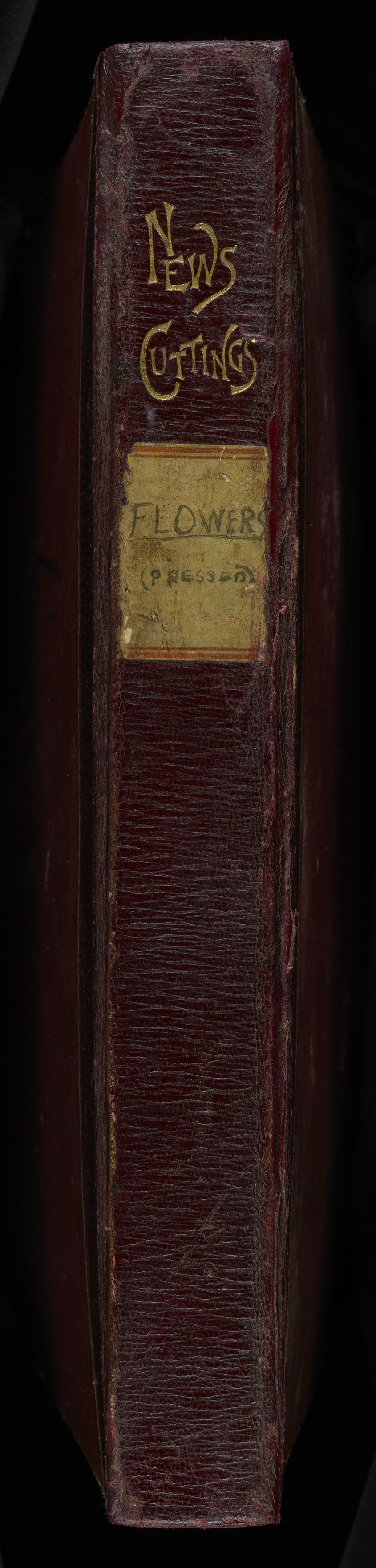
Spine view of the album titled News Cuttings

Spine of the album.

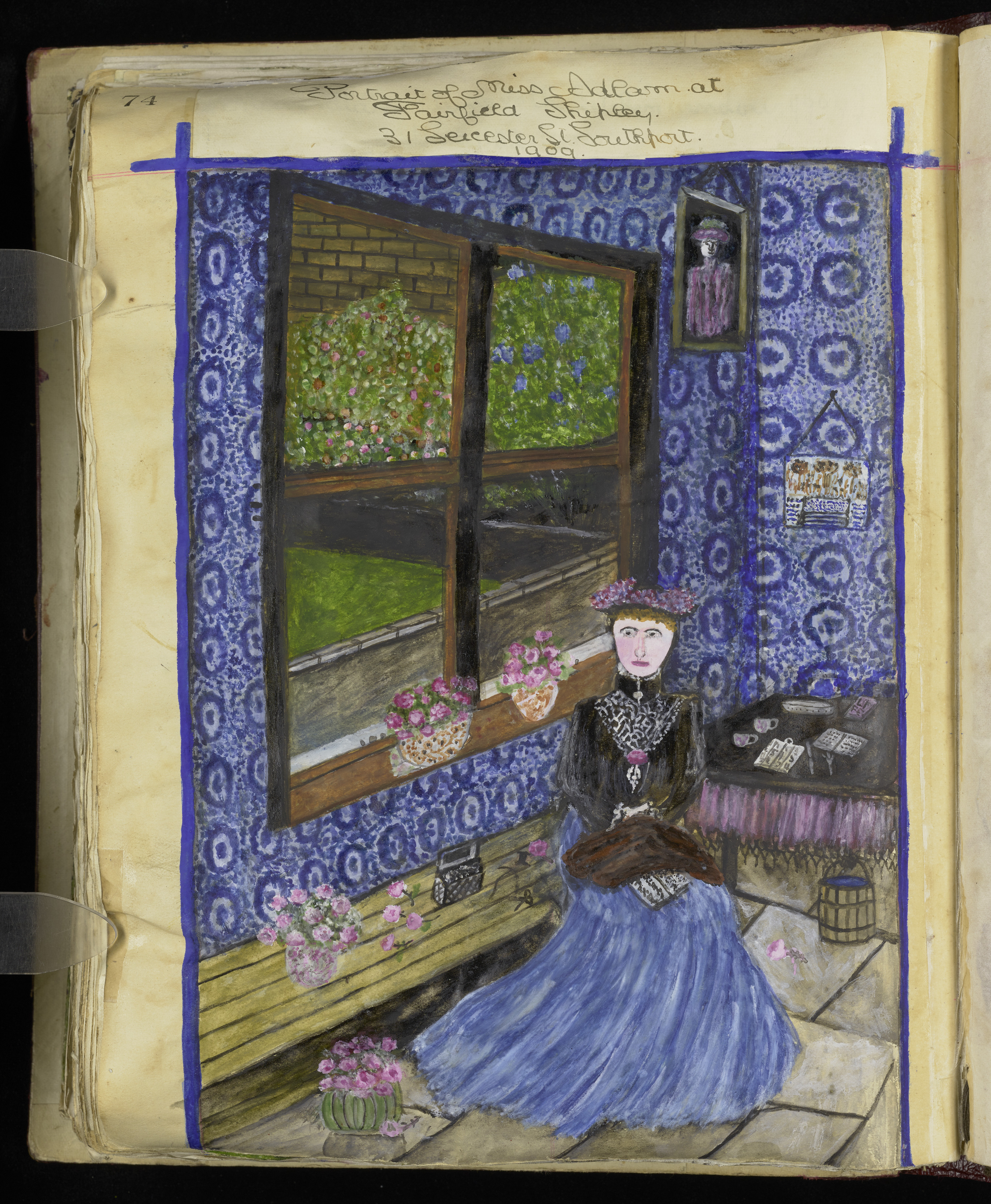
Manuscripts and Archives Processor at the Small Special Collections, Ellen Welch started the Spring season with a blog about the Herbarium Pictum album with botanical illustrations honoring Virginia Garden week. Here we are at the end of summer ready to share a new acquisition that is a 20th century garden album from England, acquired from the Mid-Atlantic Chapter of the American Rhododendron Society, titled Folk Art Herbarium (MSS 16573). It is an album with pressed flowers, leaf and shrub cuttings and hand drawn illustrations representing the life of the creator of the album. The artist is unknown and created the album from the years 1907 to 1913.


Side view of the album showing a span of the pages.

“The combination of artwork and pressed flowers in these pages is spectacular,” according to Ellen Welch, Manuscripts and Archives Processor.

Flip through the pages that are filled from edge to edge with these colorfully illustrated drawings showing the gardens they planted, the houses they lived in, and the people they knew. Complimenting the artwork are handwritten personal captions from the artist. See this unique album and be inspired to start your own album to share with generations to come.

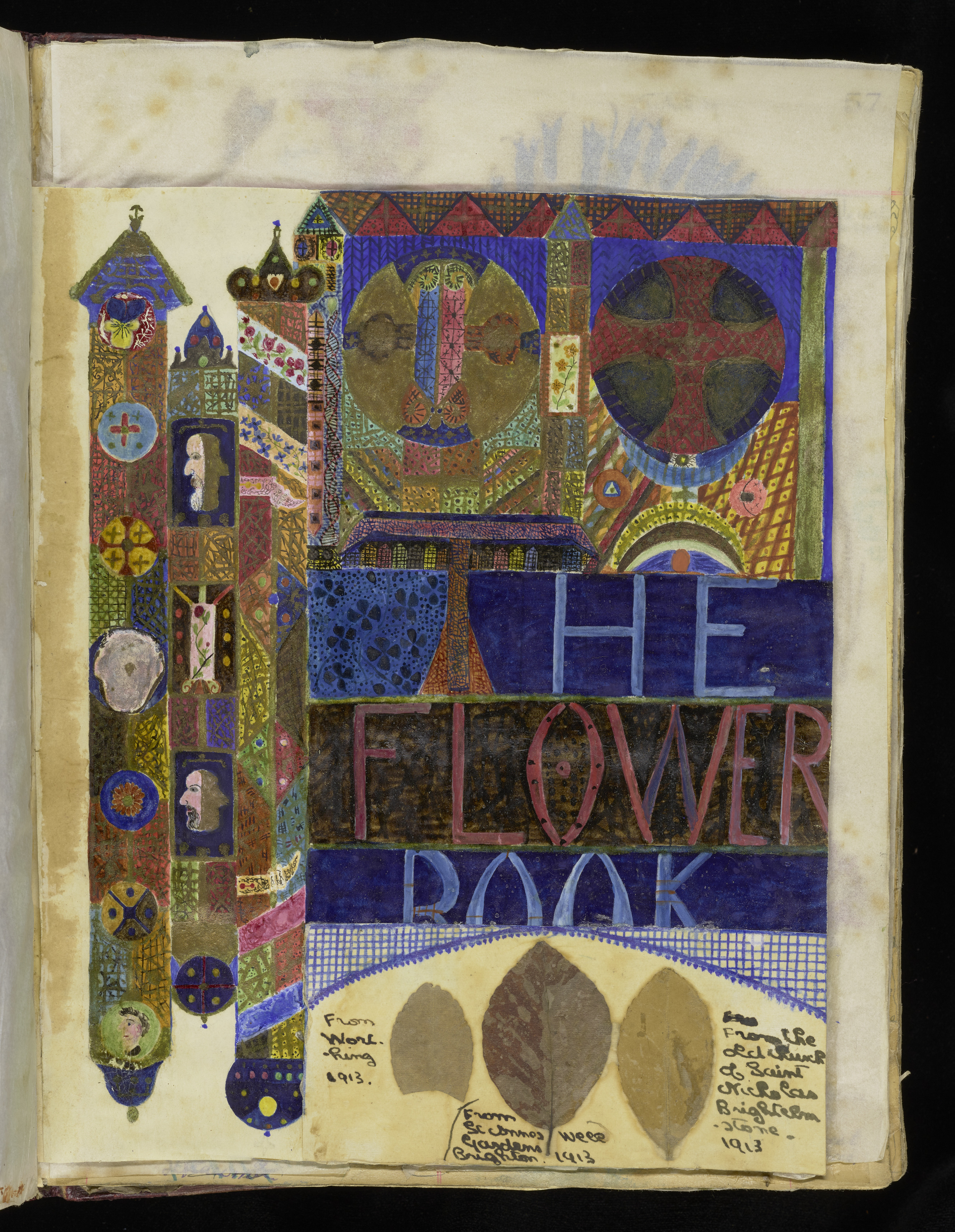
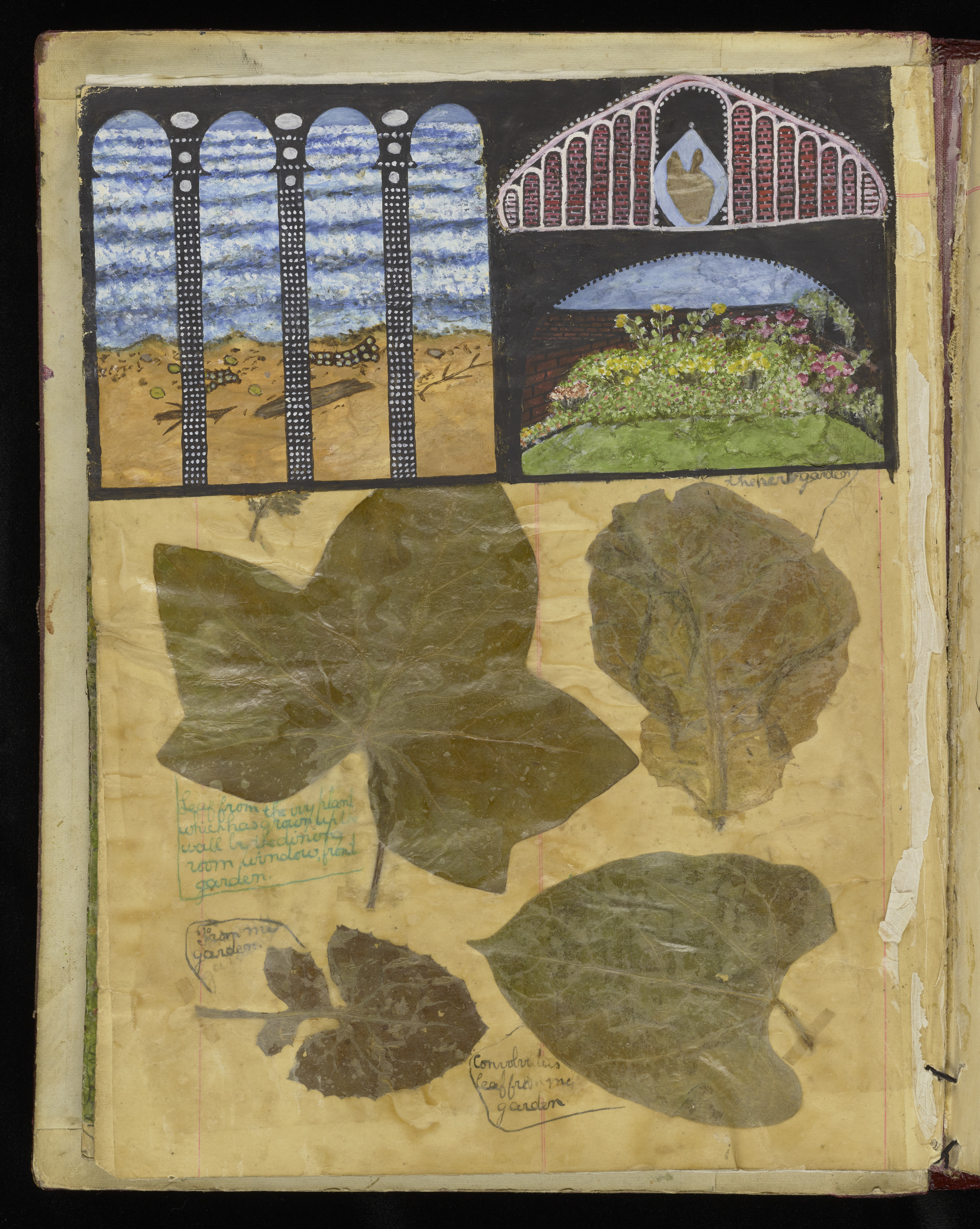
First page of album

The first page of the album is full of bright colors, interesting designs, pressed plant leaves, and comments.

Below are some images of the pages along with comments from the Small Special Collections staff upon seeing the album. Special thanks to Rose Oliveira, Accessioning Archivist, for suggesting this item to share and to Whitney Buccicione, Director of Technical Services, for encouraging blogs about our collections depicting flower gardens.

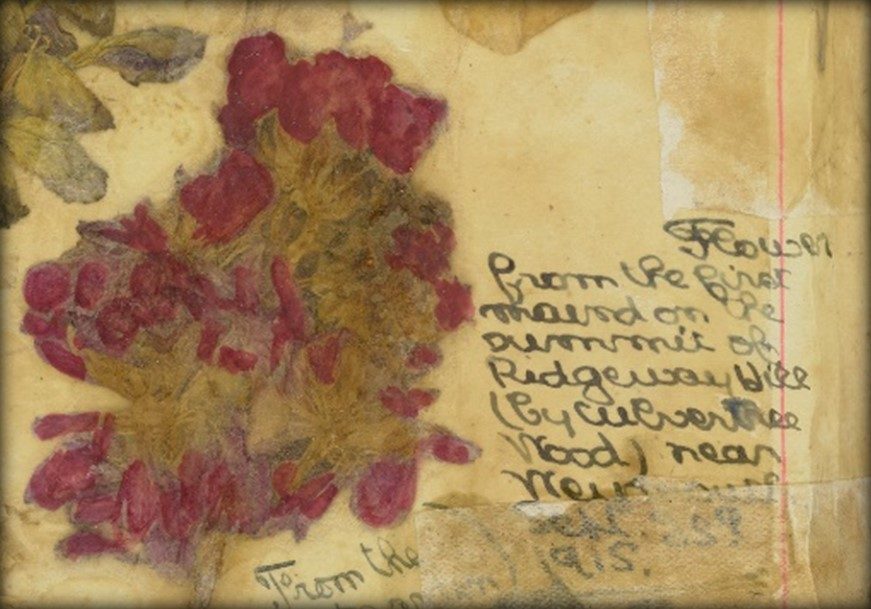
detailed insert of page with a pressed flower

“I love how this album tells a story of one person’s hobby and artistic talents in the 20th century. The combination of preservation techniques and striking amateur paintings stir the imagination about this individual who so clearly had a fondness for their home and gardens. It is remarkable how the colors and textures of these plants remain today. When we receive treasures such as this, I often wonder what the author would think about people still admiring their work a century later.” ~Barbara Hatcher, Acquisitions Specialist.

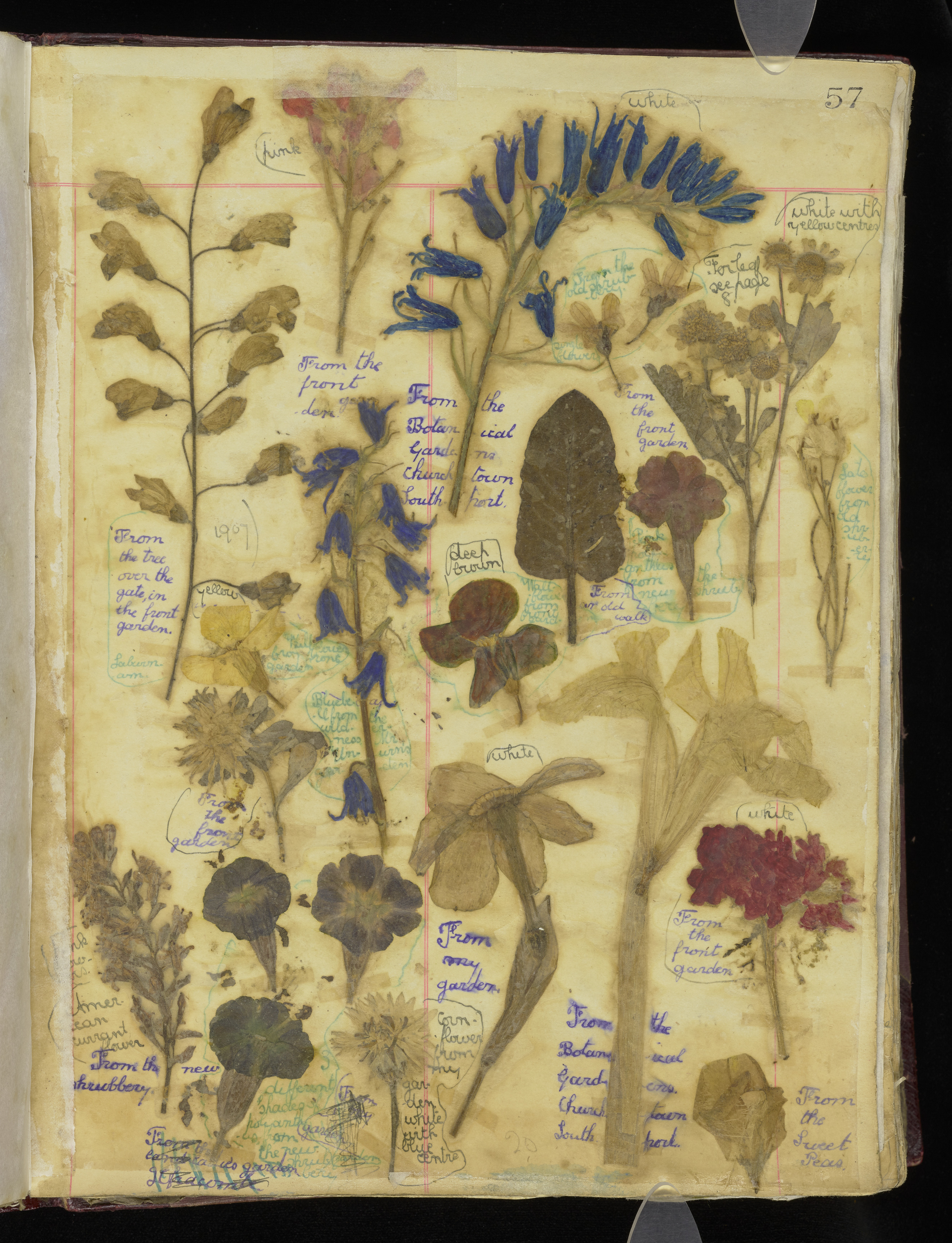
page of pressed flowers

“I am really drawn to the pressed flower page. The texture is intriguing and as a visual learner, getting to see the actual flowers and leaves is so cool! The bright colors of the next image are eye catching, but the pressed flowers make me want to reach out and touch them!” Penny White, Reference Research Librarian.


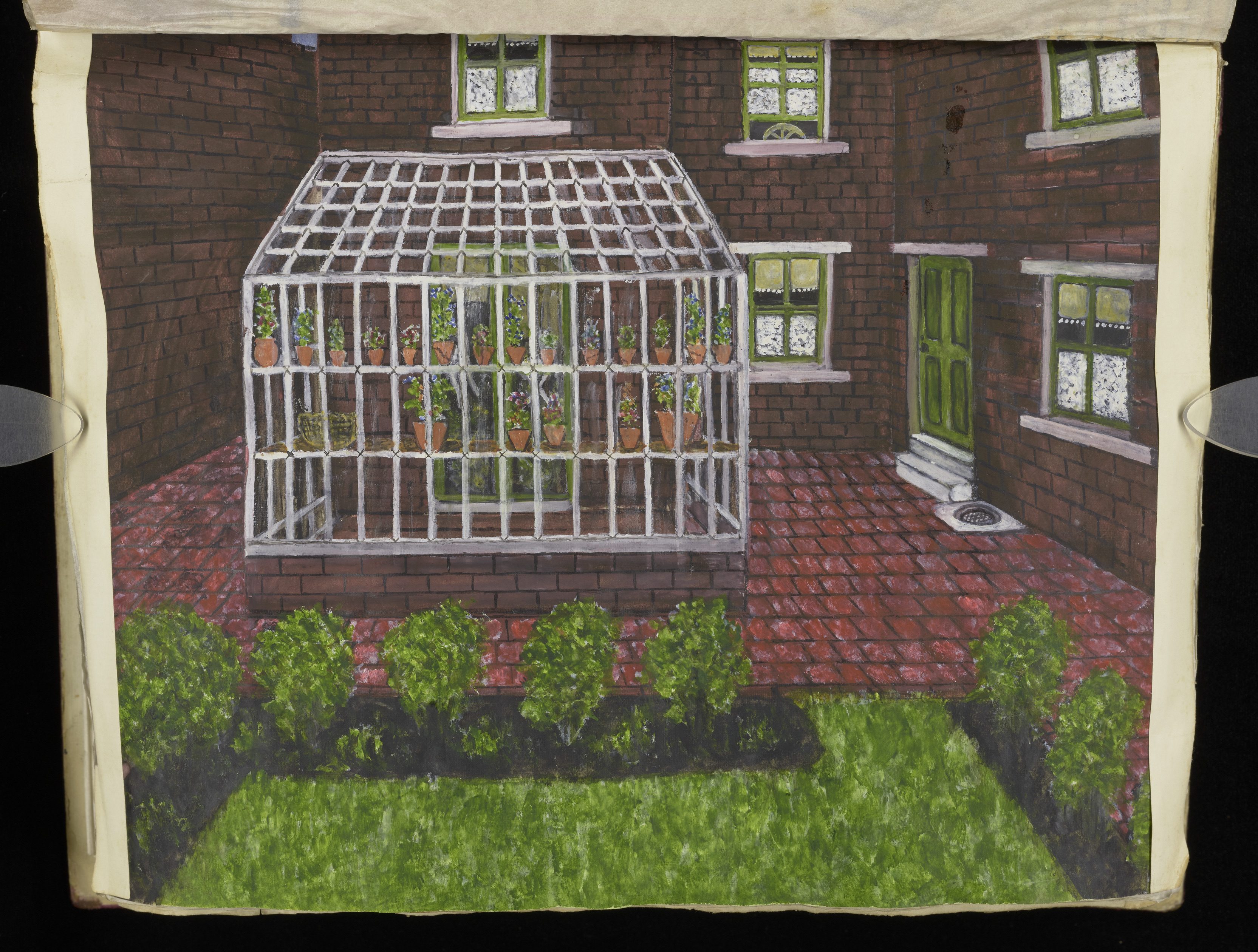
Greenhouse drawing

“This beautiful album reminded me that I recently procured a beautiful blank notebook to document my summer vegetable garden, and—while my garden is bursting with lush life and absolutely, wildly fecund here at the mid-point of the summer, my notebook is just as blank as the day I brought it home. In the seasons of life (and this life of mine, now), I might eventually fill the pages of my garden album and seeing this reminds me that doing so might bring joy beyond the seasonal outdoors gardens I make or the illustrative notes I might capture—it might live well beyond me and my time to bring joy to others in worlds and times I cannot even imagine.” Holly Robertson, Exhibits Coordinator.

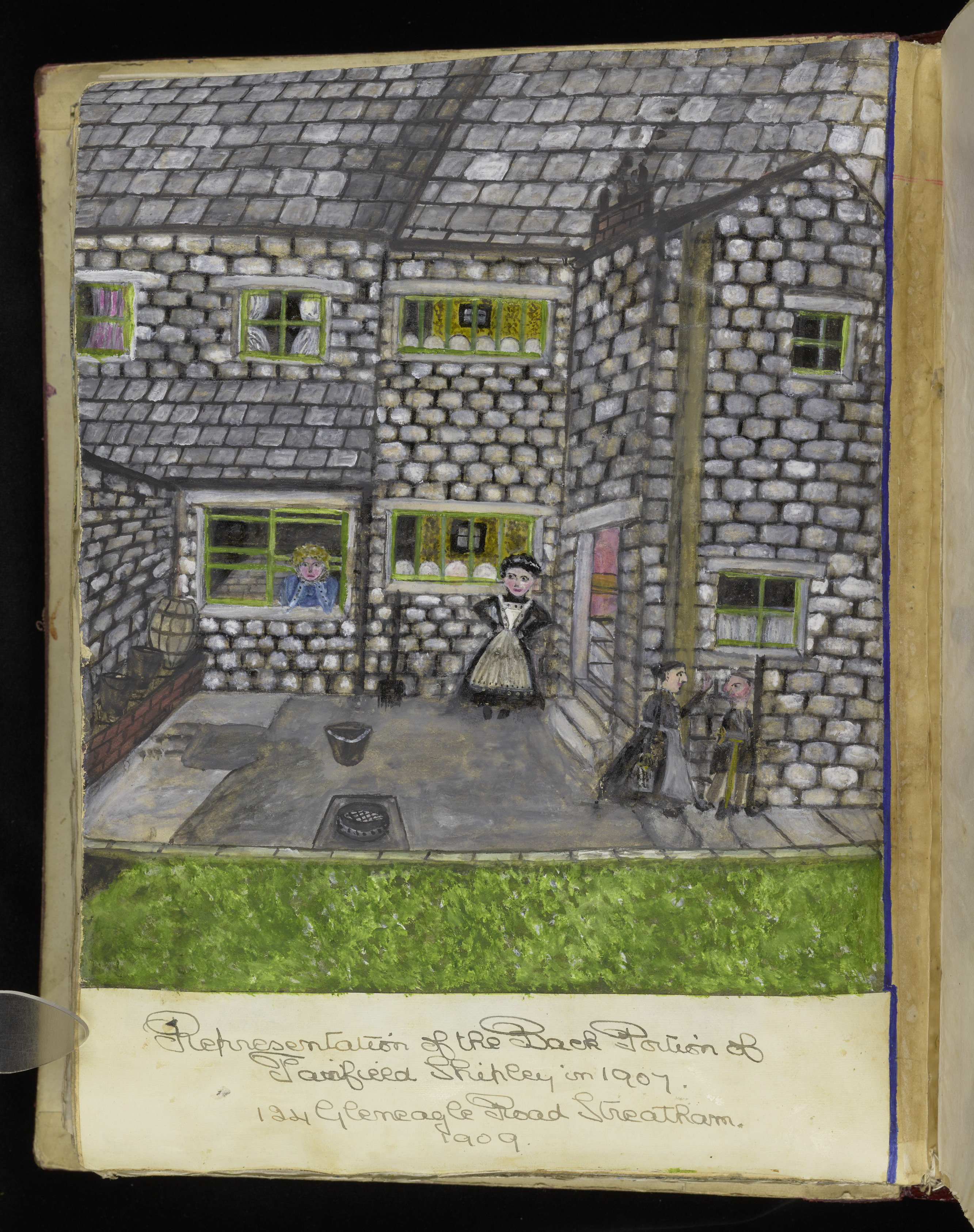
Drawing of stone or rock house from Streatham, England with inhabitants on the back porch.

“I am the Accessioning Archivist, and I was dazzled when I saw this collection in our intake room. It had been sitting in there a while, a casualty of the pandemic and staff turnover, waiting for someone to move it along. It was such an interesting piece, I might say magical, with so much attention paid to each page. I was happy that our Processing Archivist could do a deeper dive to learn more about it.” Rose Oliveira.

Drawing of Miss Adlam sitting by the window in a house called Fairfield Shipley.

“I love this album so much! The bright colors and intricacy in the paintings make them feel like they are bursting with life. You can tell that this was a passion project for the artist, and I am so glad we have it here so that people can still appreciate it today and possibly be inspired to create artwork of their own.” Stacey Lavender, Digital Archivist.

Specific comments about the last flowers and plants from the garden in the Spring of 1907.

The artist depiction of the the last tulip and the last plant that came out of the front garden. Spring 1907

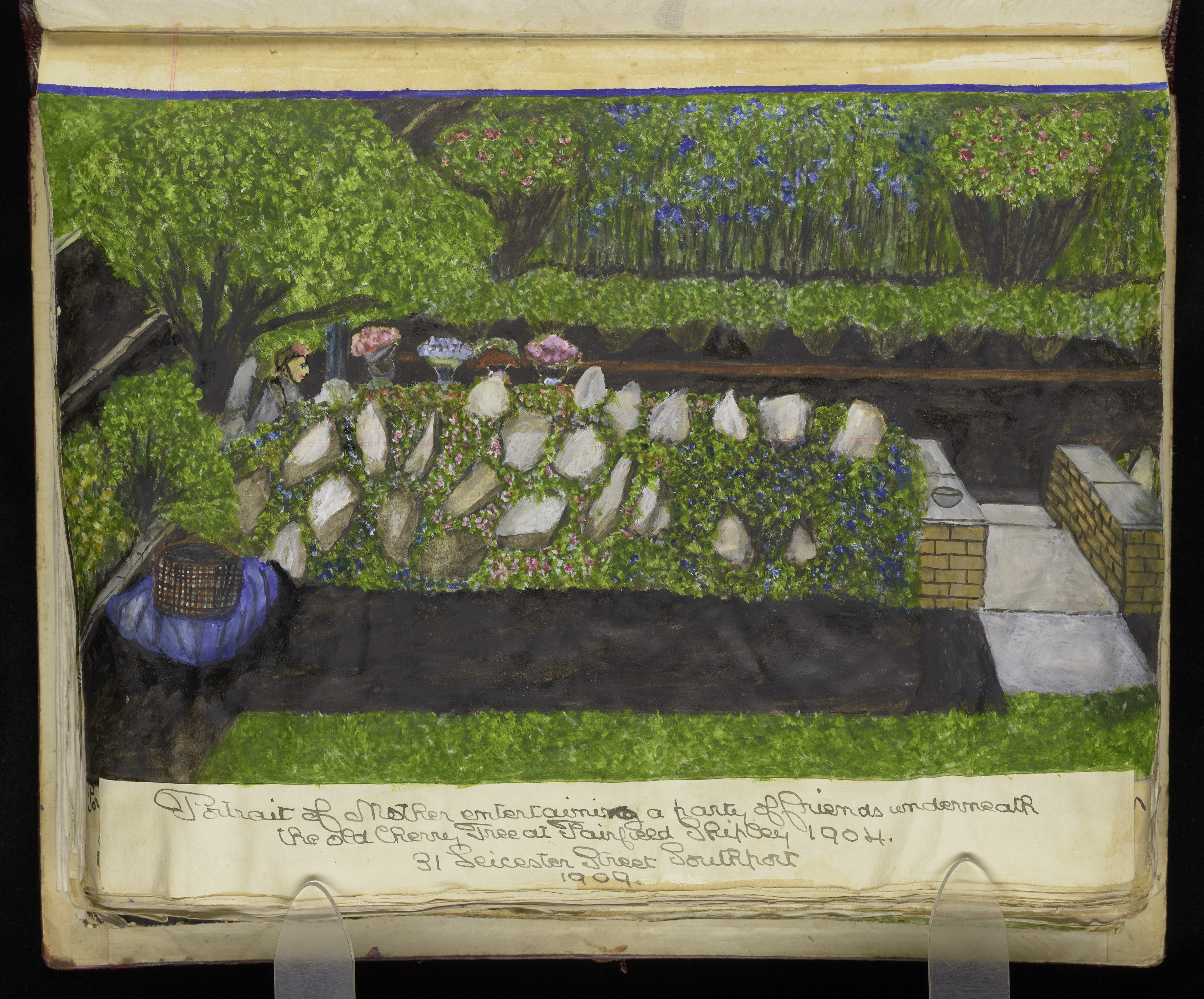
Portrait of the artist mother during a garden party.

Molly Schwartzburg, the Curator who purchased this collection for UVA, was thrilled to acquire this imaginative album created by a non-famous person.

The collection was brought in on September 21, 2017. Come in and see the whole album. There are more illustrated pages of gardens and activities of the artist.

Othello Tillo Freeman and the Otis Mead Chalmers Family Papers

Small Special Collections Library Manuscript and Archives Processor Ellen Welch is back with another story from her work to process the papers of Anna Maria Hickman Otis Mead Chalmers (1809-1891):  

 It has been very exciting to process this collection and learn of an enslaved person called Othello “Tillo” Freeman. Anna Maria Hickman’s grandfather, General William Hull, who served in the American Revolutionary War and was governor of Michigan, enslaved Othello Tillo Freeman—and “Tillo” is mentioned in legal documents and in the family correspondence. Othello Freeman, if that is even his real name, is represented in the collection by the perspectives and bias of the family. They characterize their relationship with Tillo as being someone that they needed to take care of instead of recognizing that he should be a free man (1. Historic Newton).  The collection was part of our backlog of holdings that are open but needed a higher level of processing to give more visibility and description of marginalized persons in the collection. Thanks to our curator, Molly Schwartzburg, for facilitating an addition to the Mead Chalmers family papers which led to the rediscovery of this historic collection that documents the stories of enslaved people and the generations of the Hull family. They lived in Michigan, Massachusetts and Virginia during epic moments in our history from 1821 to 1897. The collection contains nineteenth century correspondence that would be relevant to historians and scholars because it reveals the complicated relationships of enslavement, including letters about Othello Freeman, as well as a letter written by a formerly enslaved person, William.

Content warning: the collection does contain offensive language.


The papers of Anna Maria (Campbell Hickman) Otis Mead Chalmers (1809-1891 (MSS 4966) and her family offer a deep look into a 19th century American family with a sharp focus on enslaved and formerly enslaved persons. The collection documents the life of a young, widowed woman, Anna Maria Mead Chalmers, who was the granddaughter of General William Hull (1753-1825). She was a mother of four children and became a businesswoman in Richmond, Virginia. She was a writer, an editor of the Southern Churchmen, an educator and founder of Mrs. Mead’s School for Young Ladies, and a director of The Southern Churchmen Cot (“Retreat for the Sick”), a hospital for children. Anna Maria’s family enslaved people who are mentioned in the papers, including Othello “Tillo” Freeman (1790’s-1860’s?).  

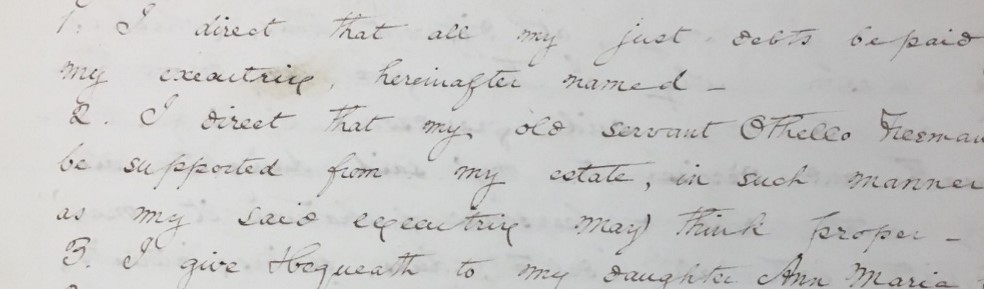
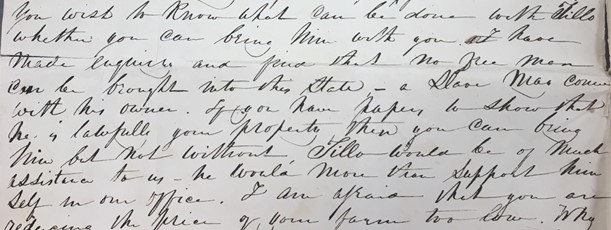
In the correspondence of the Mead-Chalmers family are letters describing Othello “Tillo” Freeman. According to the History of Newton Massachusetts, Town and City, From Its Earliest Settlement to Present Time 1630-1880 by Samuel Francis Smith, Tillo was the last known enslaved person in Newton, Massachusetts (2 Smith, S. F.). When Tillo could not work anymore, Anna Maria’s mother, Nancy “Ann” Binney Hull Hickman (1787-1847) left a stipulation in her will that his housing, clothing, and medical care would be provided for him. At the time, this would have been considered generous but there was no discussion of granting him his freedom from enslavement. Instead, the family also inquired about slave laws for travelling with the family so that they could bring Tillo with them when they moved from Newton, Massachusetts to Richmond, Virginia.  

Nancy Ann Binney Hickman last will and testament (September 16, 1846) making provisions for the care of Othello “Tillo” Freeman

Nancy Ann Binney Hickman last will and testament (September 16, 1846) making provisions for the care of Othello “Tillo” Freeman

Letter from Zachariah Mead to his mother-in-law Nancy Ann Binney Hickman explaining that if she moves to Virginia from Massachusetts that she will need to have legal papers to bring Tillo with her. (August 24, 1838)

Letter from Zachariah Mead to his mother-in-law Nancy Ann Binney Hickman explaining that if she moves to Virginia from Massachusetts that she will need to have legal papers to bring Tillo with her. (August 24, 1838)

Letters in the collection show that the Mead and Chalmers family describe themselves as being anti-slavery but not supportive of abolition. They believed in educating enslaved persons but did not free them because they felt that the enslaved needed the protection of their white enslavers.  

Anna Maria Mead Chalmers recounts memories of living with her grandparents, General William Hull and Sarah Fuller Hull, in Newton, Massachusetts and describes their first meeting of an African American named Sam. He survived being enslaved and beaten in Louisiana and escaped to the Hull farm where he was given rest and, after he recovered, worked on their hay fields for the rest of his life. Anna Maria Chalmers refers to him as a “hired” [African American] working on the farm. Her recollection focuses on the kindness that her grandmother bestowed upon Sam who stayed on the farm until his death thirty years later. He was called “Sam the fiddler” because he played the fiddle for the children. He is characterized as faithful and loyal, and while he may have felt gratitude, this description does not take into consideration that he never had the opportunities that existed for free white men.  

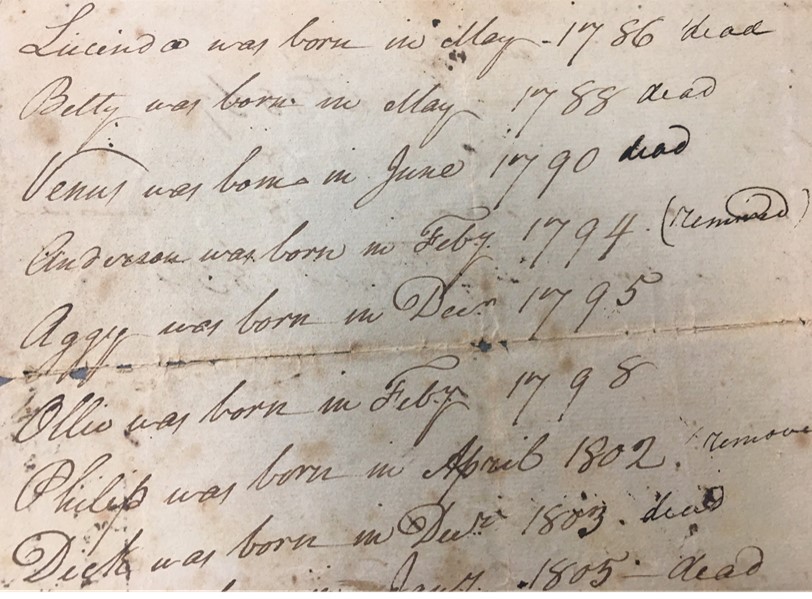
There is also a leather-bound account book containing a list of the first names of enslaved persons. It is not clear who owned the book or the location of the enslaved persons, but the list is extensive and dates from 1767 to 1845. Also included in the account book are records for horses and business transactions. 

Page from account book with an extensive list of first names and dates from 1767 to 1845.

Page from account book with an extensive list of first names and dates from 1767 to 1845.

Another formerly enslaved person, William, wrote a letter to Mrs. Chalmers (May 2, 1875) in which he expresses sorrow for the death of her husband, David Chalmers. The letter appears to express the mutual affection shared between Mr. and Mrs. Chalmers and William. It offers a rare glimpse into the realities that people experienced in the institution of enslavement, showing that as wrong as it is to own a person, there are a range of emotions that are hard to describe when people are living close together, with their relationships intertwined in daily life. According to the context provided in these family letters, the family acted as benevolent providers by teaching enslaved persons to read the Bible, paying for their bedding, clothing, medical care, rest, and retirement if they could not work. The family and the formerly enslaved person express intimacy and concern for one another as people might do when they live close together, but at the same time, they are forcing them to serve in bondage or limiting their freedom by offering them work with very low wages. Even though the language in the correspondence appears to be caring and intimate, it must be noted that enslaved persons had no choice in the relationship and that only the family perspectives are fully represented.  

Letter from William, who drove the carriage for Mr. Chalmers, to Anna Maria Mead Chalmers after Mr. Chalmers’s death. May 2, [1875]

Letter from William, who drove the carriage for Mr. Chalmers, to Anna Maria Mead Chalmers after Mr. Chalmers’s death. May 2, [1875]

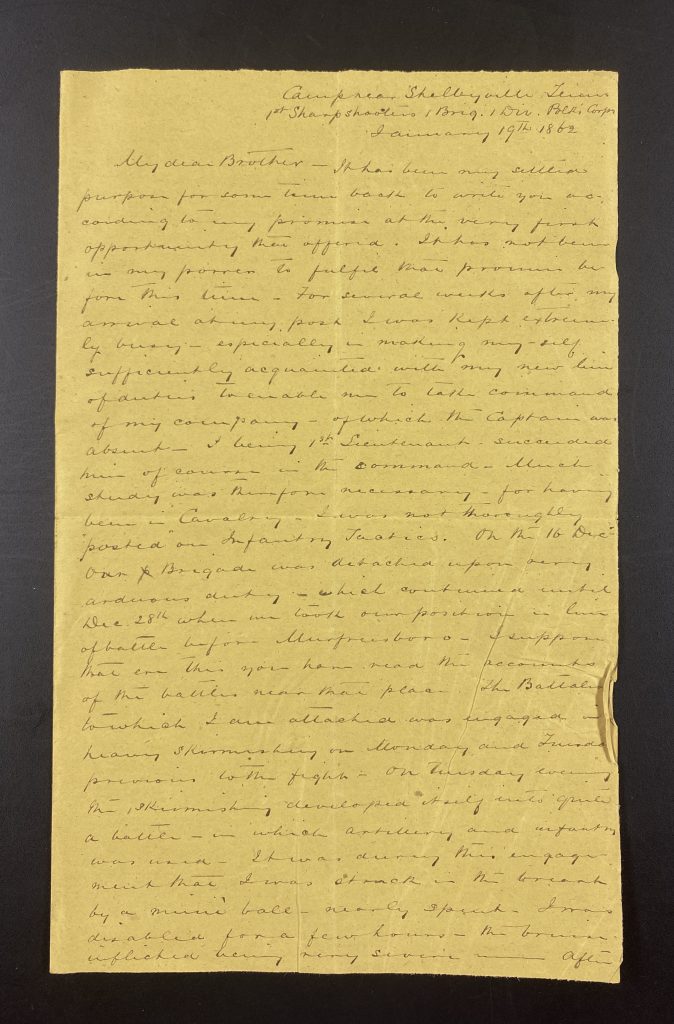
Anna Maria Mead Chalmers grew up with a strong religious foundation that supported her faith throughout her life of grief and loss. She became the family matriarch after surviving the deaths of three husbands, George Otis (1803-1831), Zachariah Mead (1800-1840), and David Chalmers (1779?-1875?). She also had three sons who lived during the time of the American Civil War: George Alexander Otis, Jr. (1830-1881) who was a field surgeon in the Massachusetts 27th volunteers and assistant surgeon general of the army; Edward C. Mead (1837-1908) who traveled to Australia in search of financial independence with a stint in gold digging, and settled on a farm in Keswick, Virginia; and William Zachariah Mead (1838-1864) who fought at Murfreesboro and died fighting for the Tennessee Army in the Confederacy in the Battle of Resaca, Georgia. The letters from William C. Mead and his friends and family describe skirmishes and battles in the Civil War including Tennessee and Georgia. Included in the collection are letters about succession and anxiety about the conflict between the states. 

Letter from Lieutenant William Mead describing the Battle of Murfreesboro where he was injured. (January 19, 1862)

Letter from Lieutenant William Mead describing the Battle of Murfreesboro where he was injured. (January 19, 1862)

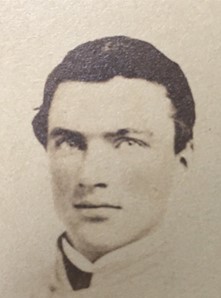
Photograph of Lieutenant William Zachariah Mead (1838-1864)

Lieutenant William Zachariah Mead (1838-1864)

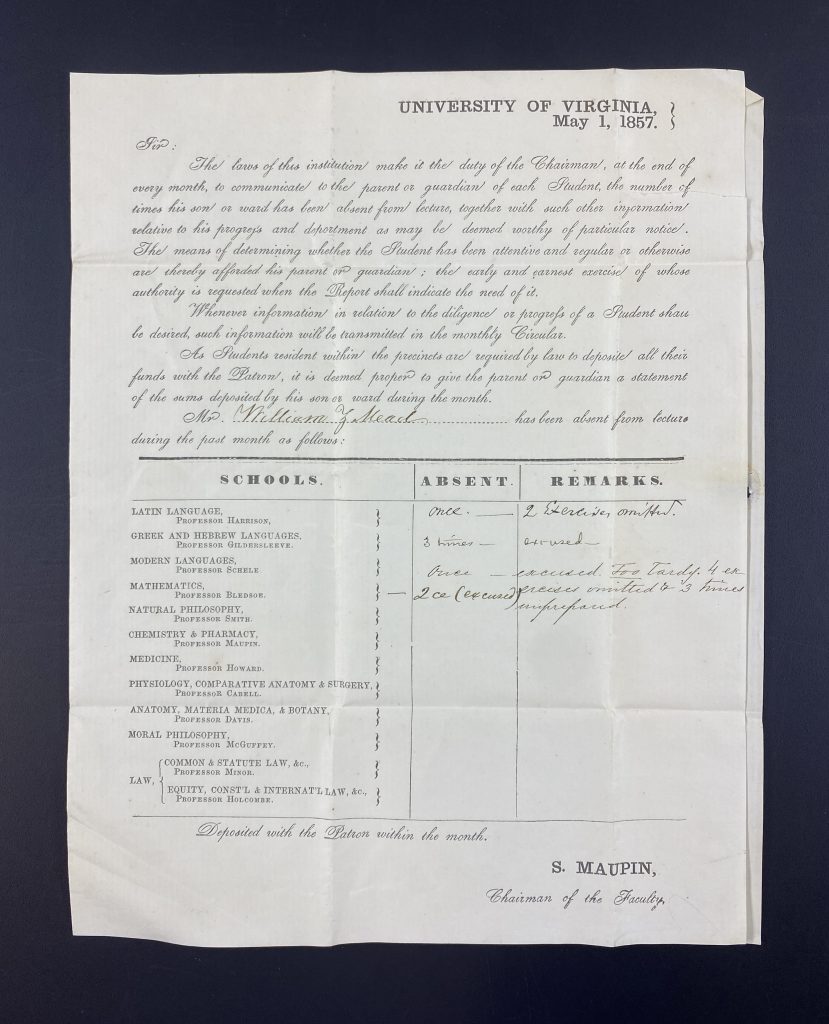
William Mead graduated from the University of Virginia in 1857 before the Civil War began. The collection has many references to Charlottesville and the University of Virginia, including comments about university professors Basil L. Gildersleeve, Gessner Harrison, Socrates Maupin, John Minor, Schele De Vere, James L. Cabell, Frederick George Holmes, and Alfred T. Bledsoe. Charlottesville families include Peter and Frances (“Fannie”) Meriwether, Frances Poindexter, Rector, and Mrs. Ebenezer Boyd, William Cabell Rives, Franklin Minor, Thomas Walker Gilmer and Elizabeth Anderson Gilmer, and Dr. Mann Page. 


University of Virginia Report Card for William Zachariah Mead

University of Virginia Report Card for William Zachariah Mead

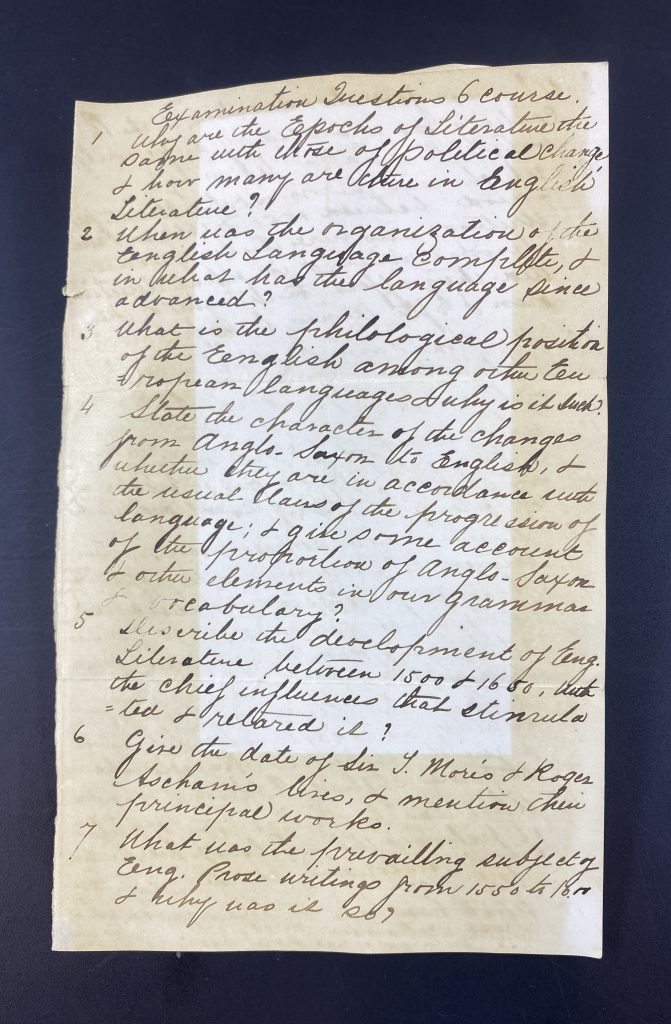
Anna Maria Otis Mead Chalmers was extraordinary in having been as well educated as any man in Boston (3 Duval, Maria Pendleton) and shared her knowledge with other privileged young white girls, including Amélie Rives Troubetzkoy, the famous writer. She and some of her family members were friends with literary authors including Edgar Allan Poe, Nathaniel P. Willis, Ralph Waldo Emerson, and Oliver Wendell Holmes. The letters refer to these writers, but there are no letters written by or to the authors themselves. 

Examination questions from Mrs. Mead’s School for Young Ladies

Examination questions from Mrs. Mead’s School for Young Ladies

The collection also includes correspondence from Anna Maria Mead Chalmer’s cousins, James Freeman Clarke (1810-1888) and his sister, Sarah Freeman Clarke (1808-1896). Sarah Clarke was a landscape artist, a world traveler, and a member of the transcendentalist movement (4 Maas, Judith). James Clarke was an American theologian, author, and abolitionist (5 Wikipedia). 

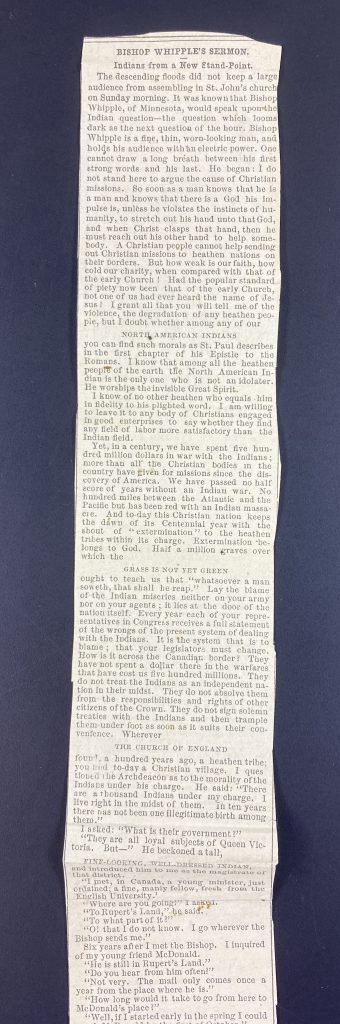
Also of interest in the collection are letters about General William Hull (1753-1825) who fought in the American Revolutionary War and the War of 1812. He was born in Derby, Connecticut and moved to Detroit Michigan when his government work, which involved the taking of land from Indigenous persons, led him to become the Governor of the Territory of Michigan and the commander of the Army of the Northwest Territory during the War of 1812. He was appointed by Thomas Jefferson and was a friend of General Lafayette. After being unsuccessful in fighting off the Canadians (however claiming that the government did not give him the resources to defend Michigan) he was court-martialed by James Madison who later commuted his sentence (6 Detroit Historical Society). For years, the family fought a claim to refute the charges and receive his backpay. In contrast to General Hull’s work with the government in taking land from Indigenous people, the family kept a newspaper clipping of a sermon by Bishop Henry Benjamin Whipple (1822-1901) printed in 1876 which displays Whipple’s outrage at the United States government for taking lands from Indigenous persons. 

Newspaper clipping with sermon by Bishop Whipple in 1876 (unidentified newspaper)

Newspaper clipping with sermon by Bishop Whipple in 1876 (unidentified newspaper)

Covering a wide-range of historic themes, including: the taking of Indigenous lands; enslavement of African Americans; the story of a widowed woman trying to earn a living in the nineteenth century; the War of 1812 and the American Civil War; as well as politics, religion, transcendentalism, local Charlottesville history and professors at the University of Virginia—this is a collection of letters rich in history that shows the inner workings of government and society, and how those systems impact people’s everyday life. Collections like the Papers of Anna Maria (Campbell Hickman) Otis Mead Chalmers (1809-1891) help us to envision our collective past and broaden our perspective on our history and our future. This one is worth a deep dive into the history of the nineteenth century locally and nationally. 


Sources: 

  1. Historic Newton, Historic Burying Grounds Preservation 
    Attachments F-1 – F3 for Historic Resource Proposals 
  2. Smith, S. F. History of Newton Massachusetts. Town and City. From Its Earliest Settlement to Present Time 1630-1880.” Boston: The American Logotype Company, 1880.   
  3. Duval, Maria Pendleton. “The Lengthened Shadow of a Woman” in The Richmond Times Dispatch. August 10, 1913 (Description of Anna Maria Mead Chalmers education in William B. Fowle’s school as being the best in Boston and Mrs. Chalmer’s school as being up to the standards of Harvard) 
  4. Maas, Judith. “Sarah Freeman Clarke: Artist, Traveler, DiaristThe Beehive. Massachusetts Historical Society. November 21, 2019 
  5. James Freeman Clarke.” Wikipedia. Accessed June 7, 2022. 
  6. William Hull” Detroit Historical Society. Detroit Encyclopedia. Accessed June 7, 2022.

Other articles of interest:  

Martin, Susan. “The Unstoppable Anna Maria Mead Chalmers,” The Beehive. Massachusetts Historical Society. June 7, 2022. 


Juneteenth 2022: The Nansemond County Training School 1924-1970

Juneteenth was originally established to commemorate June 19, 1865, when enslaved African Americans in Galveston, Texas heard the reading of the Emancipation Proclamation and learned that they were free. However, Juneteenth is not the only freedom celebration in the United States. For more than two hundred years, Black Americans have selected various dates—including January 1, March 3, July 5, and August 1—for the day’s local significance to the abolition of the slave trade and slavery. With the recent creation of Juneteenth as a federal and state holiday, today we’re reflecting on education as one of many ways that African Americans manifested freedom in Virginia.
— Krystal Appiah, Curator of Virginia Collections

Nansemond County Training School was the first high school for African Americans in Suffolk, Virginia in 1924. We recently received the Margaret Stephenson Collection on Nansemond County Training School (MSS 16683) which documents the work of alumni from 1998 to 2007 to preserve the school and its history—which is also their history. They made a documentary film “Living Through Our Roots” about the school which is included in the collection. Alumni also held reunions to encourage former classmates to share their memories and ephemera in the film. I have enjoyed learning about the school and the people who attended it, and I feel enriched by their personal and uplifting perspectives on life after having lived through segregation. We would like to explore this new collection with you as a celebration of Juneteenth.
— Ellen Welch, Manuscripts and Archives processor


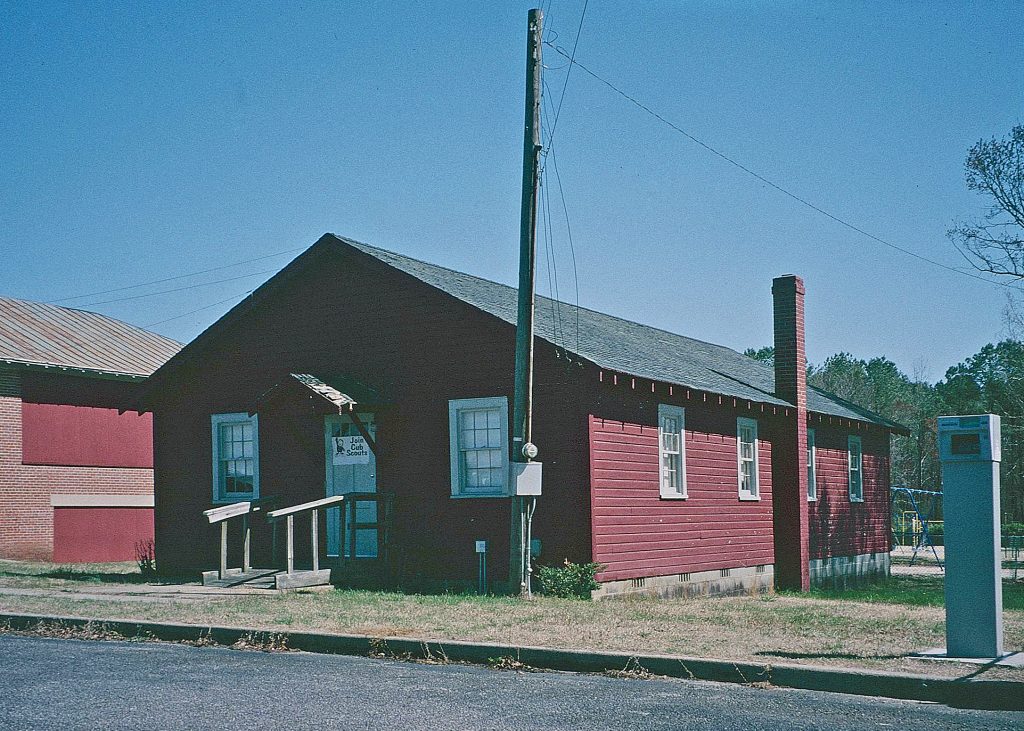
The Nansemond County Training School grew out of a one room building named Little Fork School located on the estate of William Jackson Copeland. According to former second grade teacher Paula Dozier, Copeland envisioned providing a building site to meet the educational and cultural needs of African American children before the turn of the century. The original school was destroyed by fire; its replacement was built in 1924 and become known as the Nansemond County Training School.

Photograph of red school building

Nansemond County Training School 1924-1970

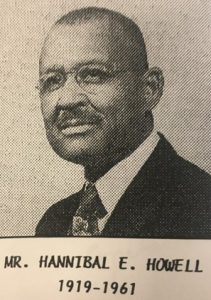
The school, with seven classrooms and one auditorium, contained an elementary and secondary school, and was one of ten Rosenwald schools in Suffolk, Virginia. The Rosenwald schools were known for their standardized floor plans which were designed to let sunlight into the classrooms in the afternoon to save money on electricity and heating. Hannibal E. Howell was its first principal from 1919 to 1961, serving for 42 years. In 1964, the name was changed to Southwestern High School and, after the racial integration of county schools, became Southwestern Intermediate School. Today it is called Southwestern Elementary School and is located next to the Nansemond County Training School (which is currently used for storage).

Headshot portrait of man in suit

Hannibel E. Howell, Principal of Nansemond County Training School 1919-1961

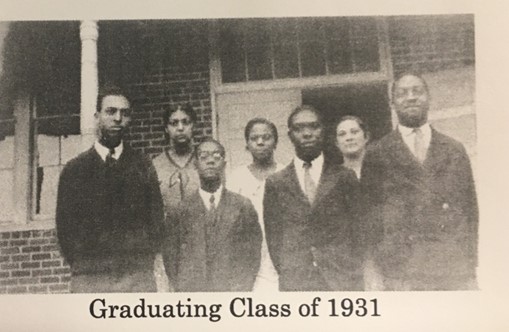
Nansemond County Training School graduating class of 1931

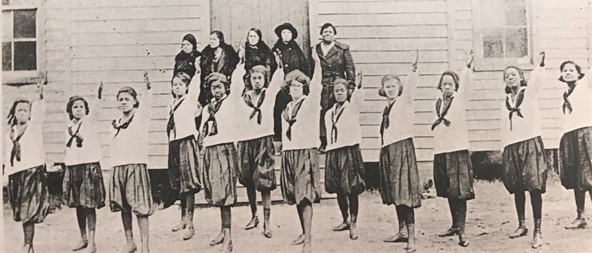
1920’s Photograph of a 4-H Club meeting on the grounds of the new school. (Courtesy of Ruby Holland Walden)

Rosenwald schools were partially funded by Julius Rosenwald (1862-1932), an American businessman, philanthropist, and part owner of Sears and Roebuck Company. Rosenwald met Booker T. Washington in 1911, and Washington encouraged Rosenwald to address the poor state of African American education in the South. In 1917, Rosenwald incorporated the Julius Rosenwald Fund to help fund schools with inadequate buildings and teaching materials. The fund required matching support from the community, parents, and local government. Nansemond County Training School received $1,500 from the Rosenwald fund, $5,000 from African American families, and $11,500 in public money.

By the time the program ended in 1932, the Rosenwald Fund had supported nearly 5,000 schools, 217 teachers’ houses, and 163 shop buildings for the education of Black students in the rural South. The documentation in the National Register of Historic Places states that the “Nansemond County Training School is an excellent example of rural southern school architecture, and the combination of public and private money and monies from the Julius Rosenwald Fund show how strongly the community wanted to be able to educate its African American population in a modern school building.”

According to an article by Phyllis Speidell in the 2008 Virginia Pilot article “Raising Funds to Restore Historic School into Heritage Center,” “Many of the Rosenwald schools have disappeared or deteriorated, while the Nansemond County Training School stands strong because it was constructed by skilled Black stonemasons living in the area.”

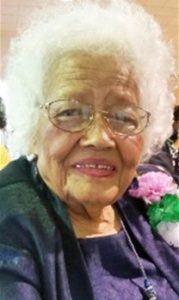
Ruby Walden (1921-2020; Class of 1938). Her slogan: “what I can, I ought to do. With God’s help, I will do.”

One of the school’s alumni, Ruby Walden (1921-2020; Class of 1938), recalled the struggles of those who attended the school endured just to get basic school supplies. She carried a notebook full of court documents from a court case about the segregated schools—those papers detailed everything from the disparity in library space between Black and white schools to a list of patrons who had given money to help fight the case. In the Suffolk News Herald article “Former School’s Alumni Recall Past, Look to the Future” (October 1, 2013), news editor Tracy Agnew quotes Walden: “We’ve come a long way with a whole lot of struggles,” citing how Black children had to walk to school while white children were provided with buses for transport. Walden added, “I’m proud of the school, but I’m not proud of the fact we could have had a much better education.”

In another article “What She Could, She Did” by Jimmy Laroue in the Suffolk-News Herald (December 29, 2020), Walden is interviewed by Dr. Cassandra Newby Alexander in 2008 as part of an oral history of Virginia’s appellate court. It describes the active leadership of Ruby Walden:

“As part of her legacy, Walden worked with the Suffolk-Nansemond branch of the NAACP to help start a community center and the Nansemond Community Ballpark. She also helped organize the Holland-Holy-Neck Civic League, helping increase voter participation and helped start a Legal Aid Society in Suffolk. Walden also worked with the Literacy Council and spoke personally with the Reverend. Dr. Martin Luther King Jr. when he visited Suffolk, an event she estimated about 20,000 people attended. Walden said, “integration was the law of the land,” so they were torn between integration and their lawsuit to equalize the schools. She recalled that the “whole state started out in ‘massive resistance,’ and then it went to ‘freedom of choice,’ and then ‘assignment.”

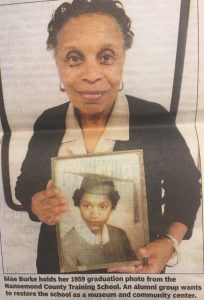
Photograph of woman holding framed portrait.

Mae Burke holds her 1958 graduation photo from the Nansemond Training School.

In thinking of her fond memories of the school, Nansemond graduate Mae Burke (Class of 1959) said, “We don’t want to live all our lives and not leave anything for future generations. We don’t want to live here and work here and raise our children here and have nothing to show for it. I think it is a good thing to tell the history.” She and Wardell Baker (Class of 1956), president of the Heritage Center Association, hope that the school can be restored, preserving a historic African American legacy in Suffolk. He said, “This is not an African American project—it’s for the entire area, the whole community.”

Despite the hurdles and inequities of a segregated school system and society, many of the Nansemond/Southwestern alumni achieved academic and professional success, graduating from universities including New York University and Norfolk Polytechnic State University (Norfolk State University) and having professional careers as teachers, doctors, politicians, and lawyers. Our work now is to share their legacy and preserve the story of this school.

This collection was recently donated to the Small Special Collections library by Margaret Stephenson, an architectural historian who collected materials from 1988-2007 to document the effort to preserve historic Nansemond County High School. Stephenson (1942-2014) was born in Richmond, Virginia to Lucille Long Bowles (originally of Severn, North Carolina and later of Como, North Carolina). She earned a master’s degree in architectural history from the University of Virginia and worked for the City of Raleigh’s Planning Department and the Virginia Department of Transportation’s Environmental Division. The Nansemond County Training School was added to the National Register of Historic Places in 2004 in (Holland) Suffolk, Virginia.

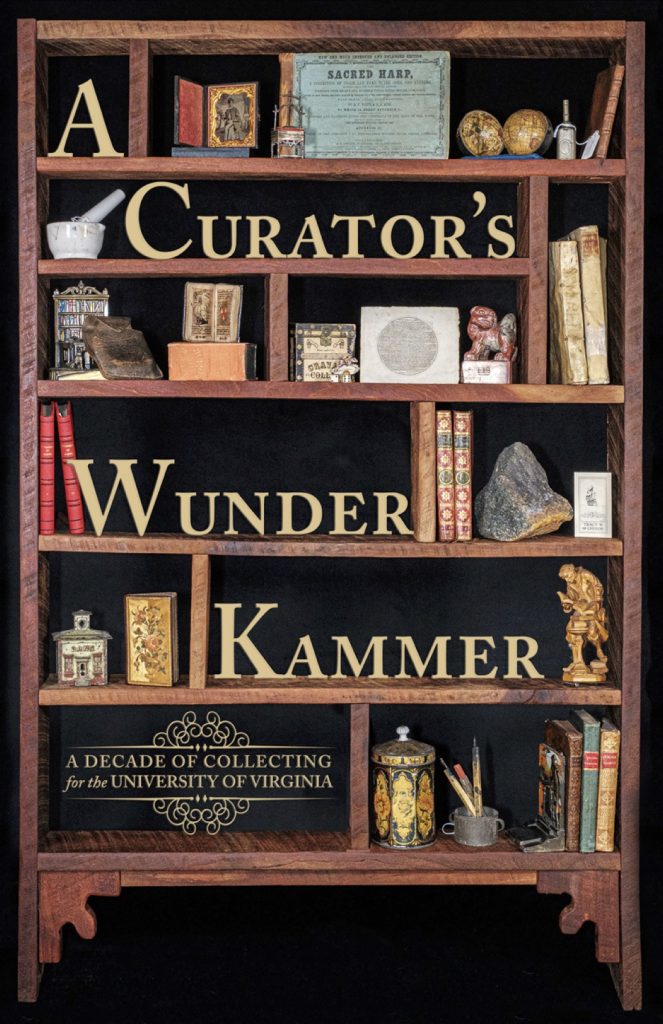
A Curator’s Wunderkammer: A Decade of Collecting for UVA

On the occasion of his retirement—after a decade of curatorial work at the Albert and Shirley Small Special Collections Library—David R. Whitesell departs the University of Virginia Library having made significant contributions to the collection.

Upon his arrival in 2012, David brought with him deep expertise and experience in acquisitions, bibliography, cataloging, and curation from prestigious institutions, as well as essential knowledge of the rare book and manuscript trade. The Library has benefited from David’s work and has grown in extraordinary ways, all to the betterment of teaching and research. 

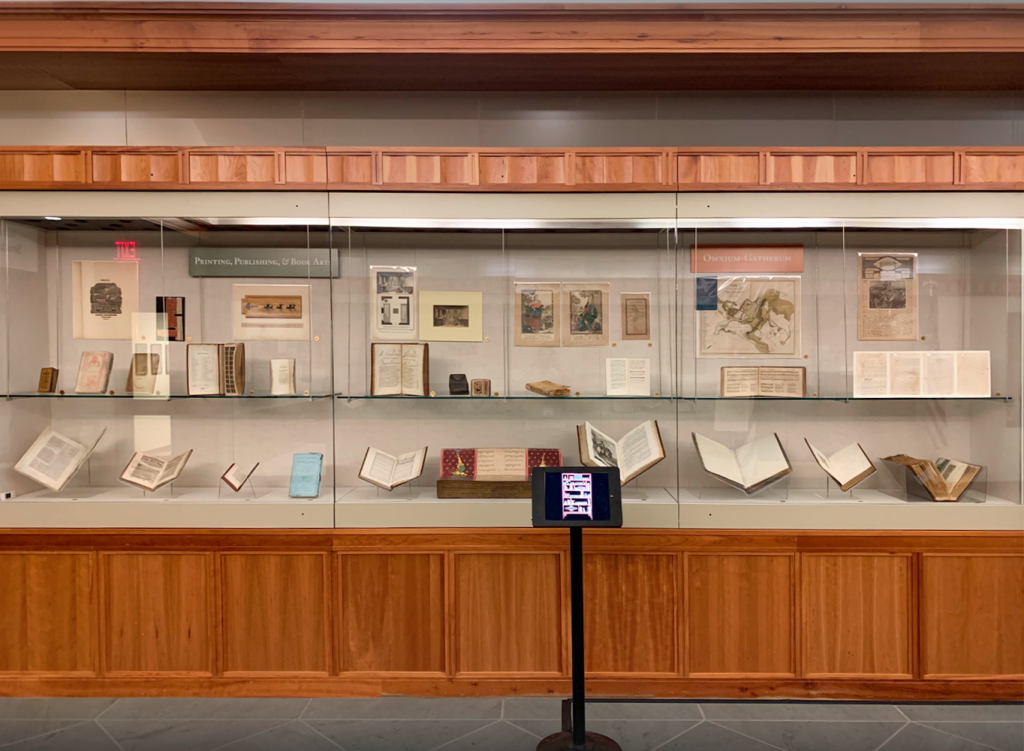
Our current exhibition, A Curator’s Wunderkammer: A Decade of Collecting for the University of Virginia (on view in the First Floor Gallery of Harrison/Small through July 9, 2022) celebrates and chronicles the stories behind David’s selected acquisitions, opening the door to an insider’s perspective on the work of a curator—where curiosity is always a key to success.


Celebrating a decade’s worth of acquisitions by Albert and Shirley Small Special Collections Library curator David R. Whitesell on the eve of his retirement: a Wunderkammer, or cabinet of curiosities that illuminates UVA’s current collecting policy, the ins and outs of the unpredictable and highly competitive acquisitions process, and how curators add value to the collection, one acquisition at a time.

Since 2012 I have shared with curatorial colleagues the privilege of augmenting UVA’s truly remarkable rare book and manuscript holdings. My remit has been primarily pre-1900 materials in all formats. As I prepare to hand this responsibility to a new curator, it seems an opportune time to reflect on a decade’s worth of acquisitions. In this exhibition I offer a small selection with comments intended to illuminate UVA’s current collecting policy, the ins and outs of the unpredictable and highly competitive acquisitions process, and how curators add value to the collection, one acquisition at a time.

Even with a healthy budget, UVA curators can acquire only a tiny fraction of the material appropriate for UVA’s diverse research and teaching needs. No precise count is possible, but my purchases for UVA total approximately 15,000 items; the gifts I have helped bring in may exceed 100,000 items. This constitutes less than 2% of a collection that has been abuilding for two centuries. Still, I hope to show that the value I have added is more than negligible, even if ultimately unquantifiable.

Were my acquisitions arrayed in one massive display, they would likely perplex the beholder by their apparent randomness—more akin to a Wunderkammer, or cabinet of curiosities, than a considered, curated selection—until placed within the larger context of UVA’s collection. This is inevitable given the capricious process by which we acquire rare, often unique, materials—a process dependent not only on funding, but especially on knowledge, considered selection, hard work, timing (from lightning response to extreme patience), relationships, market savvy, and luck.

The small sampling on display in the exhibition has been ruthlessly pared by omitting gifts and items representing many areas in which I have collected. Despite having some topical and linear arrangement, it remains more a Wunderkammer than a coherent whole. I encourage you, then, to explore this exhibition in your own way, engaging with those curiosities which attract your gaze and, I hope, some that do not. If I have done the job well, these disparate objects will generate serendipitous connections, insights, and meanings for you, for whom we assemble our collections.

View the full exhibition catalog online here

Every day—now through mid-June—we’ll highlight one object from A Curator’s Wunderkammer on our social media channels. Follow us on Twitter, Facebook, and/or Instagram!

The exhibition will be on view through July 9, 2022 in the First Floor Gallery of Harrison/Small.


Herbarium Pictum: 2022 Historic Garden Week in Virginia

Each April, we celebrate Historic Garden Week in Virginia. Next week—April 23-30, 2022—private landscapes, public gardens, and historic sites across Virginia will offer tours showcasing our beautiful state at the peak of spring.

In this post by Manuscripts and Archives Processor Ellen Welch, you’ll enjoy just a sampling of images from our collection, Herbarium Pictum (MSS 38-618) which contains five volumes of illustrated watercolors of flowers, plants, fungi, and trees painted by Erdmann Christianus Seyffert, 1743-1757. Special thanks to Heather Moore Riser for suggesting this collection and Whitney Buccicone for the blog idea.

The illustrations are numbered and labeled with their scientific (Latin and Greek) names. The end of volume five includes an index with the names and classifications from Carl Linneaeus (1707-1778), a Swedish botanist, zoologist, taxonomist, and physician who formalized binomial nomenclature, the modern system of naming organisms. The first part of the name, the generic name, identifies the genus to which the species belongs, and the second part is the specific name of the species. The first letter of the generic name is capitalized, and the species is in lowercase. Both names are italicized. The descriptions of the plants have been added to this blog for further identification but are not part of the collection. These watercolor illustrations painted so long ago are beautifully detailed and it is our privilege to share them with you.

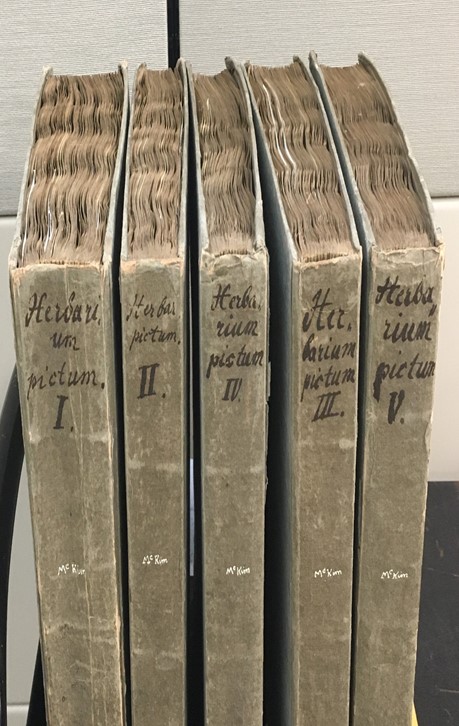
The five volumes of Herbarium Pictum—each in a grey paper wrapper with handwritten lettering on the spines.

Herbarium Pictum (MSS 38-618): five volumes of illustrated watercolors of flowers, plants, fungi, and trees painted by Erdmann Christianus Seyffert, 1743-1757.

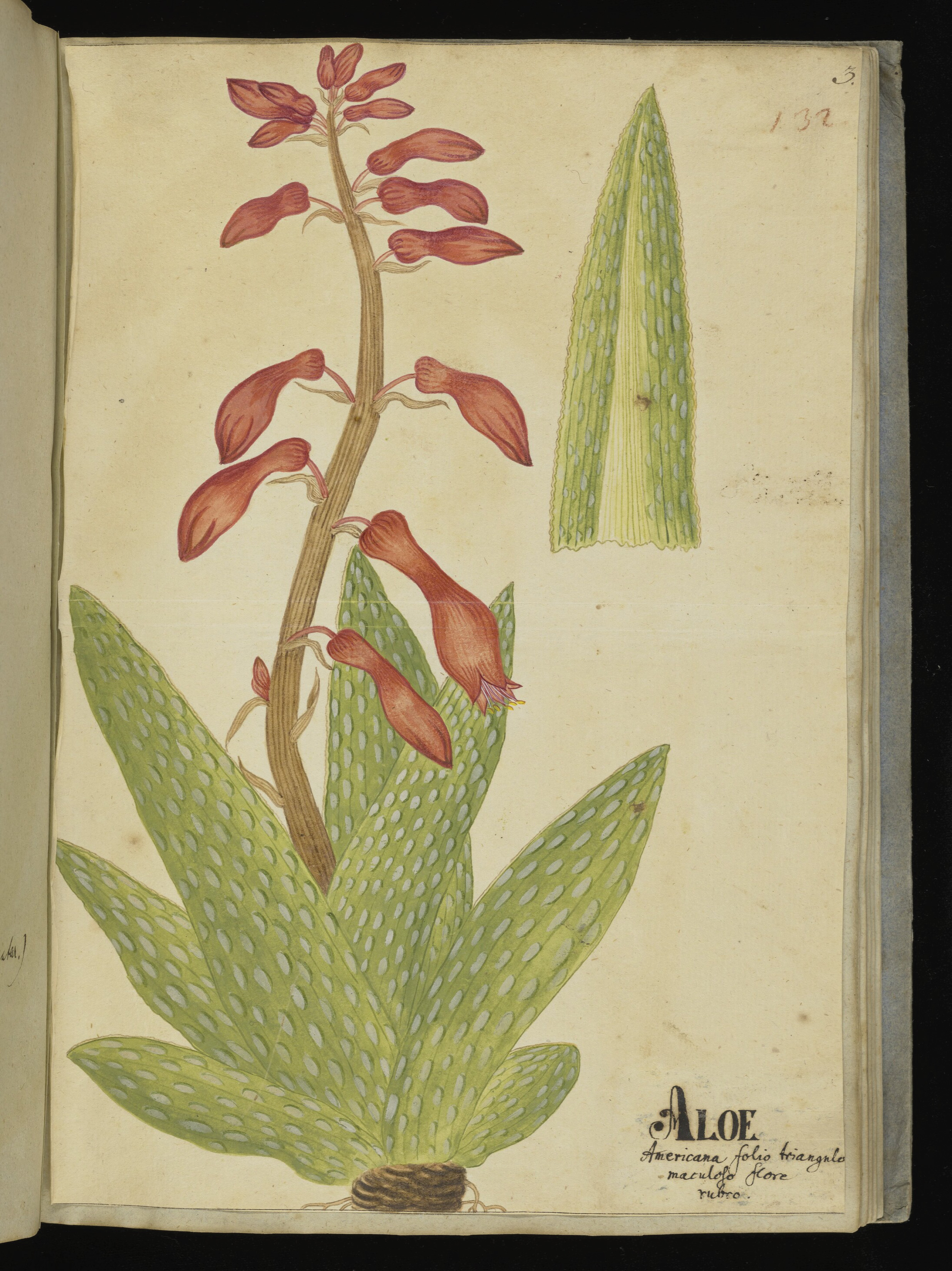
Aloe americana folio triangula maculoso flore

Aloe americana folio triangula maculoso flore


Aloe americana folio triangula maculoso flore

Aloe, also written Aloë, is a genus (Asphodelacea) containing over 560 species of flowering succulent plants. The most widely known species is Aloe vera, or “true aloe” which is known for healing wounds and treating skin problems.  It is native to tropical and southern Africa, Madagascar, Jordan, and the Arabian Peninsula, as well as various islands in the Indian Ocean.


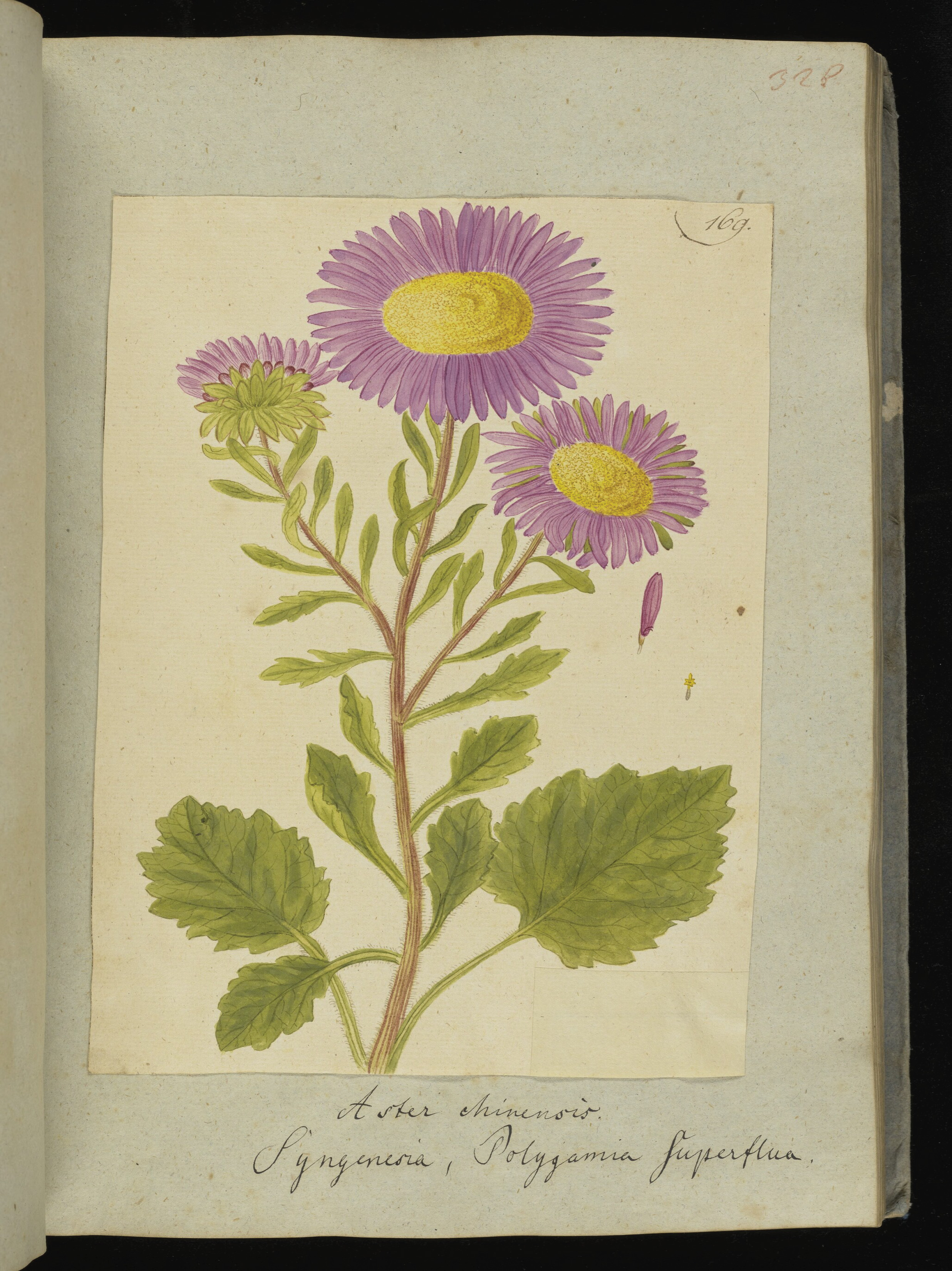
Aster minensis lyngeneora Aster minensis lyngeneora (Greek and Latin name for Star)

According to one version in Greek mythology, the aster was created by the tears of the Greek goddess, Astraea, at seeing violence on earth. She became upset and asked to be turned into a star. From the heavens, she saw what happened to earth and wept. Her tears fell to the ground and turned into star-shaped flowers. For this reason, asters were named after her. Asters provide habitat and late-season food for pollinators.


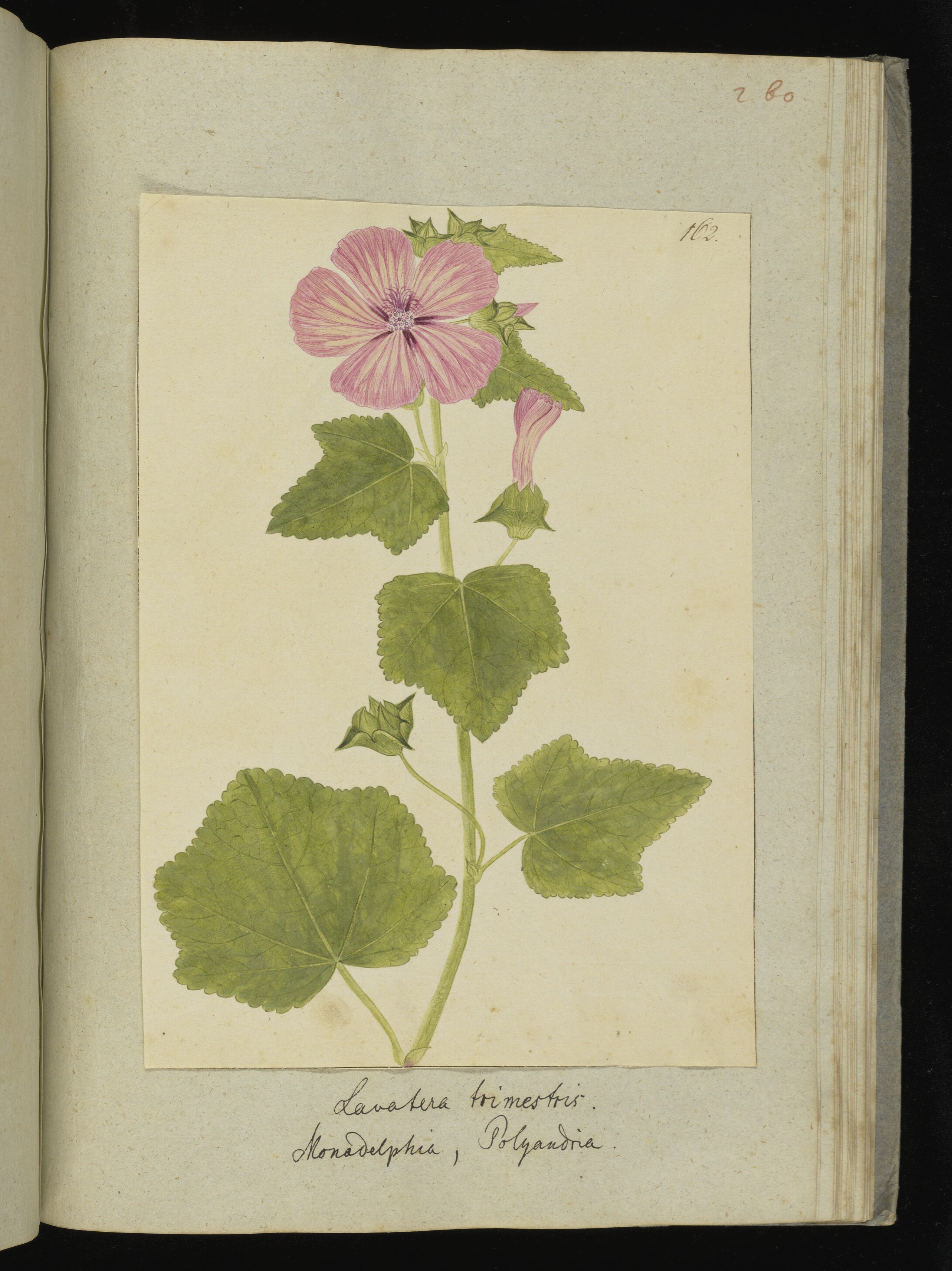
Lavatera trimestris 

Lavatera, a native flower of Spain and Syria, is in the family Malvaceae and is a cousin of hibiscus and hollyhock. It was named after 17th century Swiss botanist, J. R. Lavatera. It was referred to as Spanish Summer Mallow.


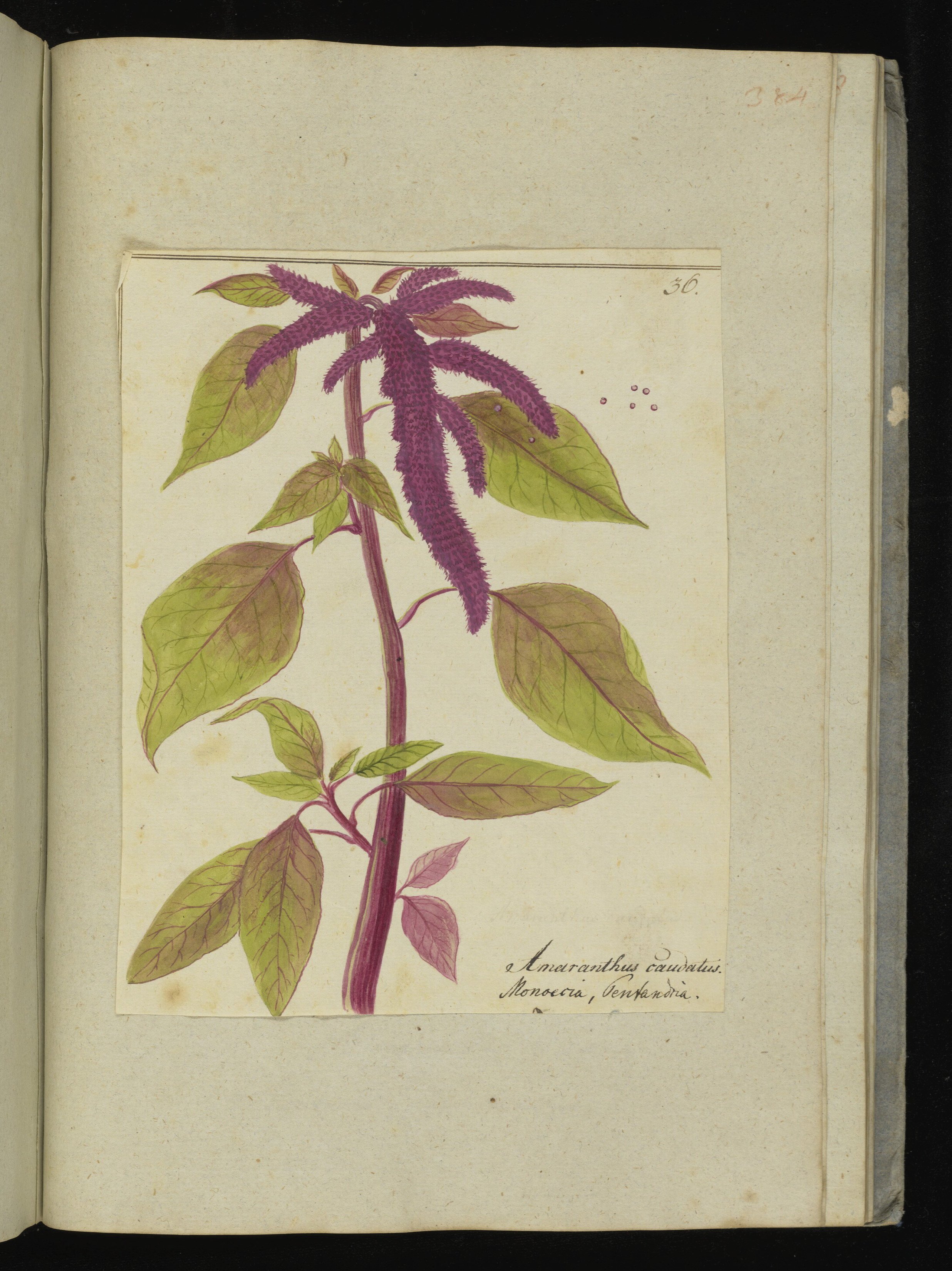
Amaranthus caudatusAmaranthus caudatus 

Also called Love-lies-bleeding, Tassell flower, and Velvet flower. Many parts of the plant, including the leaves and seeds, are edible, and are used as a source of food in India and South America. In the Victorian language of flowers, Love-lies-bleeding means hopeless love.


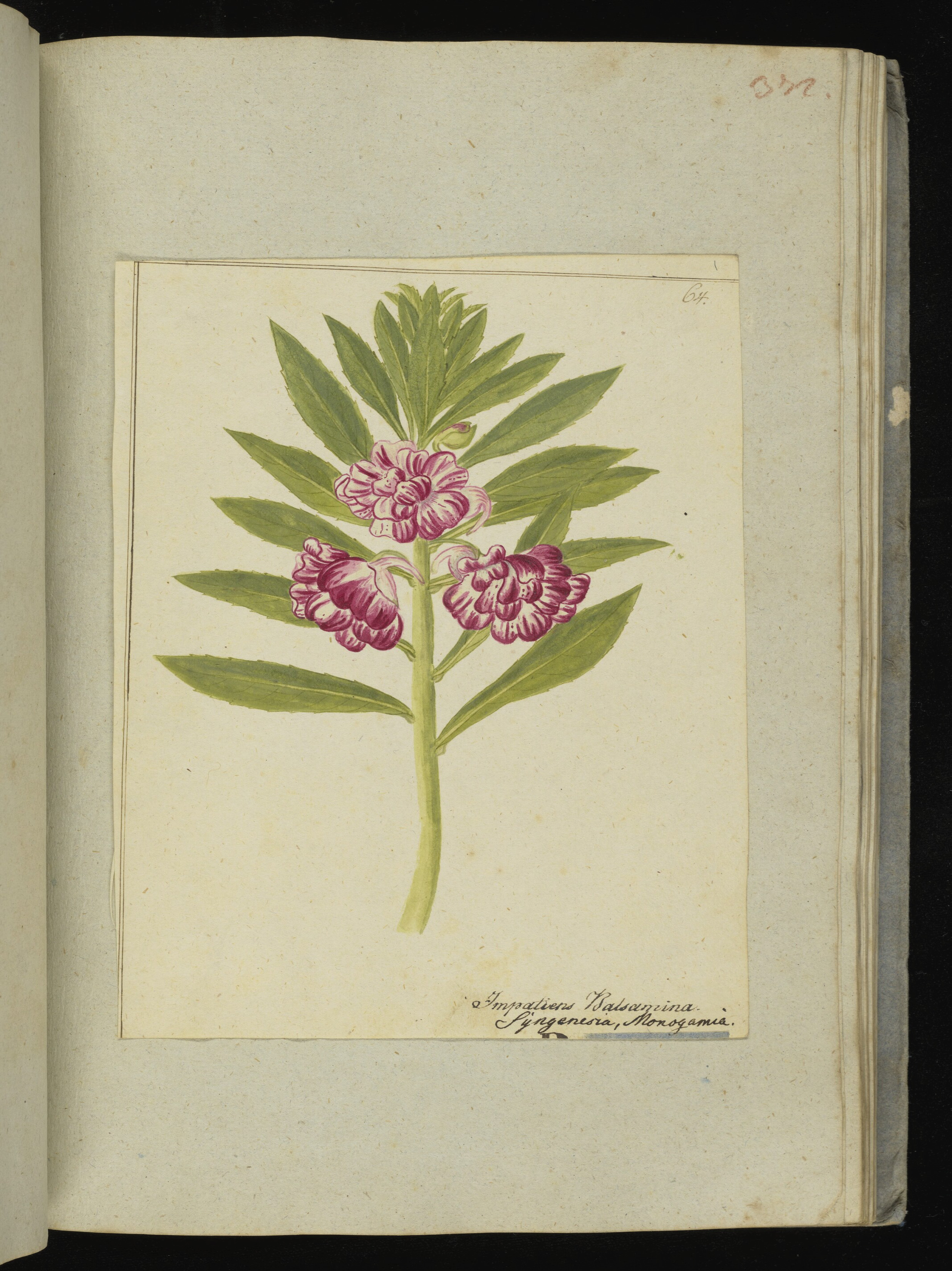
Impatiens balsamina Impatiens balsamina

Known also as Balsam, Garden balsam, Rose balsam, Touch-me-not or Spotted snapweed, Impatiens is a species of plant native to India and Myanmar. Juice from the leaves is used to treat warts, snakebites, rheumatism, fractures, and other ailments.


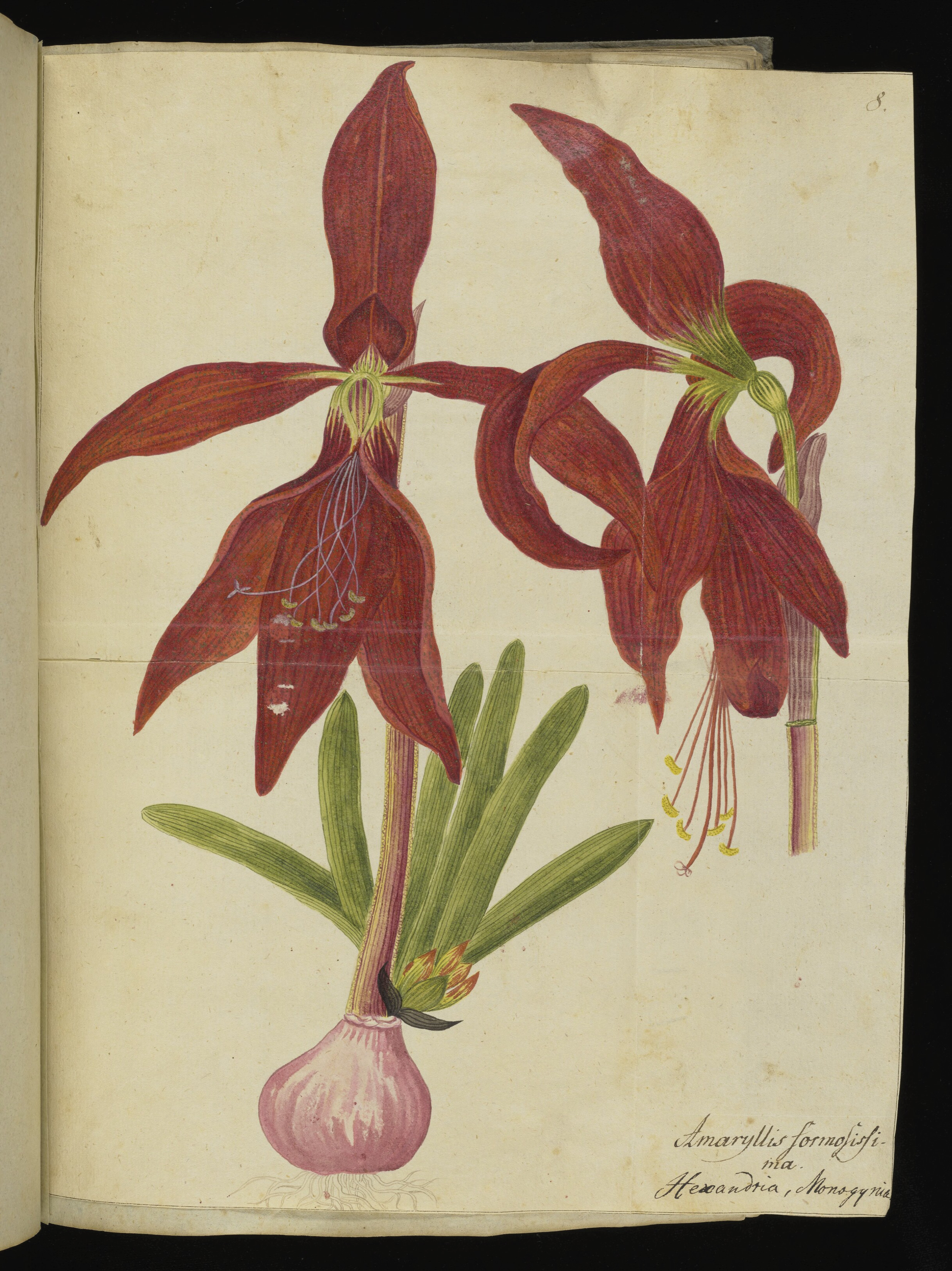
Amaryllis formosissima hexandria Amaryllis formosissima hexandria  

First known in Europe in 1593, Amaryllis are from South America according to Swedish botanist, Carl Linnaeus (1707-1778).


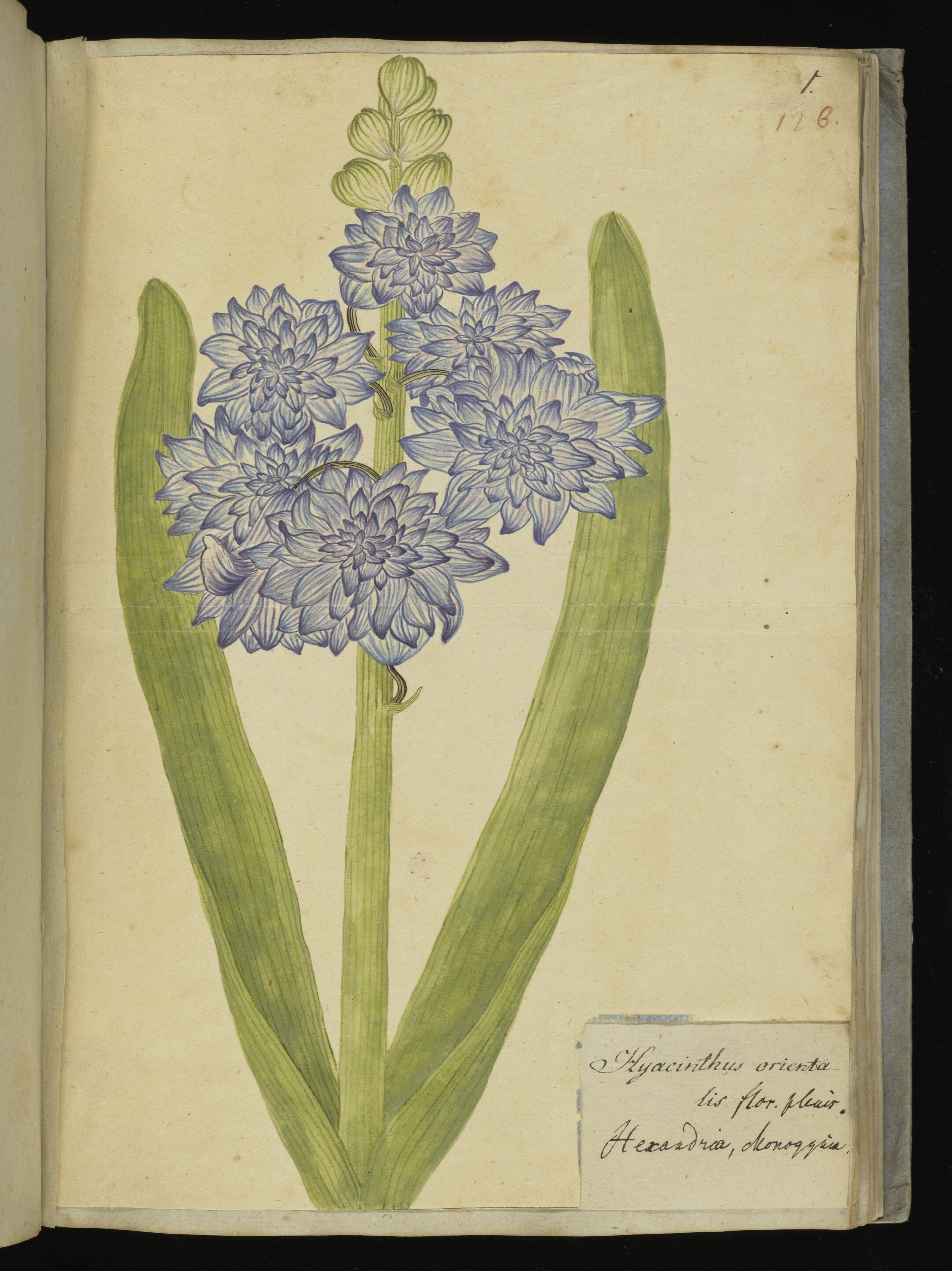
Hyacinthus orientalus Hyacinthus orientalus 

Hyacinthus are native to Turkey, Syria, Lebanon and Israel. In the 16th century they became very popular and were imported to many European countries. The first known mention of Hyacinth is in Homer’s Iliad which dates to approximately 762 BCE.


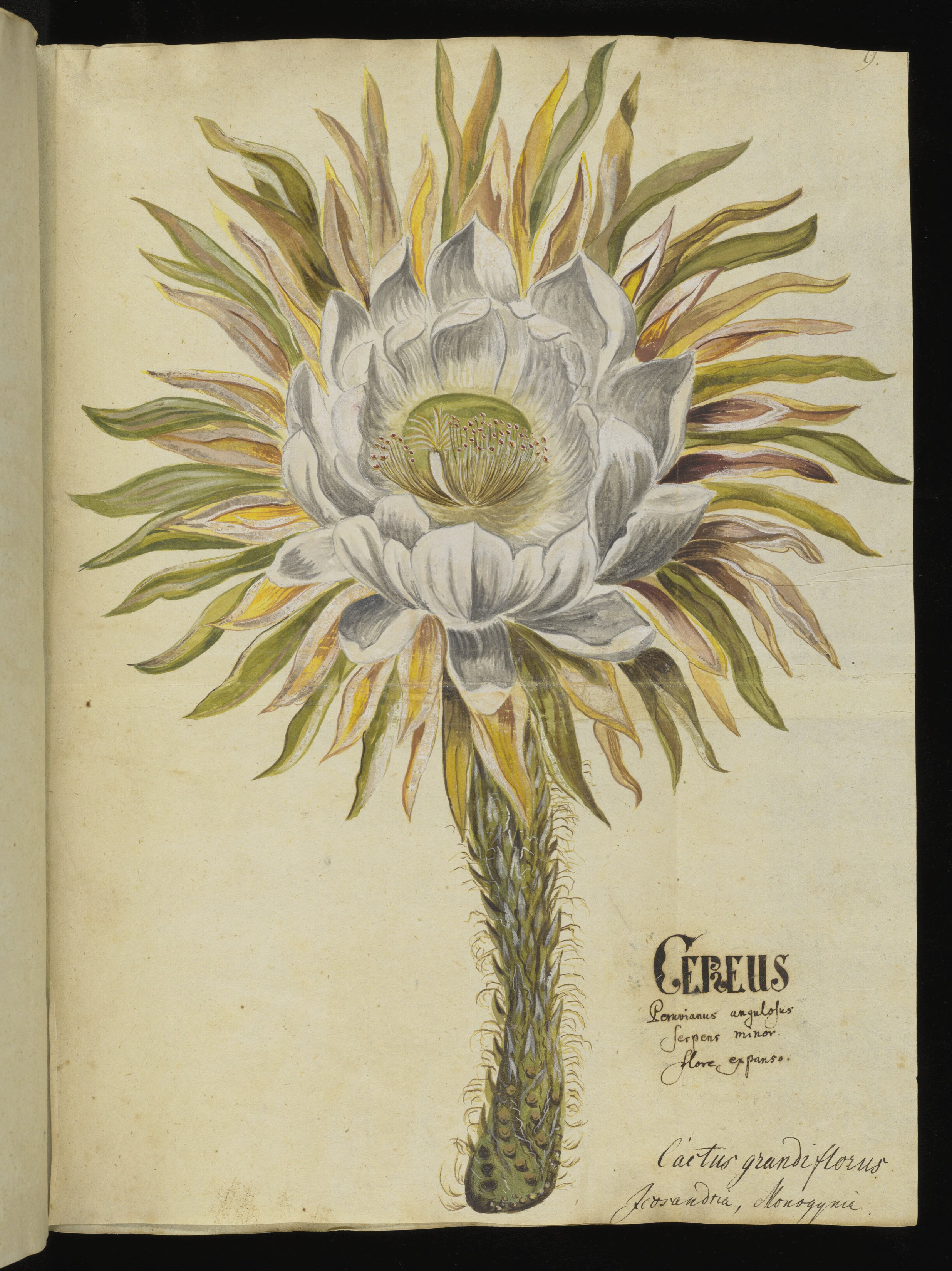
Cereus cactus grandiflorus Cereus cactus grandiflorus

Grandiflorus means “large flowered”in Latin. Carl Linnaeus described this cactus in 1753 as the largest flowered species of cacti known. It is also called Queen of the Night.


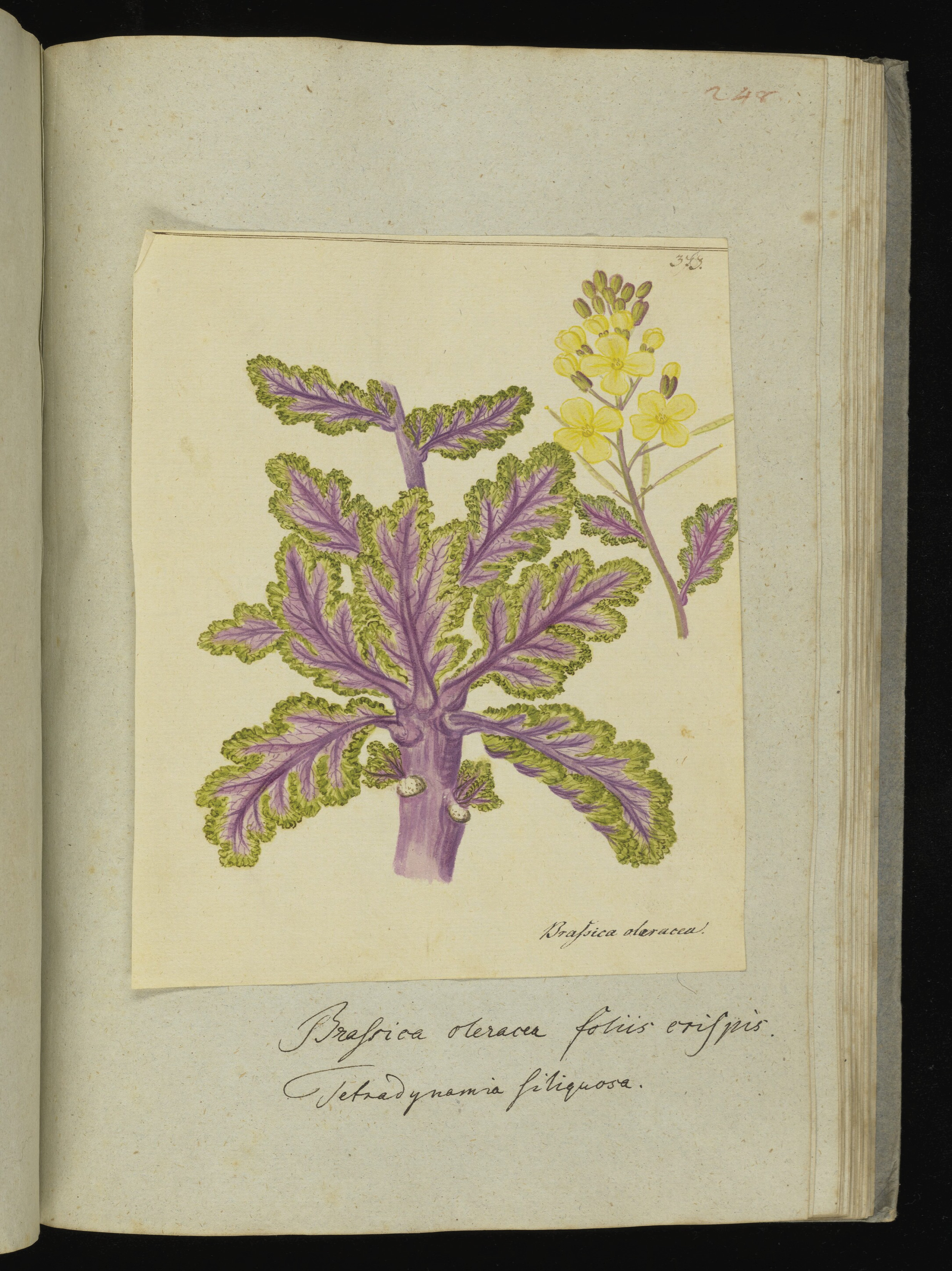
Brassica oleraceaBrassica oleracea

Brassica oleracea is a plant species that includes many common cultivars, such as cabbage, broccoli, cauliflower, kale, brussels sprouts, collard greens, Savoy cabbage, kohlrabi, and gai lan.


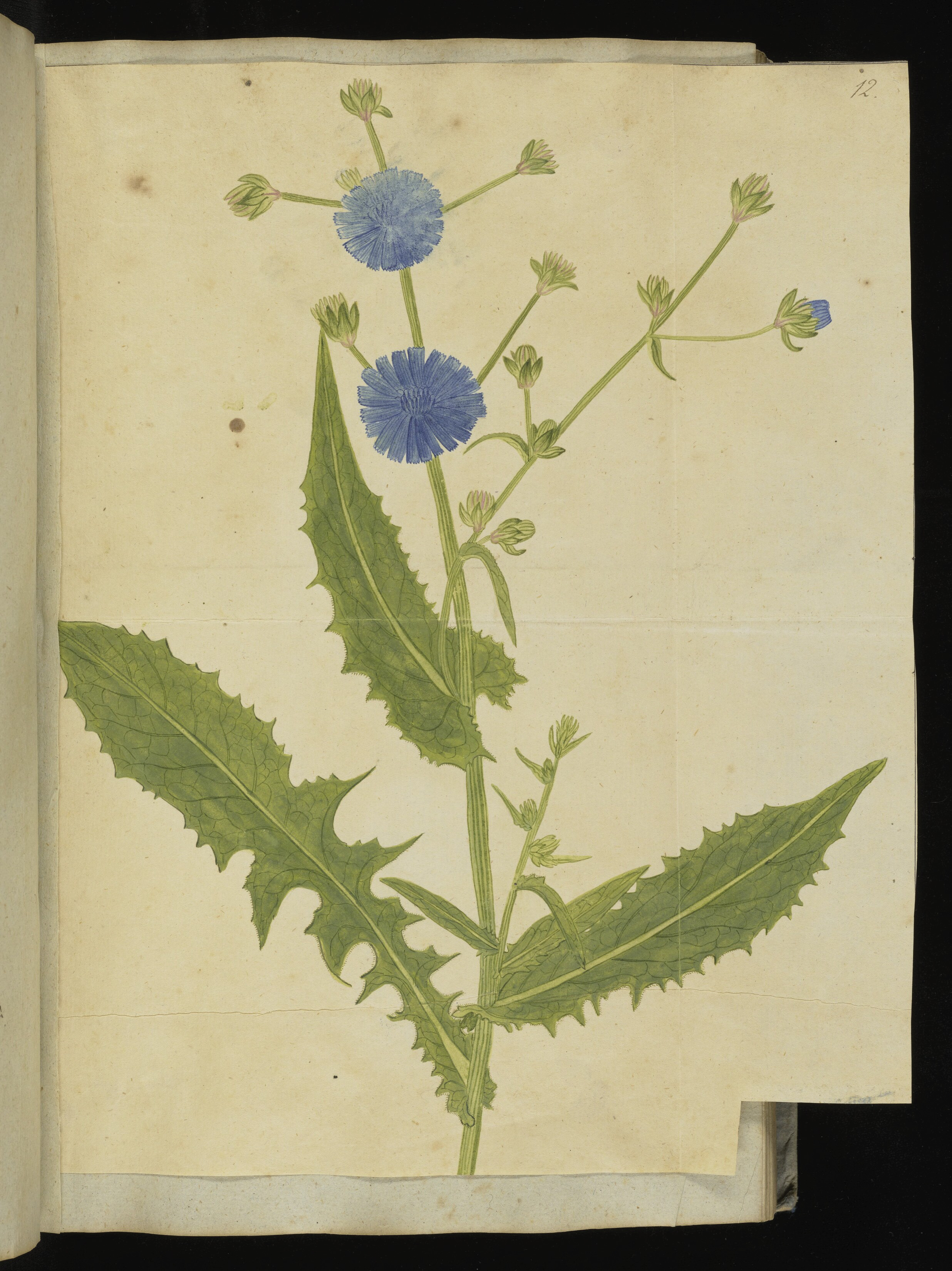
Cichorium intybusCichorium intybus

Known as chicory, it is a woody, perennial herbaceous plant of the daisy family Asteraceae, featuring bright blue flowers. It can be used as a coffee substitute and food additive.


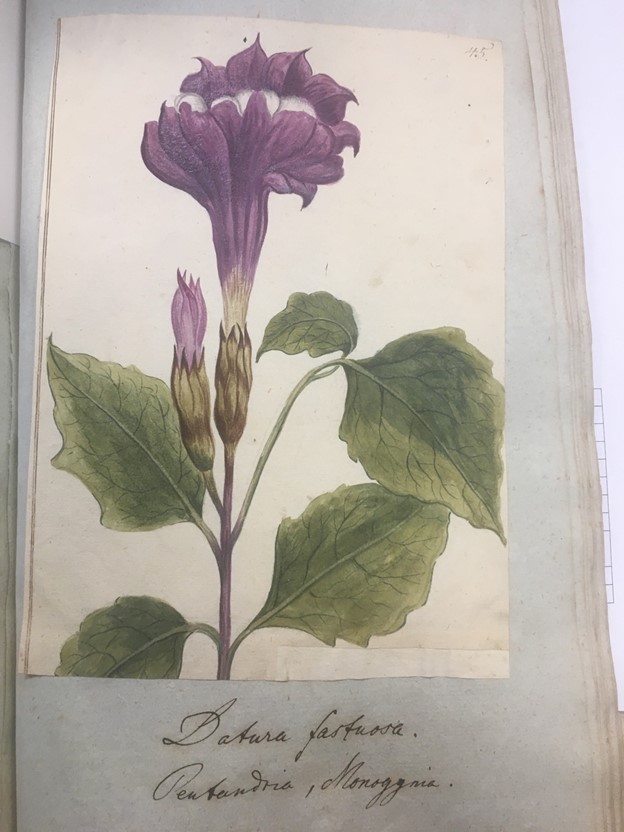
Datura fastuosa (Devil’s Trumpet)Datura fastuosa (Devil’s Trumpet)

Datura is a poisonous, vespertine-flowering plant belonging to the family Solanacea.  Also called thornapples, jimsonweeds, devil trumpets, moonflower, devil’s weed, and hell’s bells, they have psychoactive properties, and can cause arrhythmias, fever, hallucinations, psychoses, and even death if taken internally. It has been associated with witchcraft in the western world.


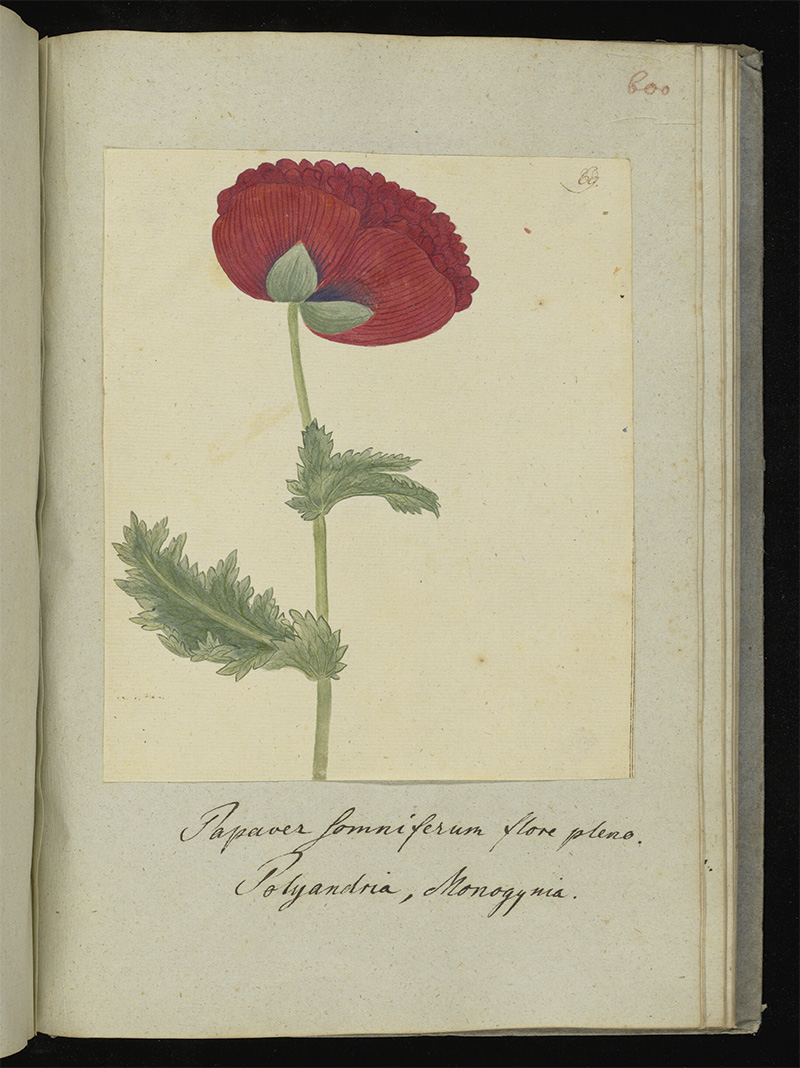
Papaver somniferumPapaver somniferum

Papaver somniferum, commonly known as the opium poppy or breadseed poppy. It probably originated in the eastern Mediterranean region but is now naturalized across much of Europe and Asia.


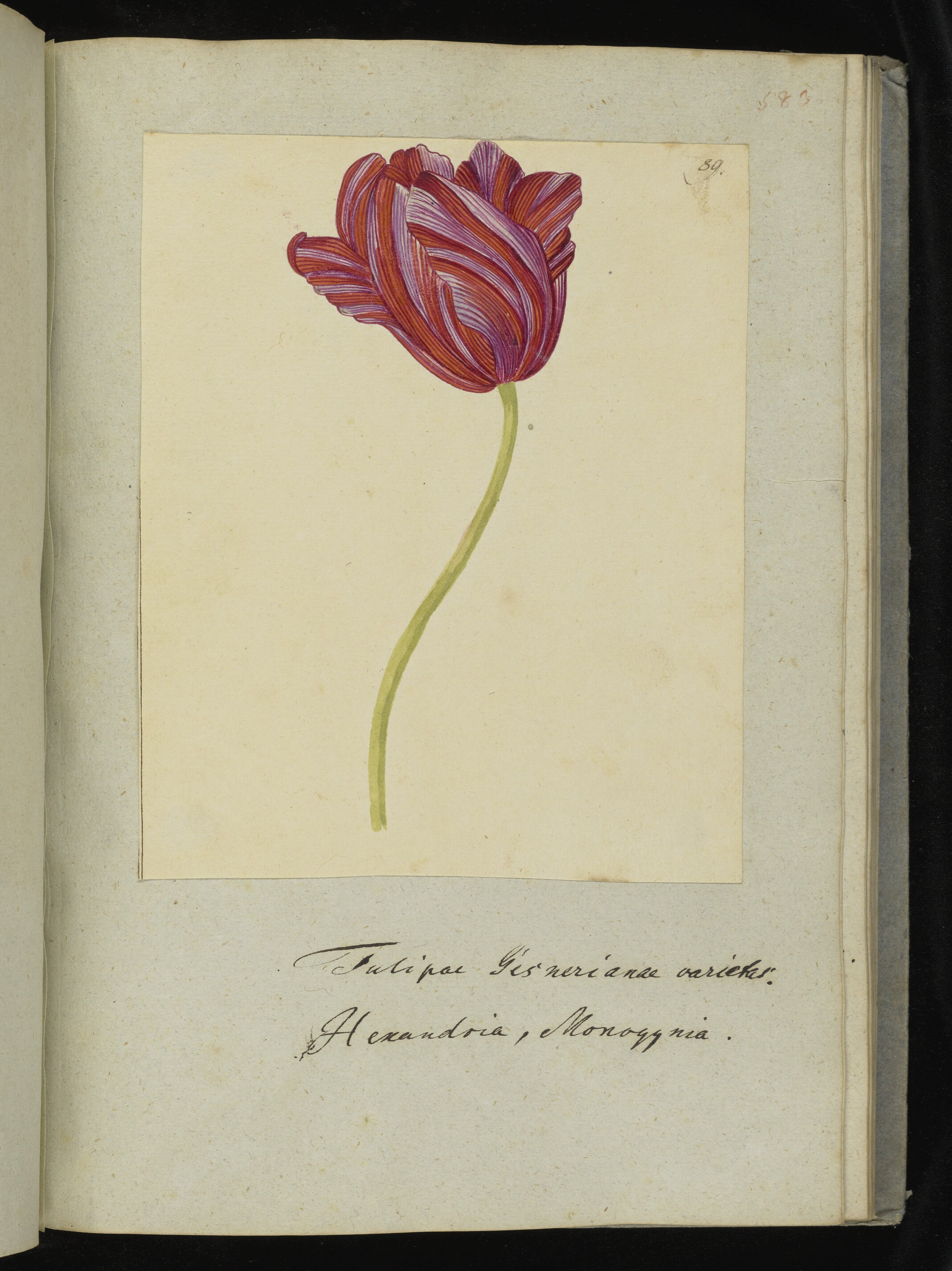
Tulipae gesnerianae

Tulipae gesnerianae

Tulipa gesneriana, also known as the Didier’s tulip or Garden tulip, is a species of plant in the lily family. It is believed to have originated in Turkey although tulips are the national flower of Holland.


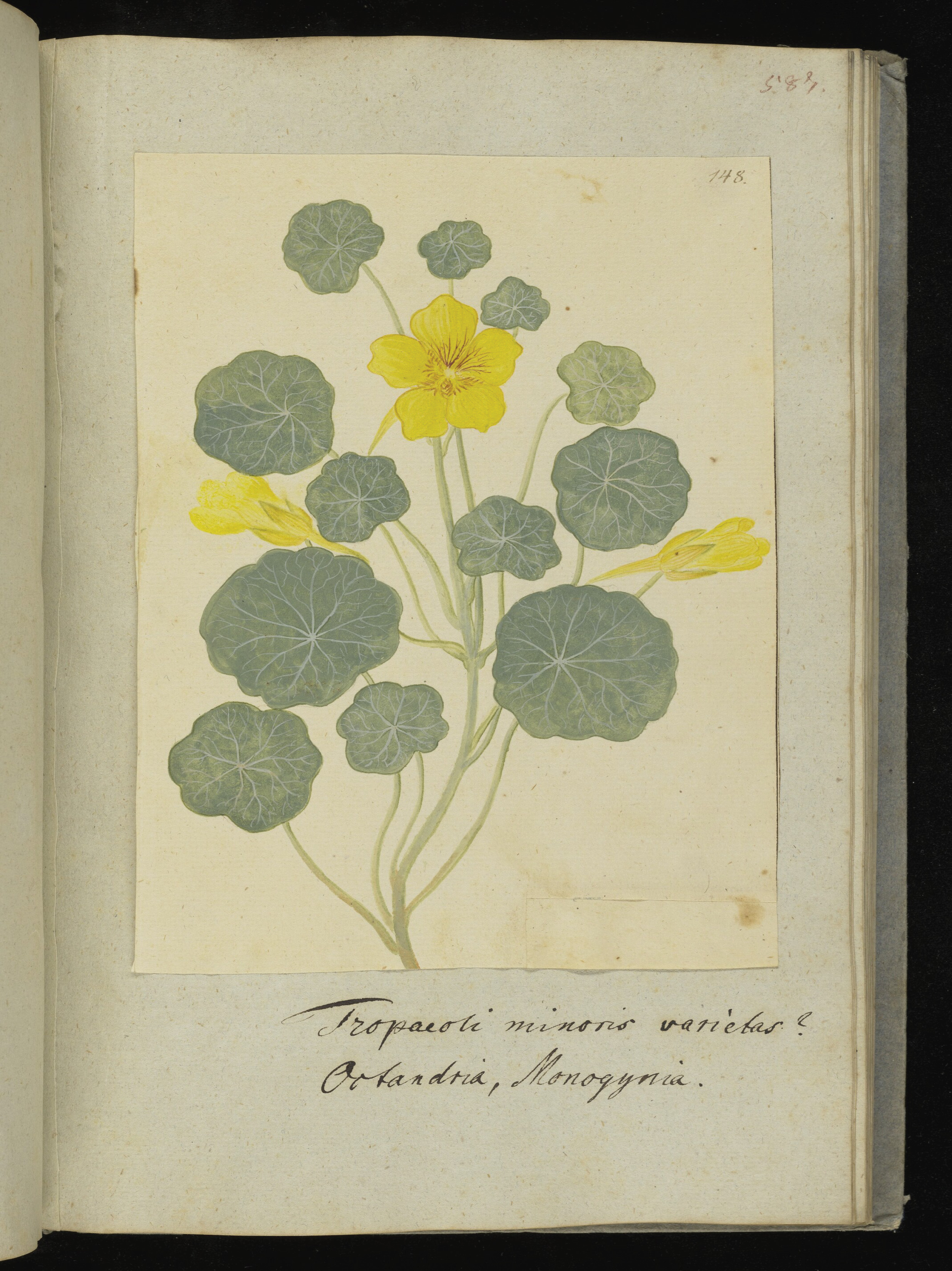
Tropaeoli minerisTropaeoli mineris

A species of flowering plant in the family Tropaeolacea, originating in the Andes from Bolivia north to Colombia. The current genus name Tropaeolum, coined by Carl Linnaeus, meaning “little trophy”(in Latin), and borrowed from Ancient Greek “trophy.”


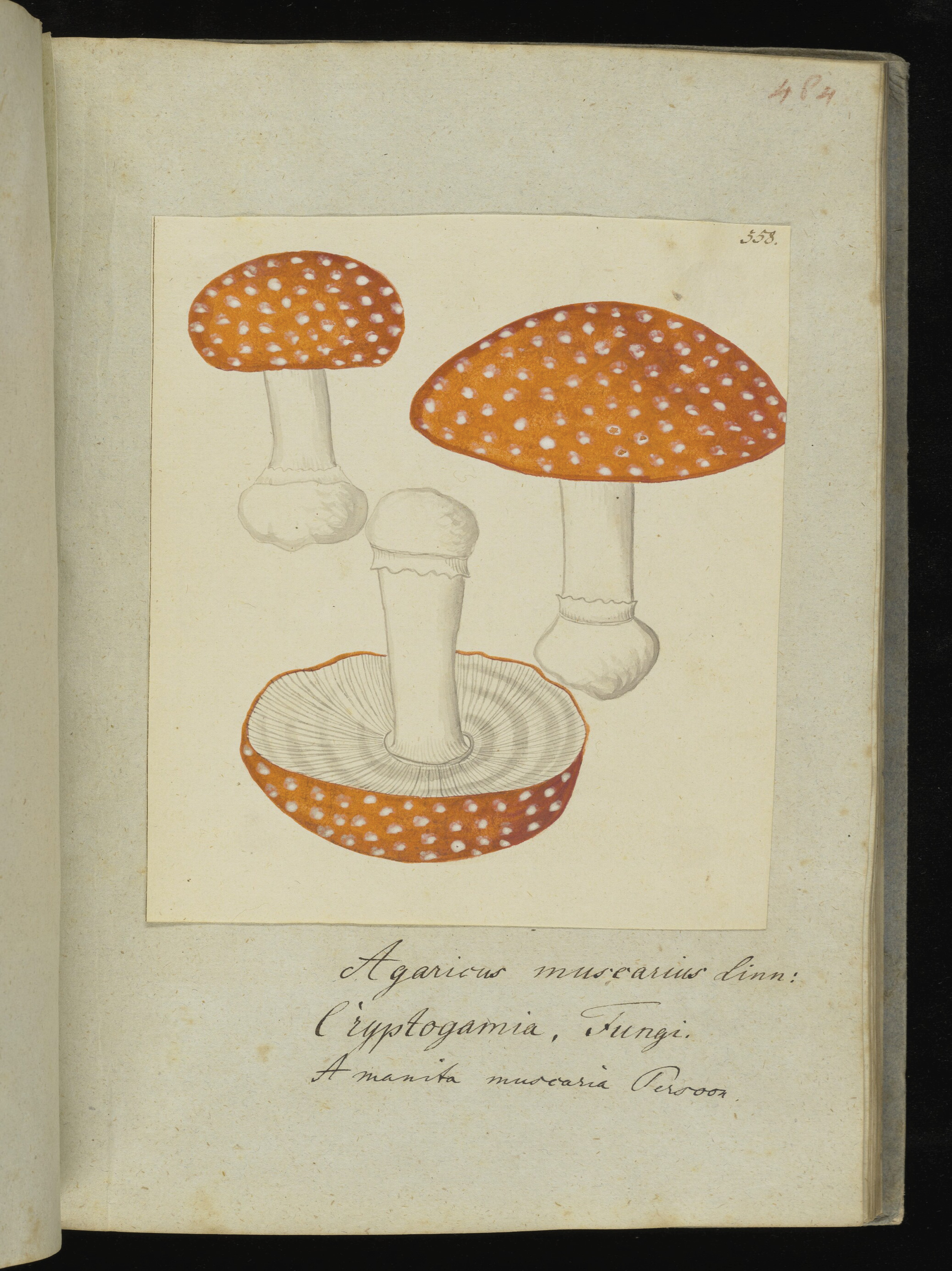
Agaricus mucariusAgaricus mucarius

Bright red fly agaric mushroom, also known as Amanita muscaria, from northern Europe and Asia.  It can contain the psychoactive chemical compound muscarine. “No mushroom has gathered unto it more folklore and mythology than this white-spotted fairytale fungus. It may well be that Lewis Carrol had experienced the hallucinatory effects of Amanita muscaria. In Alice’s Adventures in Wonderland, Alice eats part of one side of a mushroom and grows shorter; a piece from the other side would make her taller.” Agaricus is a remedy for twitches, jerks, tics, cramps, and convulsions.


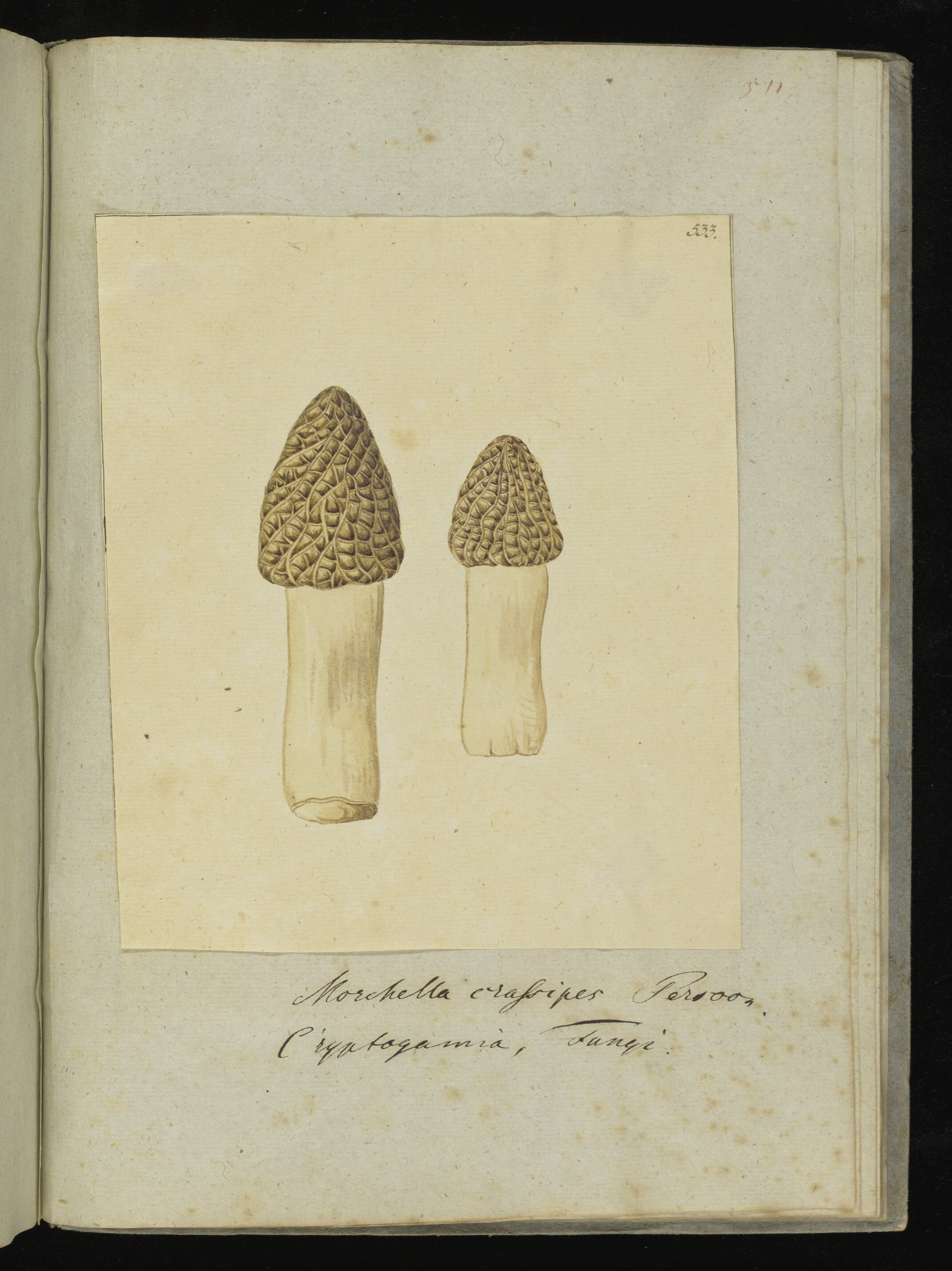
Morchella crassipes persoon (Thick-footed morel)Morchella crassipes persoon (Thick-footed morel)

A morel with a conic fertile portion having deep and irregular pits. The generic name Morchella is said to come from “morchel,” an old German word meaning “mushroom.” Morels are edible mushrooms appreciated worldwide for their savory flavor. They have also been used in medicines for centuries.


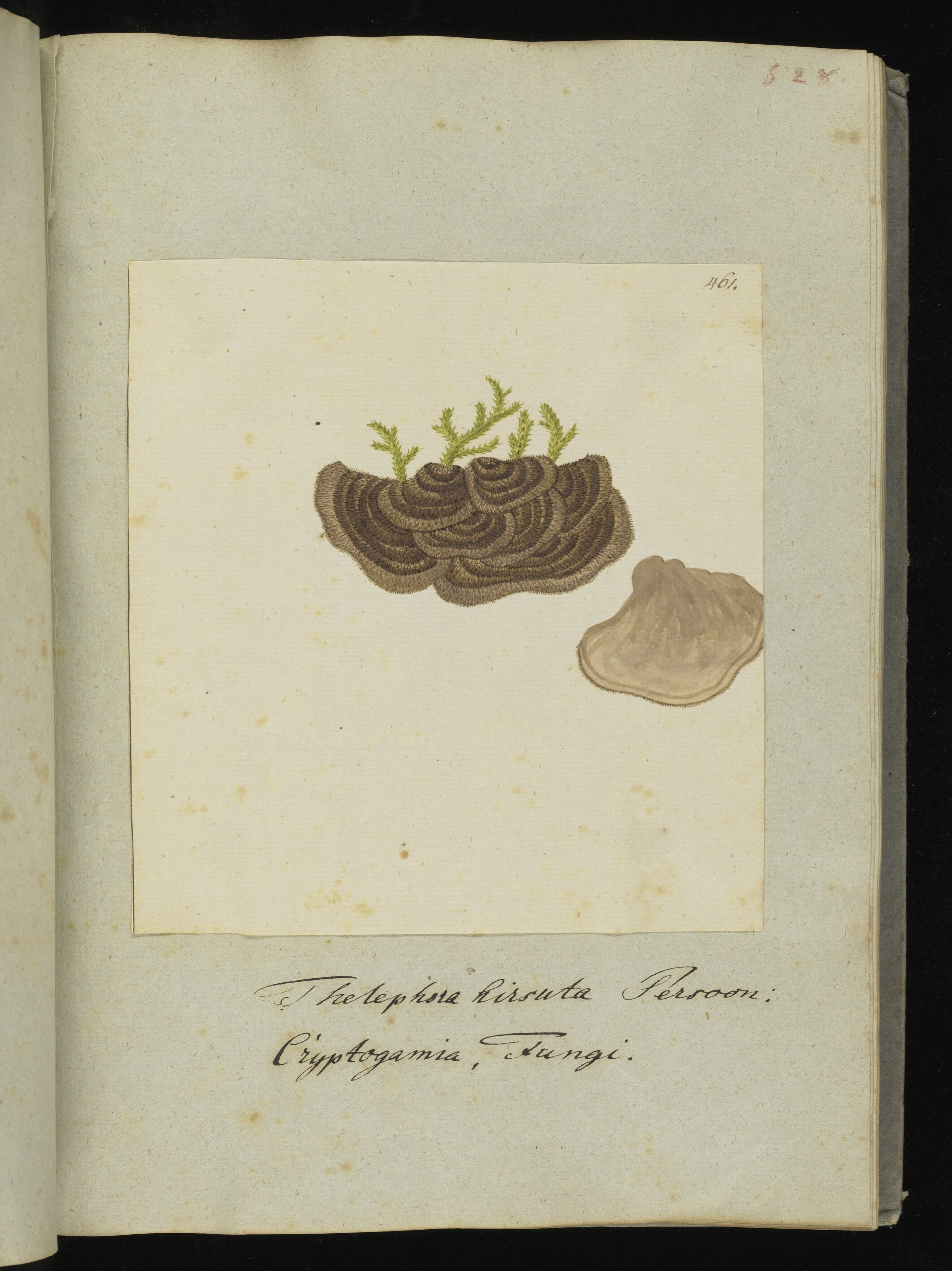
Thelephora hirsuta persoonThelephora hirsuta persoon

Fruit bodies of this mushroom are leathery, usually brownish at maturity, and range in shape from coral-like tufts to having distinct caps. Almost all species in the genus are thought to be inedible.


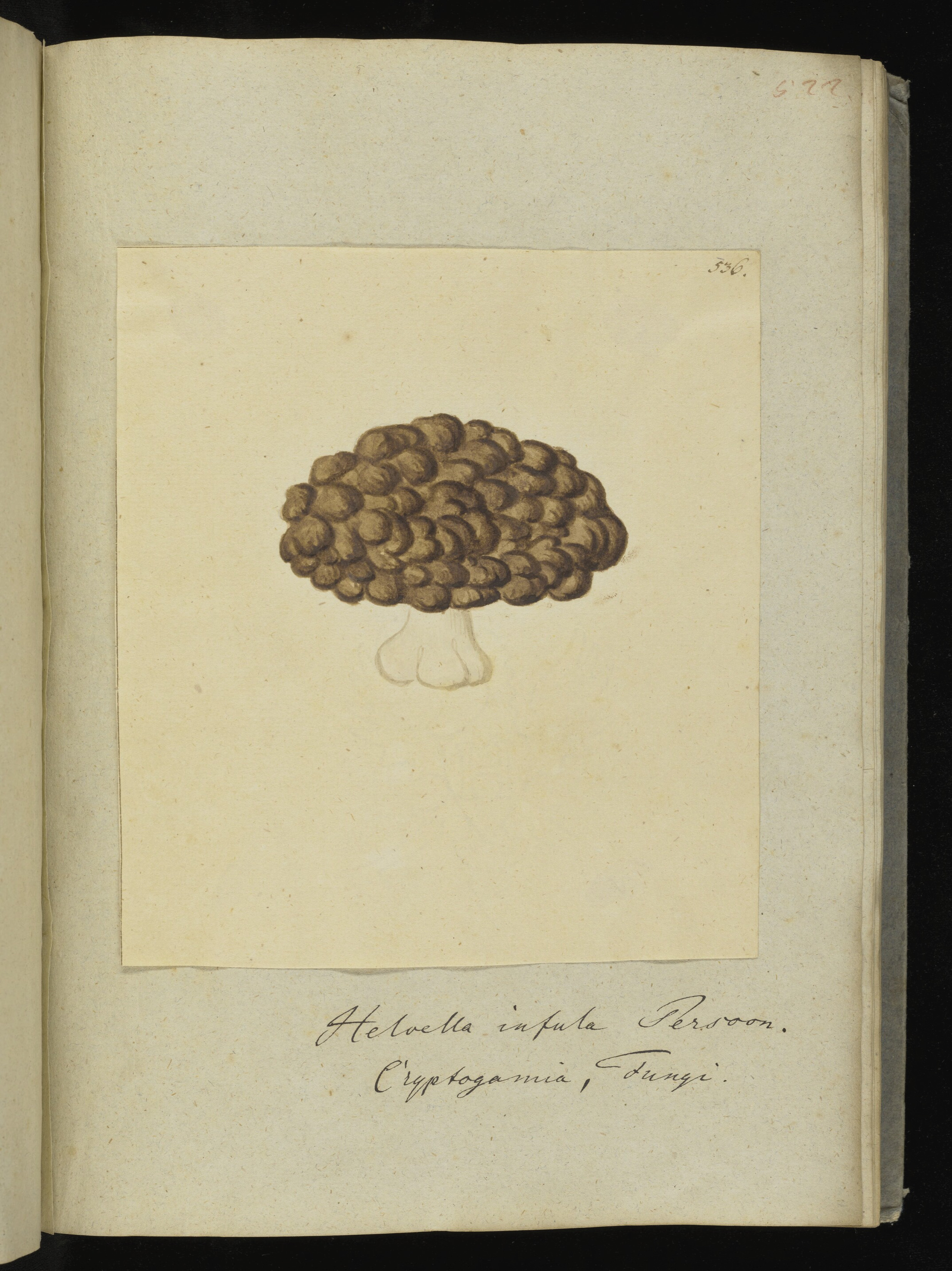
Helvella infula persoonHelvella infula persoon

Helvella is an ascomycete fungus from the genus Gyromitra which is widely distributed across Europe and North America. It normally fruits in sandy soils under coniferous trees in spring and early summer. The mushroom is an irregular brain-shaped cap that is dark brown in color. It can be poisonous, if eaten raw or not cooked properly.


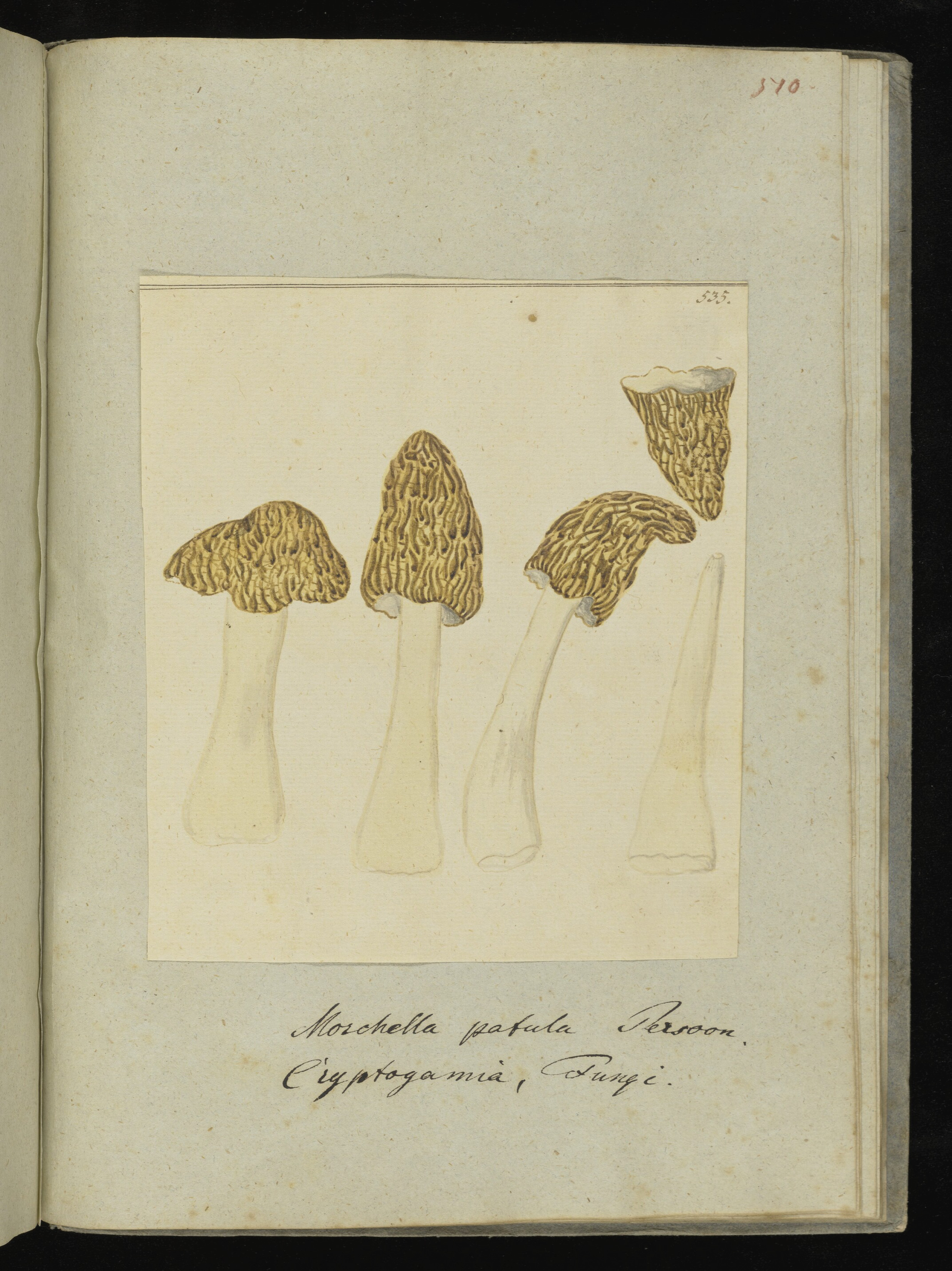
Morchella patula persoonMorchella patula persoon

Morchella is a type of morel. Morels are a feature of many cuisines. Their unique flavor is prized by chefs worldwide. They have many species names which have been disputed for over a century.


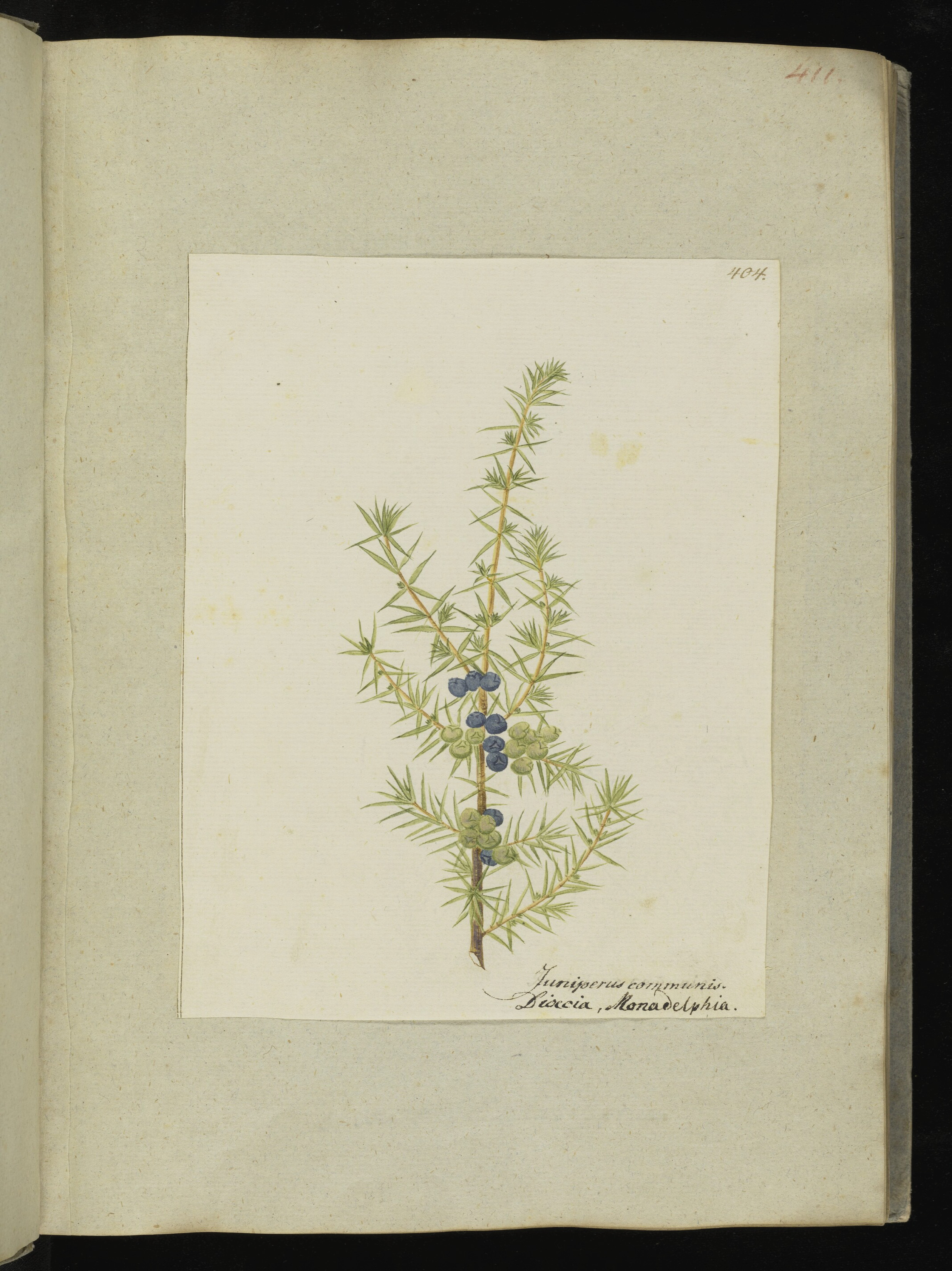
Juniperus communis (tree)Juniperus communis (tree)

The common juniper is a species of small tree or shrub in the cypress (Cupressaceae) family. This evergreen conifer has the largest geographical range of any woody plant. The cones are used to flavor certain beers and gin. The word “gin” derives from an Old French word meaning “juniper.” The berries are also used in the ales of Norway, Sweden, Finland, Estonia, and Latvia. They have been used as medicine by many cultures including the Navajo people.


Rare Book Cataloging Internship – Summer 2022

The Albert and Shirley Small Special Collections is thrilled to announce an internship for the Summer of 2022.

Under the guidance of the Senior Special Collections Cataloging Librarian, the Rare Books Cataloging Intern will catalog a recent major acquisition of more than 400 Chinese, Japanese, and Korean rare books that comprise a focus on East Asian book history. This position plays an integral part in the discovery and access to these materials.

The intern will gain experience and knowledge in:

  • Cataloging standards (specifically DCRM(b), RDA, and AACR2) and the application of these for rare materials.
  • Knowledge of the care and handling of rare materials

This position reports to the Senior Special Collections Cataloging Librarian and will work closely with the Curator responsible for acquiring this collection. The intern will join in on department and unit meetings and participate in discussions therein. During one week of the internship, Rare Book School is graciously providing free tuition for the intern to attend the course, “The History of the Book in China” taught by Soren Edgren.

This position requires an on-campus presence while cataloging is being completed. The internship begins May 23rd and will last until August 12th (end date is negotiable). A virtual internship is possible after cataloging is complete.

Our ideal candidate is currently enrolled in a Masters’ or PhD program with a focus in library science or Chinese history. We are looking for someone with an interest in special collections cataloging and who plans on pursuing this as a career.

The full details are below:

  • Title: Rare Books Cataloging Intern, Summer 2022
  • Duration: 12 weeks (40 hours/week) with possibility for extension
  • Salary: $25/Hour
  • Location: Charlottesville, Virginia
  • Application deadline: March 1st, 2022
  • Schedule: Monday through Friday, 8 am -5 pm

Requirements:

  • Bibliographic knowledge of Chinese, Japanese and Korean books
  • Familiarity with MARC, DCRMB, LC Classification and subject headings, OCLC Connexion, and  SirsiDynix Workflows
  • Cataloging background with focus in special collections cataloging preferred
  • Reading knowledge of Chinese language preferred.
  • Familiarity with Chinese history and culture, especially history and physical description of books

To apply:

Please submit your application by March 15th.

  1. Go to https://uva.wd1.myworkdayjobs.com/UVAJobs
  2. Scroll down to “Job Type” on the left hand column, select “Temporary”
  3. Select Temporary Administrative Pool (Evergreen, R0000013), click “Apply”
    1. Please note that you will not see a specific temporary position for this position title but specify
  4. You will be prompted to Sign In
  5. New Users: Select Create Account
    1. Enter your email address and create a password. IMPORTANT: Please use a personal email address, you WILL NOT be able to change your email once you create an account even if your email address changes. We recommend not using a school or work email account.
    2. Select create account.

Completing Temp Application:

IMPORTANT: You will only have one chance to submit an application to a position. Please make sure everything is filled out thoroughly and to the best of your knowledge. You will not be able to go back and edit your application for a posting you have applied to.

  1. For this position, you will need to submit one document that contains a brief cover letter (no more than one page) and a resume/CV. Please include the name of this position on the first paragraph of this document.
    1. The application will pull key information from the uploaded document to be automatically filled in. However, make sure to double check that the information is entered correctly and thoroughly as you will not be able to go back and edit the application for this specific posting. It is not required to submit a resume/CV.
    2. Click ‘Next’
  2. My Information
    1. Note: The red asterisks are required information.
    2. Work Experience/Education/Resume
      1. You will not have a chance to update this information once you apply to this position. Make sure you have filled out everything thoroughly and to the best of your knowledge.
      2. Enter your work experience from the past few years. Make sure to describe your experience and skillsets with the position. Select add as needed for more positions.
    3. Education
      1. Resume/CV: option to upload a file
      2. Select Next
  3. Application Questions
    1. Additional Application Questions: This information is required, please fill out all the questions thoroughly and to the best of your knowledge.  When giving references, do not use friends or family members.
  4. Voluntary Disclosures
  5. Self-Identify
  6. Review
    1. Note: This is your last chance before submitting to make any changes to the application for this posting.

Next steps:

  1. A HR representative will contact you to confirm which position you applied for.
  2. If you are selected for the first round of interviews, you will be contacted by the Senior Rare Books Cataloging Librarian.

“Flaming Angel”: Introducing the Papers of Petra Vogt

This week we are pleased to present a guest post by English PhD student Annyston Pennington, who works as a curatorial assistant here in Special Collections. Annyston assists with many incoming collections, and we asked them to share their perspective on this fantastic new acquisition after spending several hours unpacking and inventorying its delicate contents. Thanks, Annyston!

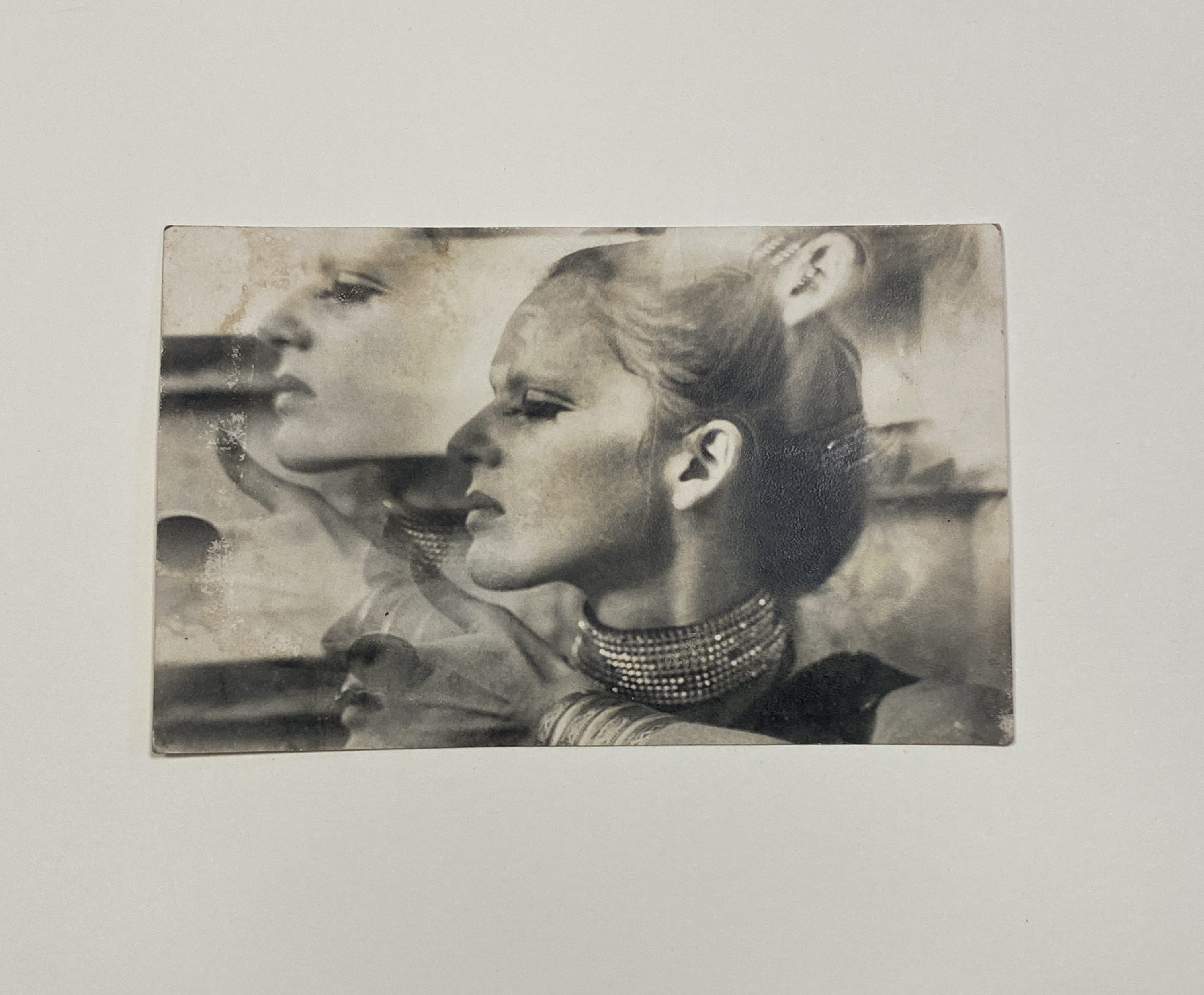
Black and white double-exposed photograph with double exposure of a blonde woman's face in profile. She is wearing a jewelled choker and bracelets, and holding up her left thumb.

Mylar photograph of Petra Vogt by Ira Cohen, ca. 1970-1979. As a performance artist, Vogt contributed to Cohen’s body of work not as a passive subject but as a multimedia collaborator. MSS 16480, Box 6.2-3

Cracking open a binder of photographs, you meet a cool gaze, her sleek center-part and graphic eye-liner placing the portrait somewhere between 1970s fashion editorials and the beauty influencers of your Instagram feed. Her image emerges amid snapshots of skulls and children on the streets of Kathmandu, as if the world were a stage set for the dark, the fanciful, and the extreme. She is the proto-goth girl of your dreams. Within this recently acquired collection, Petra Vogt peers out, unflinching, from a time at once alien to and rhymed with our own.

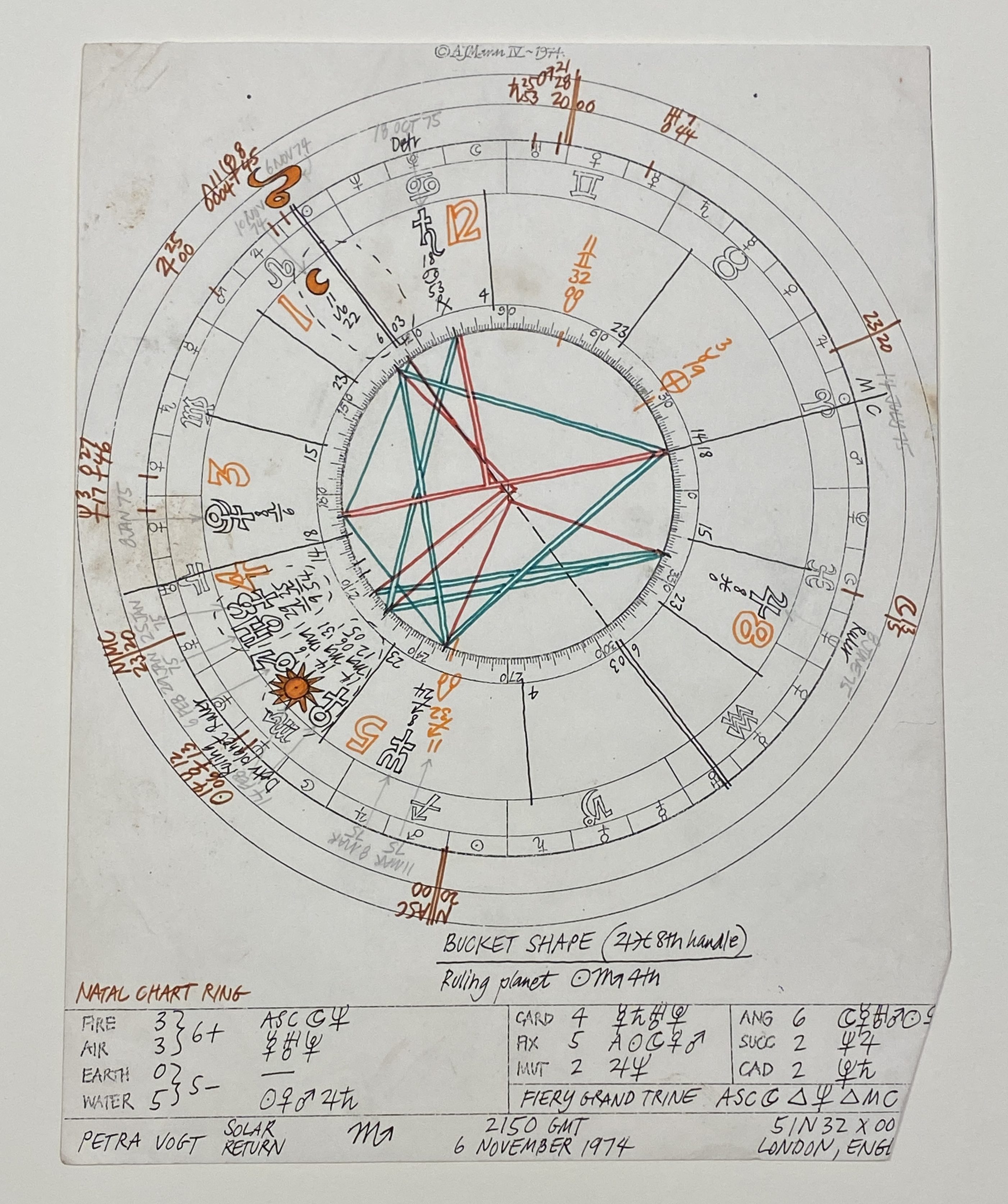
A round graphic in black pen and ink with red, green, yellow, and brown additions and content below, on white paper.

Astrological chart for Petra Vogt by Alden Taylor Mann, 1974. A detailed manuscript explanation of Vogt’s alignments accompanies the chart. MSS 16480, Box 4.6

The personal archive of Petra Vogt, which covers the years 1966-1978 and was acquired during the summer of 2020, is now processed and prepared for researchers to explore. The UVA Library boasts impressive holdings in the poetry and poetics that arose in the post-war era, particularly in the voluminous Marvin Tatum Collection of Contemporary Literature. Vogt’s papers, however, shed new light on the Beat Generation from the perspective of a multidisciplinary, female interlocutor.

Vogt came of age in Berlin, Germany, developing an artistic and spiritual practice in a world effulgent with the violence, transnational movement, and creative experimentation that mark our contemporary understanding of the twentieth century. In 1962, Vogt joined The Living Theatre, an experimental theatre company, based in New York City, that performed for both American and international audiences. While touring in the United States with The Living Theatre for their performance of “Paradise Now,” Vogt met poet, photographer, and publisher Ira Cohen. One might say, the rest is history, but the papers of Petra Vogt communicate less a traceable narrative than they provide a tantalizing glimpse into the life and mind of an unsung contributor to late-Modernist art.

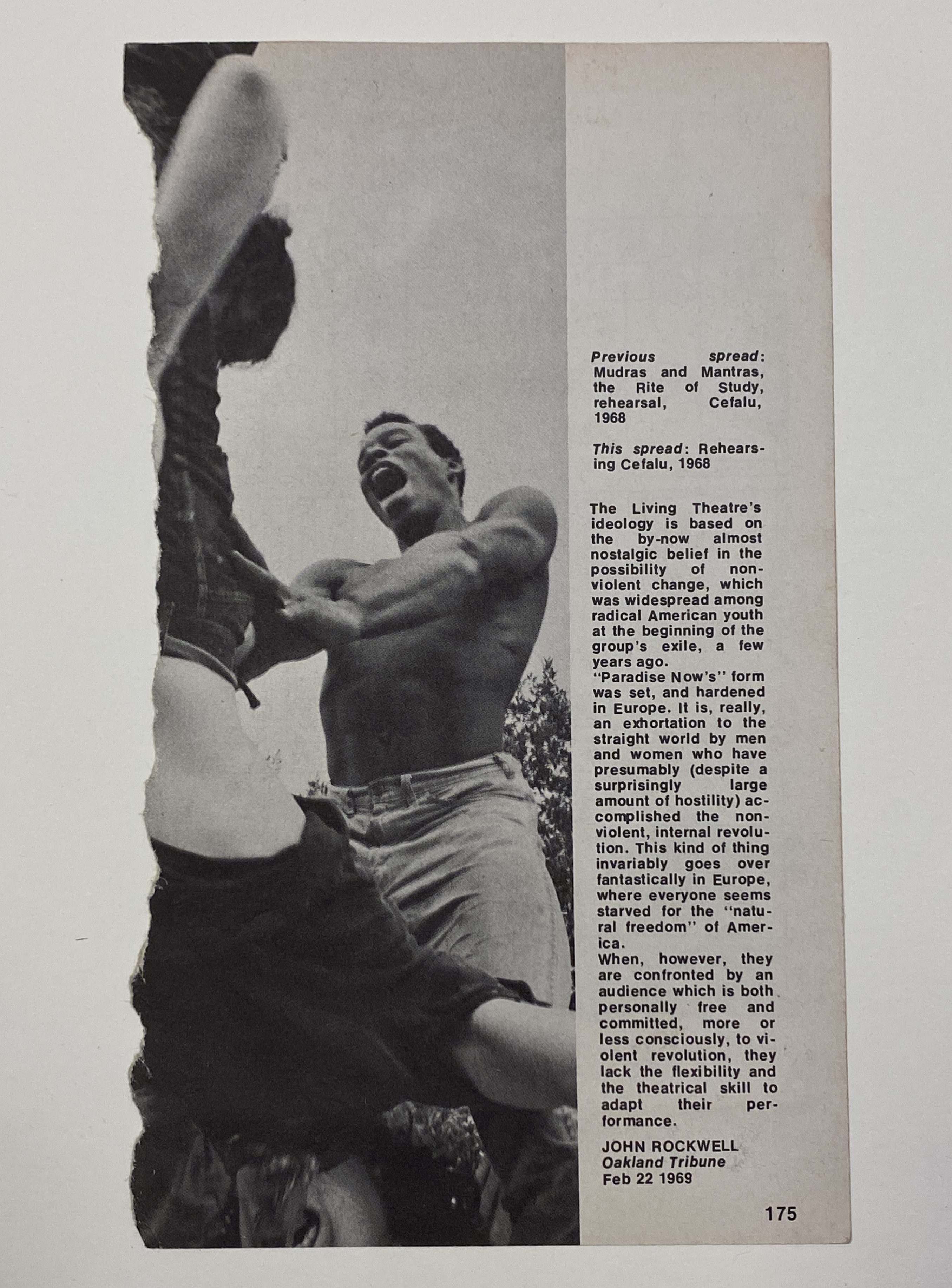
A page of a magazine, with the left margin torn, and a black and white photograph of a Black man with his mouth open wide, holding a white woman who is upside down with her mouth wide open, accompanied by a column of text on the right.

Magazine clipping featuring review of The Living Theatre’s production of “Paradise Now,” 1969. Petra Vogt performed in the 1968 productions of this play, which Ira Cohen attended. MSS 16480, Box 5.1

In the early 1970s, Vogt immigrated with Cohen to Nepal, where the pair linked up with other creatives and wanderers, such as Nepalese hippies Jimmy Thapa (born Saraj Prakash Thapa), Trilochan Shrestha, and other notable visitors to “Freak Street,” or Jhocchen Tole, a street in Kathmandu dubbed so for its hippie population. While in Nepal, Vogt expanded her artistic horizons from performance art into literature, visual art, and print material. While often footnoted as a “muse” for Cohen, Petra Vogt was, undoubtedly, a maker. 

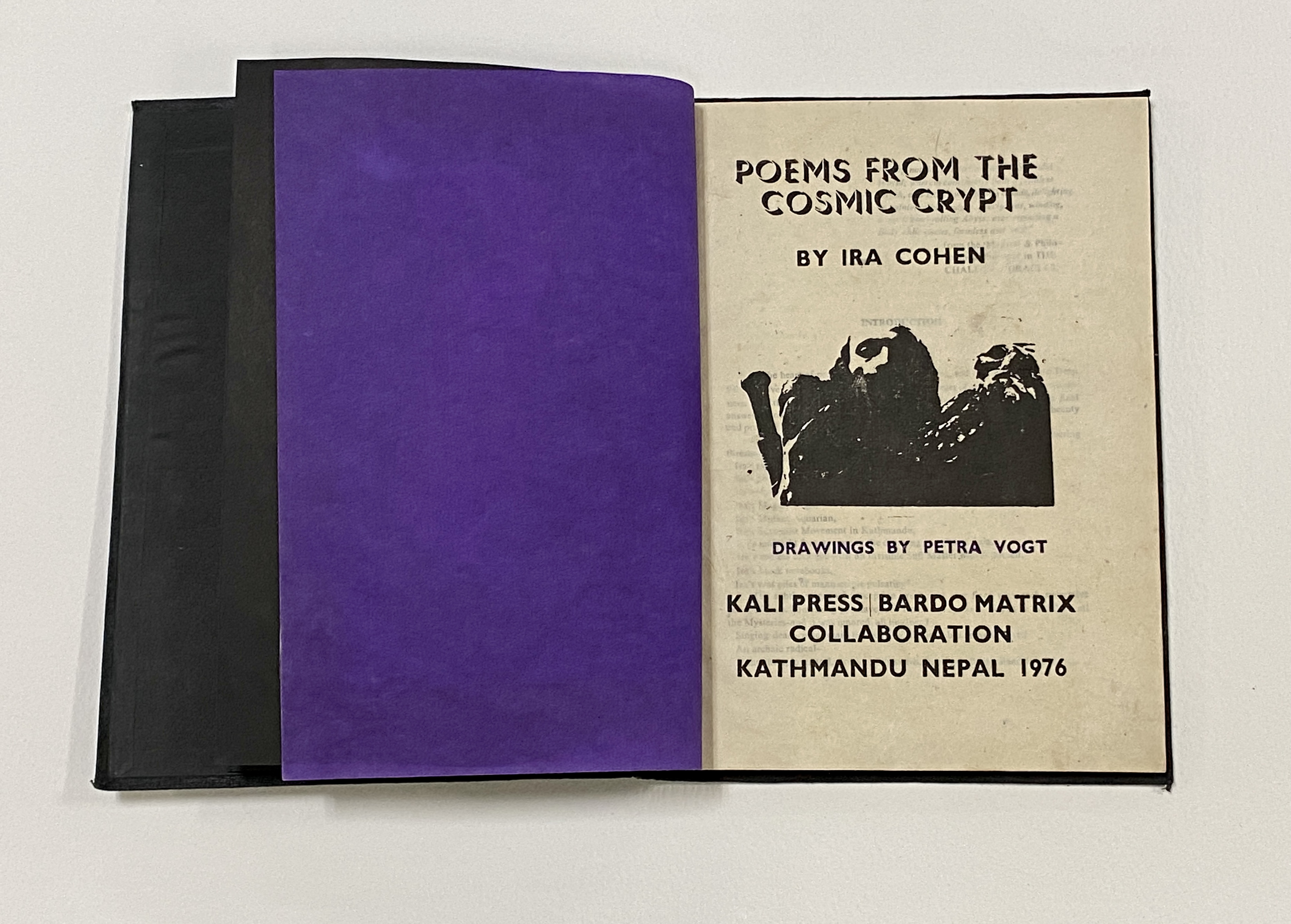
A hardcover book with black endpapers lies open on a surface, open to the title page. The verso is a deep purple, and the recto holds the title information and a black and white photographic image of a man.

Title spread from  “Poems from the Cosmic Crypt,” a Bardo Matrix title, which features black and white illustrations by Vogt, 1976. Cataloging in process: record XX(8890369.1)

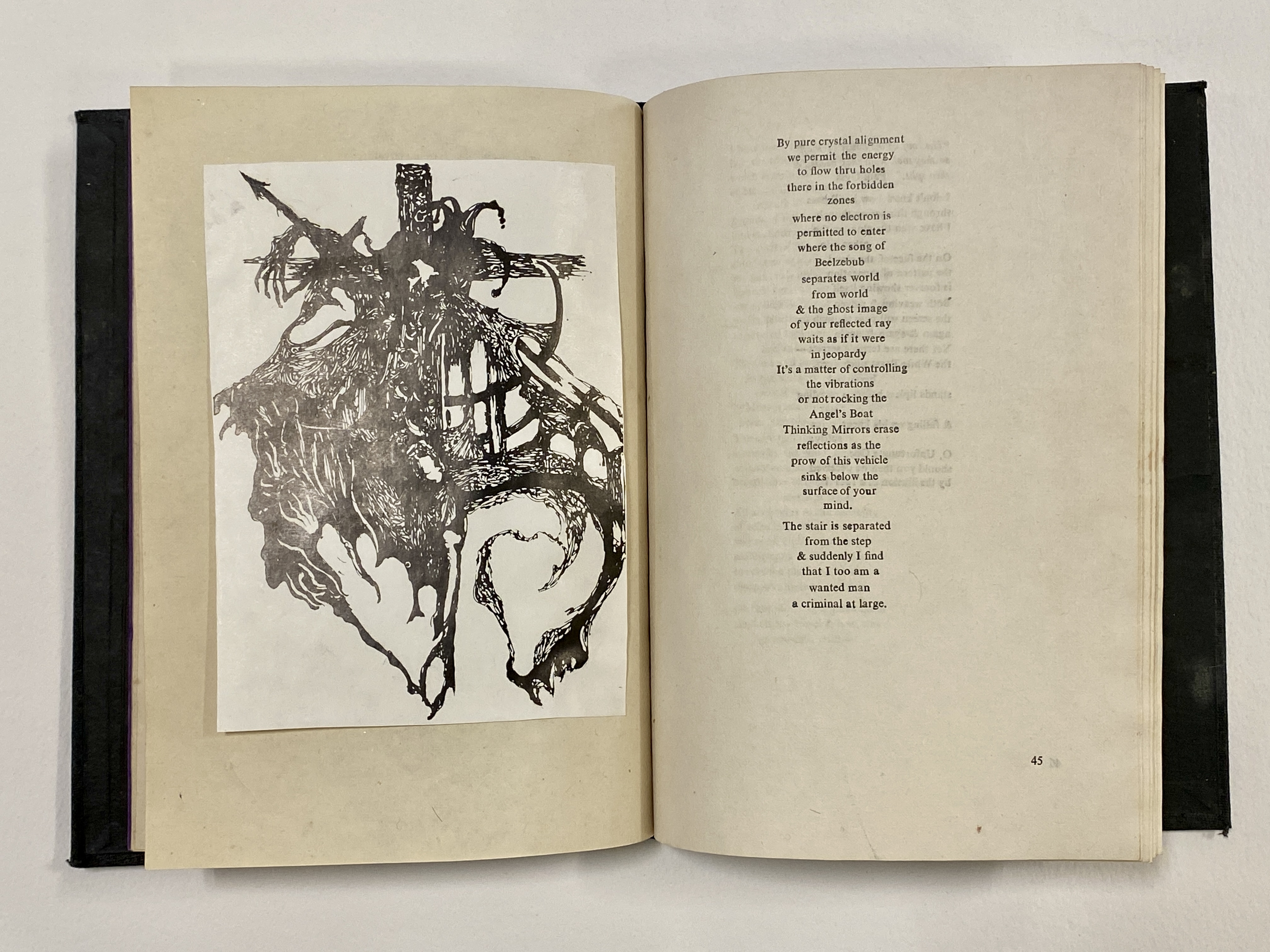
A hardcover book with black endpapers is open on a table. It is open to a page spread with a mounted print of a drawing on the verso, and a narrow column of verse on the recto.

An interior page spread from “Tales from the Cosmic Crypt.”


In her eleven-box archive, drawings, paintings, and collages by Vogt mingle with hand-made scrapbooks and artists’ books, modified commercial texts, and Bardo Matrix Press woodblock prints. In addition to manuscript items, Vogt’s archive includes select Bardo Matrix titles, such as Poems from the Cosmic Crypt, for which she provided pen illustrations to accompany Cohen’s poetry.

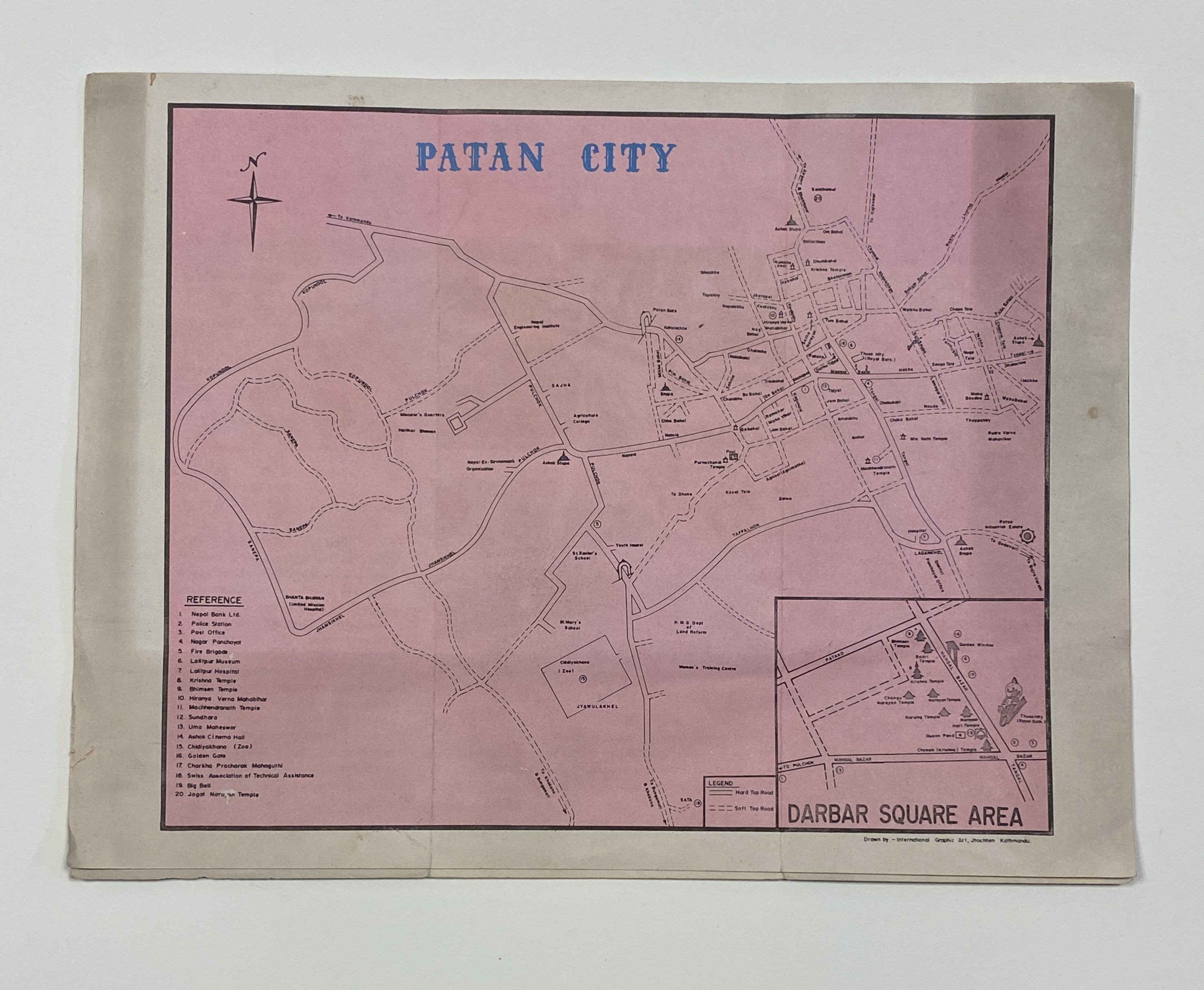
A single sheet of white paper with a printed street map in English in black ink on a pink background, with the title "Patan City" in bright blue ink.

Map of “Patan City,” featuring the Darbar Square area, in a tourist brochure for Patan, 1974. “Freak Street,” a hub for artists and hippies during Vogt’s time, falls south of Darbar Square. MSS 16480, Box 5.13

Vogt and Cohen’s lives in Nepal are documented in romantic grayscale and occasional lush color, if the term “document” can encompass both Cohen’s hallucinogenic Mylar photographs and snapshots of the local community’s domestic, public, and funerary rituals. Her papers are aesthetically shocking, even dark, with images of death and the occult filling almost every folder. But human intimacy and tenderness peek through: affectionate notes penned on the backs of polaroids; postcards conveying enigmatic epigrams and well-wishes; hand-made scrapbooks of jewel tone tissue paper hold pages self-adhered with silver leaf; torn-out magazine pages of 70s fashion and fetish gear; and even casual group portraits (with one shot guest-starring Mick Jagger). Candid and staged, curated and altered, Vogt’s archive pays homage to the oddity and beauty of the bohemian everyday, be it newspaper clippings, lotka paper prints, or pictures of Nepalese market stalls. In these papers, we see her artistic impulse to highlight the sensuality latent in such materials.

Petra Vogt’s presence persists, radiant, in her papers. The eccentricity of her biography alone makes the material worth exploring, but it is the collision of the ephemera of an individual life, lived on the outskirts and in constant motion, with the residue of conflicting identities and politics that produces a collection greater than the sum of its parts.

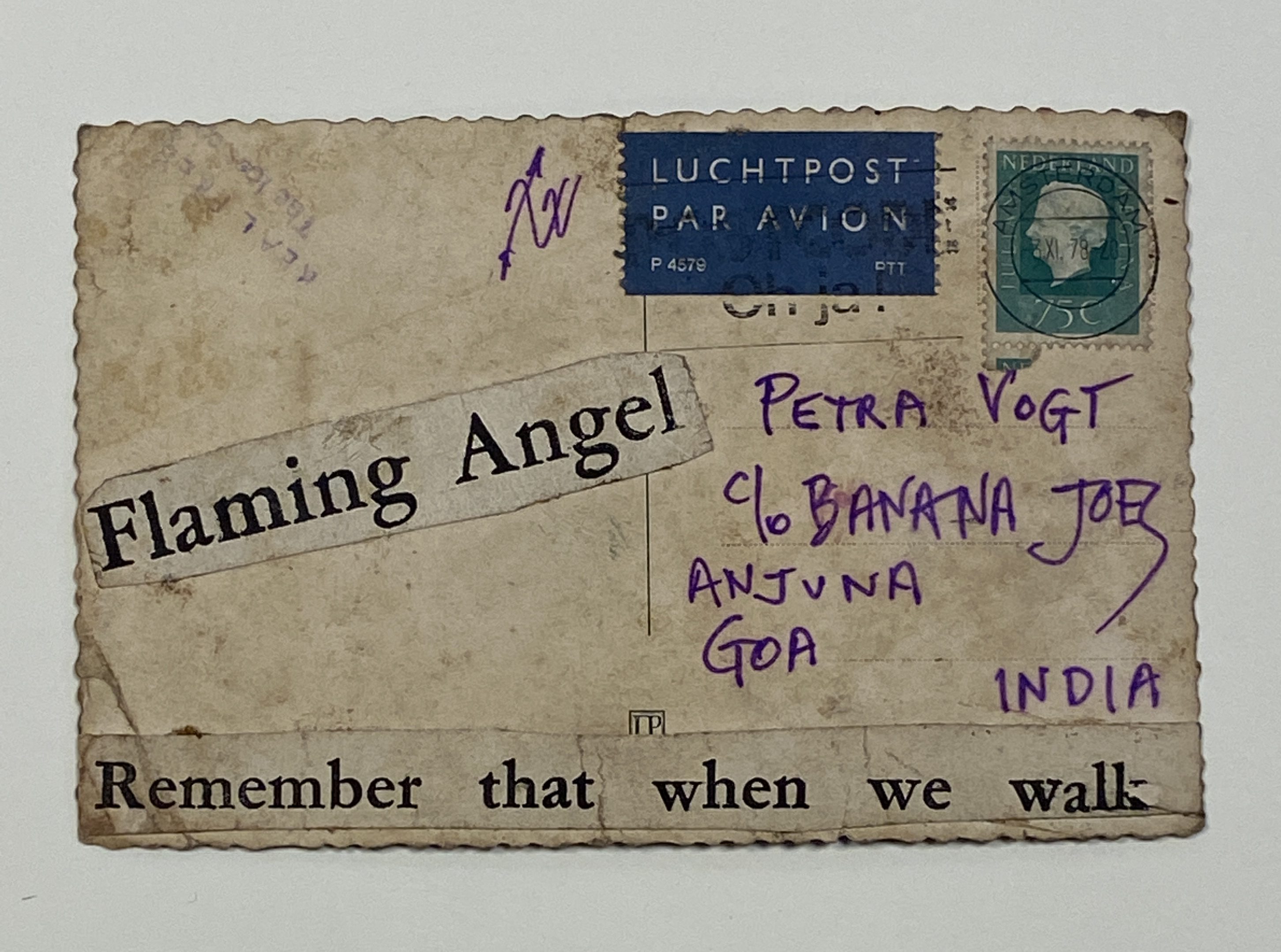
The text side of a commercial postcard with rippled edges, heavily soiled. Printed text is collaged onto the background, "Flaming angel / Remember that when we walk". The address is in violet ink and there are stamps.

Postcard addressed to Vogt in India, sent care of Banana Joes, 1978. Features Ira Cohen’s glyph in upper-center and reads “Flaming Angel Remember that when we walk” in cut-out print text. MSS 16480 Box 5.9

Note: Thank you to archival processor Sharon Defibaugh of Special Collections Technical Services, who processed and housed the collection and created the magnificent finding aid, all during a pandemic. To see more of the collection, we encourage you to visit our reading room or submit a reference request.

Keeping Score: The 1981-1982 Virginia Cavaliers Men’s Basketball Team

We are very excited to share some photographs of the 1981-1982 Virginia Cavaliers Men’s basketball team transferred from the University’s Athletic department and now housed in our Small Special Collections Library. This blog post was contributed by Ellen Welch (Manuscripts and Archives Processor at the Small Special Collections Library) and her husband, Peter Welch (University of Virginia Library Information Technology Department). Both Ellen and Peter are longtime fans of UVA basketball and have attended games since the 1970s!

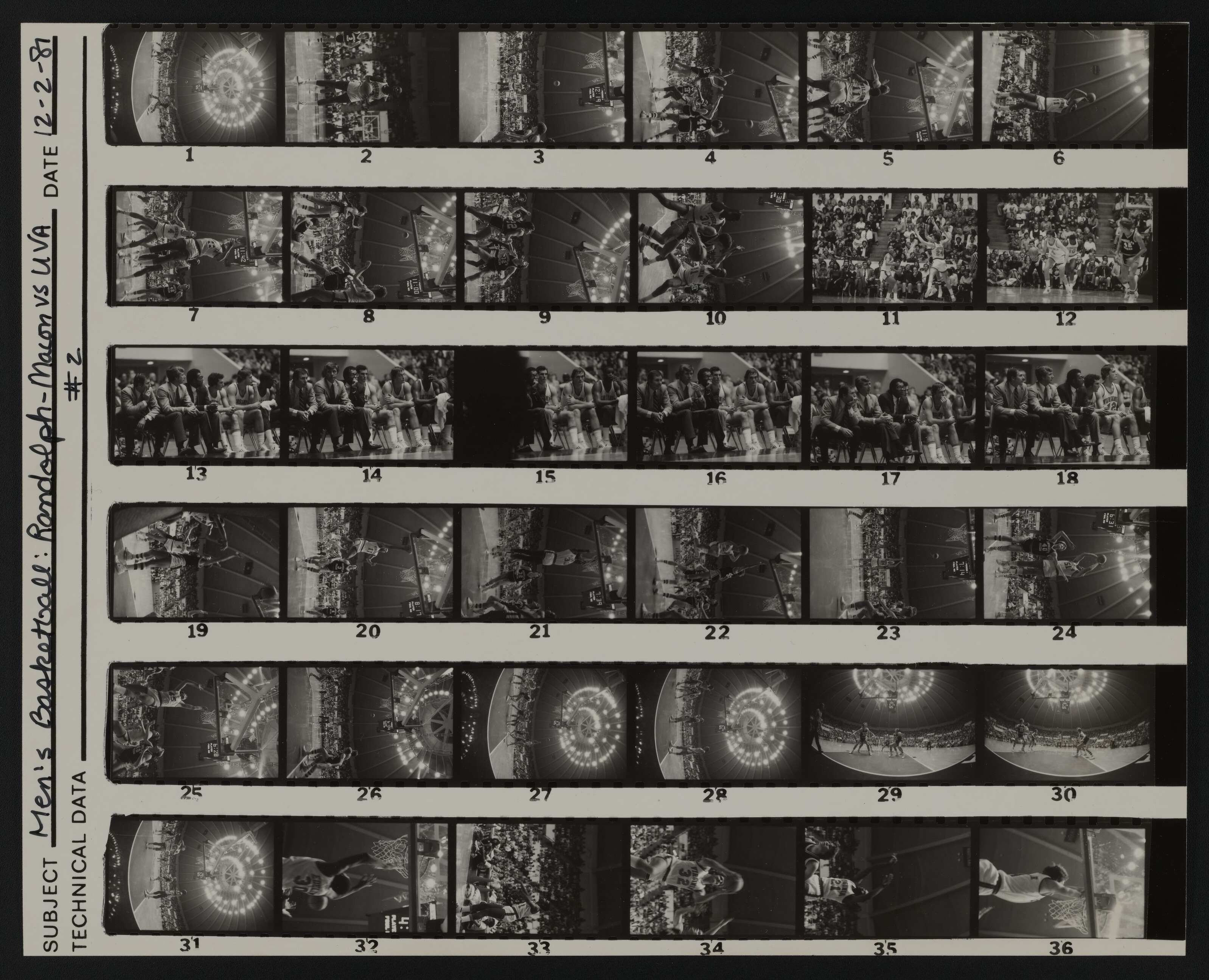
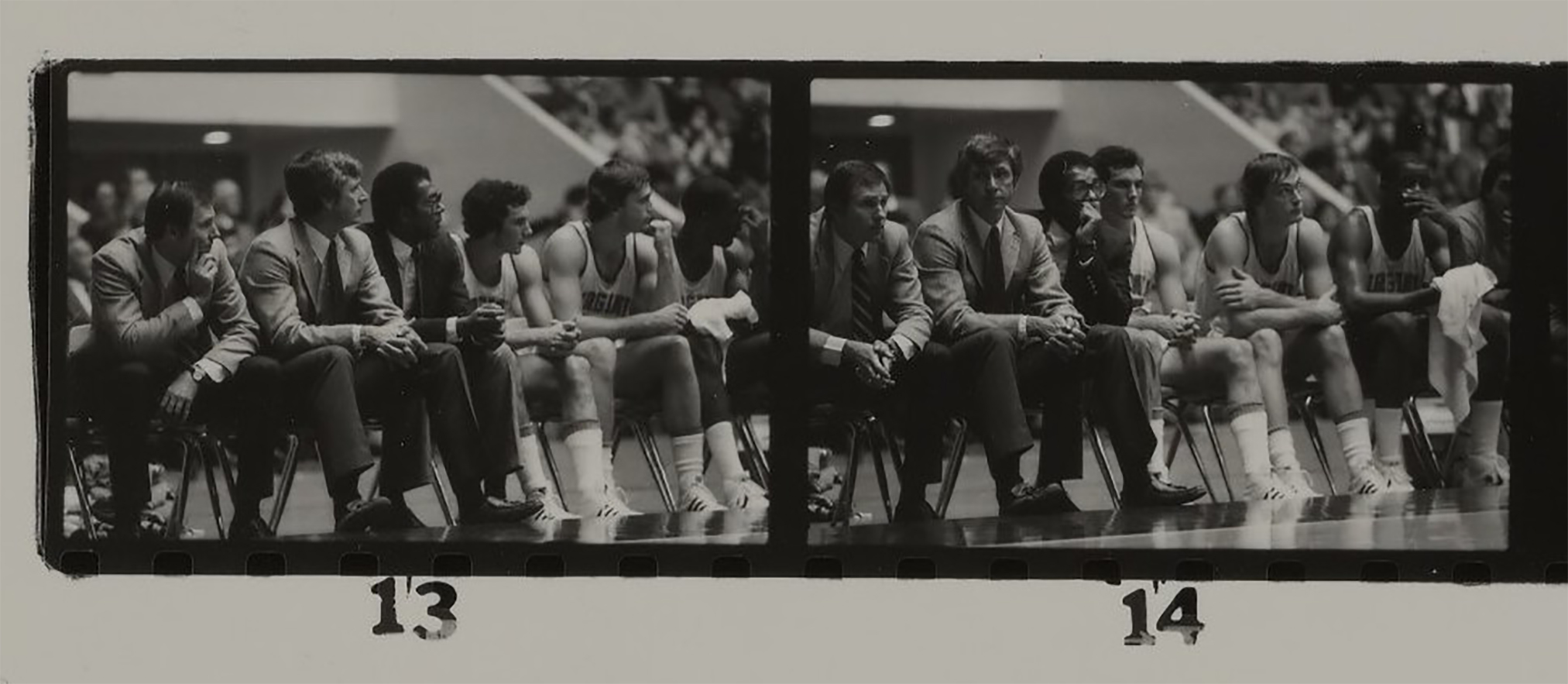
A contact sheet of black and white photographs from the basketball game.

A contact sheet of photographs from the December 2, 1981 UVA game against Randolph-Macon College in Ashland, Virginia. There are thousands of photographs of UVA sports, events, and life from 1965 – 1973 in the photographic files of University photographer Dave Skinner / University of Virginia Printing Services Photograph File and Index (RG-5/7/2.762).

The 1981–82 University of Virginia Cavaliers Men’s basketball team—members of the Division 1 ACC (Atlantic Coast Conference)—held the top seed in the Mideast Region of the 48-team NCAA Tournament (National Collegiate Athletic Association) and made it to the Sweet Sixteen until they were upset by just two points, losing to the University of Alabama-Birmingham (UAB). The Mideast bracket followed with UAB losing to Louisville 75-68 and Georgetown beating Louisville 50-46. In the finals of the tournament, Georgetown lost 63-62 against UVA’s longtime rival, Dean Smith’s University of North Carolina Tar Heels. Many basketball players who later rose to national prominence were introduced that year, including UVA’s Ralph Sampson, who played for the University from 1979-1983 before going professional in the National Basketball Association (NBA); North Carolina Tar Heel and Los Angeles Laker James Worthy (“Big Game James”); Sam Perkins; and one of the greatest athletes of all time, Michael Jordan.

In the 1981-82 NCAA tournament, Curry Kirkpatrick’s article “Sweet 16 and the 32 Who Missed” describes Virginia’s win over Tennessee to get into the round of sixteen:

…Give the Cavaliers a D—D for the desire of Othell Wilson, who played on one leg and with one painful thigh bruise, and D for the determination of Ricky Stokes, who drilled the two winning free throws in Virginia’s 54-51 escape in Indianapolis from the mechanical clutches of Tennessee. Oh yes, and add another D for Ralph Sampson’s defense on Dale Ellis, who shot up the Cavaliers until Sampson shut him down. Jeff Jones suggested the move in the huddle and what it did was disrupt the Tennessee tempo—”He made Dale pull the string,” said Vol Coach Don DeVoe—wipe out a 10-point deficit and give control of the game to the Cavs. …Four straight Sampson buckets, a 51-51 tie and shortly a Virginia freeze. Stokes got a high-five from Wilson just before he went to the line for his crucial free throws.

Ricky Stokes (who clocked in at a height of 5’ 10) said, “Ralph and I have the same initials, I can use his monogrammed handkerchiefs, but not his shirts.” Ralph Sampson was the tallest player on the team (7′ 4).

The 1981-82 team had several freshman recruits—including Jimmy Miller, Tim Mullen, Dan Merrifield, and Kenny Johnson—because Jeff Lamp, Lee Raker, and Terry Gates had graduated. Mullen and Miller were solid role players for the next four years. The surprise player that season was walk-on Kenton Edelin (#30) who played good defense off the bench as a backup forward and center behind basketball star Sampson. Edelin went on to be a good role player the next two years and eventually played in the NBA. Jeff Jones was the starting point guard with Ricky Stokes backing him up and Othell Wilson was the other starting guard. They all played good defense and good team basketball. Tim Mullen started every game that year as a freshman. Craig Robinson was the other starter at forward. They won 30 games but had a disappointing loss in the NCAA tournament to UAB in the 2nd round. They had to play UAB on their home court at Birmingham so that didn’t help. Ralph Sampson averaged 15 points per game that season, which is high scoring, but only taps the potential for a guy who could dominate the game. He scored up to 30 points when he played in the NBA. Sampson declared for the NBA draft after the 1981-1982 season but ultimately decided to return for one more season with the Cavaliers. His final season was the last before the institution of the shot clock rule which kept teams from unfairly holding the ball until the last second of the game. The 3-point shot was also introduced that year in ACC games. The next year—their first year after Sampson had graduated—UVA made it to the Final Four. Go figure? Great things were to come for the Virginia Cavaliers, particularly winning the NCAA tournament in 2019 under coach Tony Bennett.

Black and white action shot photographs from contact sheet of Othell Wilson and Jim Miller shooting baskets in the game.

Left: Othell Wilson (#11) goes for a dunk with freshman forward Jim Miller(#4) assisting on the shot. Right: Wilson makes another shot. Two points! From the University of Virginia Printing Services Photograph File and Index (RG-5/7/2.762).

Shown here are scenes from a regular season game on December 2, 1981 where the UVA Wahoos (formally called the Cavaliers, but familiarly called the “Wahoos” or “Hoos”) defeated Randolph-Macon in Ashland, Virginia 82-50. The Cavaliers were coached by Terry Holland with assistant coaches Craig Littlepage and Jim Larranaga. It was star player Ralph Sampson’s sophomore year although he was not in the lineup for this game. High scorers of the 1981-82 season were Ralph Sampson (15.8 points per game), Othell Wilson (11.4), Craig Robinson (9.7), and Jeff Jones (8.2). Jeff Jones was a prolific passer and had 598 assists.

The team members consisted of:

  • Number 4 Jim Miller, forward 6’8 Freshman
  • Number 10 Craig Robinson, forward 6’8 Junior
  • Number 11 Othell Wilson, guard 6’0 Sophomore
  • Number 12 Dean Carpenter, forward/center 6’9 Senior
  • Number 14 Ricky Stokes, guard 5’10 Sophomore
  • Number 21 Jim Runcie, guard 6’1 Freshman
  • Number 24 Jeff Jones, point guard and team captain 6’4 Senior
  • Number 30 Kenton Edelin, forward 6’7 Sophomore
  • Number 32 Doug Newburg, guard 6’2 Junior
  • Number 33 Kenny Johnson, guard 6’0 Freshman
  • Number 42 Peter MacBeth, forward 6’9 Junior
  • Number 45 Tim Mullen, guard, forward 6’5 Freshman
  • Number 51 Dan Merrifield, forward 6’6 Freshman
  • Number 55 Ralph Sampson, center 7’4 Junior

UVA Basketball History:

Informal portrait of Pop Lannigan in coat outdoors.

Henry “Pop” Lannigan. Image courtesy of George Seitz.

Henry “Pop” Lannigan started the University of Virginia basketball program in 1905 and had a successful season until his death in 1930. He accumulated a dominant overall record of 254–95 (.728 winning percentage) over twenty-four seasons as the UVA head coach.


Portrait of Gus Tebell in Virginia sweater.

Gustave “Gus” Kenneth Tebell. University of Virginia Visual History Collection (prints00568).

Gustave “Gus” Kenneth Tebell was the coach from 1930 to 1951, achieving his first championship in just his second year. During his tenure, he compiled a 240–190 record, including a National Invitation Tournament berth in 1941.

After a series of coaches with more losses than wins, the Cavalier regained success under Terry Holland who began coaching in 1974. He had a winning record of 326–173. His tenure at Virginia (through 1990) also included 1981 and 1984 Final Four appearances, a 1980 National Invitation Tournament championship, Virginia’s first of three ACC Tournament championships (1976), and two ACC Coach of the Year awards. In addition to all-star Ralph Sampson, there were many great basketball players during Coach Holland’s career, including brothers Ricky and Bobby Stokes, Barry Parkhill, Marc Iaveroni, Lee Raker, John Crotty, Wally Walker, Jeff Lamp, and many others.

Black and white photograph of Coach Terry Holland and other coaches and players sitting on bench.

Coach Terry Holland (second to the left) with the Virginia Cavaliers coaching staff at the Randolph-Macon College game, December 2, 1981.

Coach Tony Bennett became head basketball coach at UVA in 2009 and led the Cavaliers to their first NCAA Tournament Championship in 2019. Bennett came to Charlottesville after spending the previous three seasons as the head coach at Washington State, where he was the 2007 National Coach of the Year. Bennett was named one of the 2011 Summit League’s (formerly the Mid-Continent Conference) Top 30 Distinguished Contributors for the league’s first 30 years at the Division I level. In January of 2016, Bennett was part of the Summitt League’s inaugural Hall of Fame class.  Bennett is a three-time recipient of the Henry Iba Award, two-time Naismith College Coach of the Year, two-time AP Coach of the Year, and four-time ACC Coach of the Year. He was named to a list of the World’s 50 Greatest Leaders by Fortune magazine. By 2019, Bennett was a three-time National Coach of the Year. This year, he enters his 13th year as the Dean and Markel Families Men’s Head Basketball Coach at the University of Virginia. As of the 2021-22 season, Virginia has had ten consecutive winning conference seasons, the longest active streak among ACC programs.

Photograph of Tony Bennett with championship game basketball net.

Tony Bennett, Dean and Markel Families Men’s Basketball Head Coach. (Photo by Matt Riley, UVA Athletics)

Tonight—November 9, 2021— the Virginia Cavaliers Men’s basketball team opens their season with a game against Navy at John Paul Jones Arena. We hope to see you there!

Sources:

Ala-Birmingham, Louisville get by Sampson, Breuer” Reading Eagle. (Pennsylvania). Associated Press. March 19, 1982. p. 24.

1981–82 Virginia Cavaliers men’s basketball team, Wikipedia. Retrieved 9/27/2021.

Martin, Steve, “UAB Blazers slay giant Virginia”. Tuscaloosa News. (Alabama). March 19, 1982. p. 12.

 Wilson, Austin,  “UAB stuns Virginia with 68-66 triumph”. Free Lance-Star. Fredericksburg, Virginia. Associated Press. March 19, 1982, p. 10

Jeff Jones Basketball, Wikipedia. Retrieved 9/28/2021.

Wysong, David, “The Game Michael Jordan Changed Everyone’s Perception of Him” Tweet and Facebook, March 29, 2020

Teel, David, “Victory over UNC elevates UVA’s Bennett into rare company“. Richmond Times-Dispatch, February 13, 2021. Note that the article mentions it was the second-longest at the time, before Duke failed to achieve a winning record in that season

Tony Bennett, Dean and Markel Families Men’s Head Basketball Coach. Virginia Sports.

Payne, Terrence, “Tony Bennett signs a seven-year deal with Virginia.” NBC Sports Jun 3, 2014.