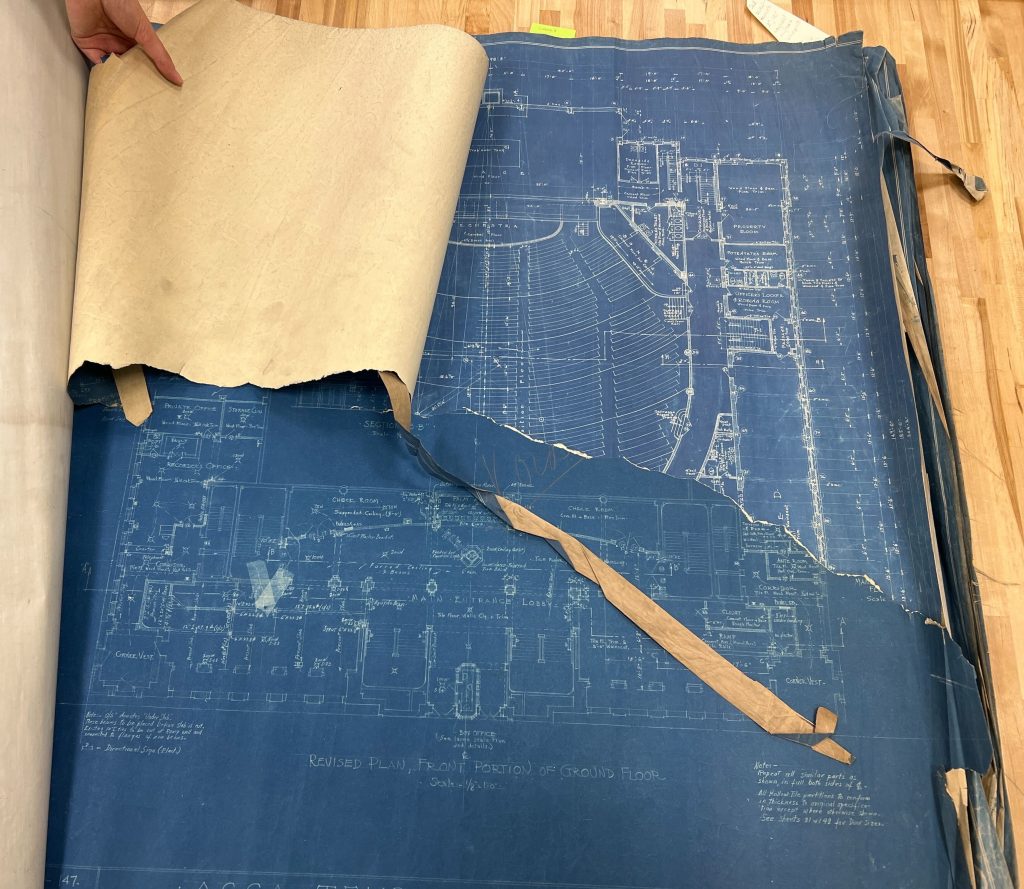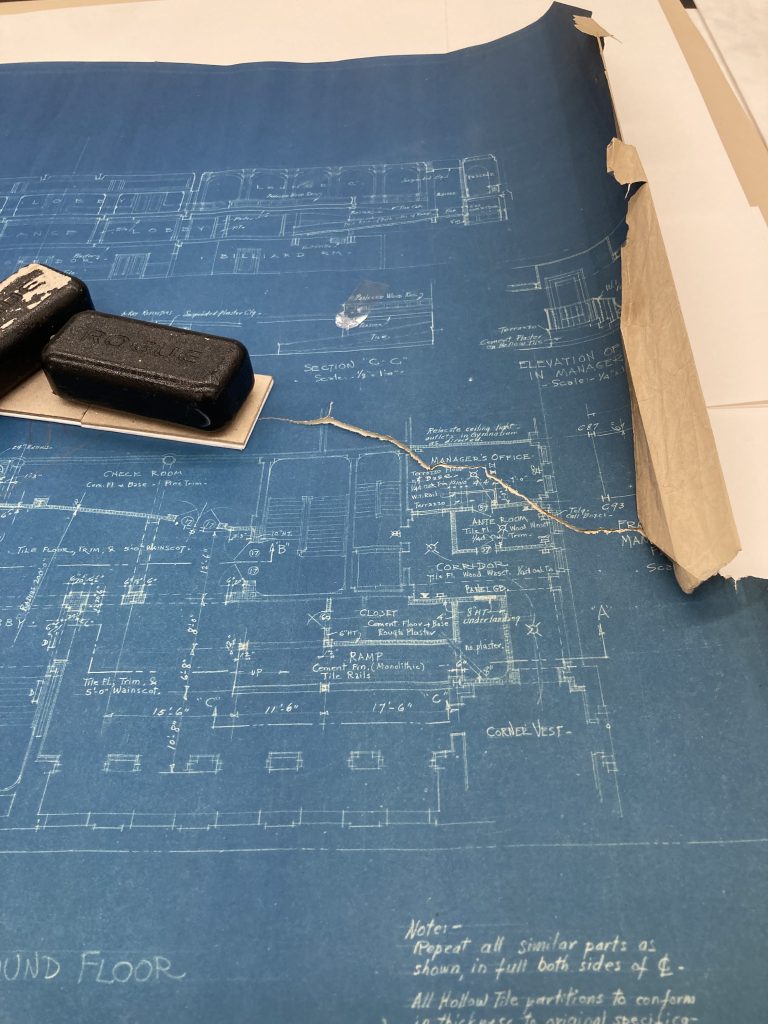

Preservation Services, within UVA Library’s Edgar Shannon Library, is providing an internship for a rising 2nd, 3rd, or 4th year Studio or Art History declared undergraduate major who is interested in the conservation/preservation of cultural heritage. The opportunity will be presented as a 6 or 8-week long internship offered between May 25-July 2026, with precise dates to be determined when the intern is selected. The intern will learn about the tools, techniques, and ethical considerations of library and archives conservation, and they will work primarily with Sue Donovan, the Conservator for Special Collections. The internship will be structured around treatment and housing of both circulating and special collections items.
The intern will be expected to participate in the following projects:
- Database work: input information regarding historical conservation treatments into a spreadsheet.
- Complete training on the lab’s XRF analytical device and conduct testing on books suspected to contain arsenic in the cloth.
- Mend damaged paper bindings from the Ma Kiam Library of Chinese classic works.
- Create custom housings for special collections as well as circulating books.
- Work on Capstone project: Mend and stabilize an important ledger from the Wingfield papers that provides invaluable historical information about African Americans in the 1900s in Albemarle County.
- Other projects as needed by the department.
At the end of the internship, the intern is expected to write a blog post about their capstone project, and they will create a 5-8 minute presentation for the UVA Department of Art on August 7.
Qualifications:
Preservation Services is looking for interns who can demonstrate:
- Time management skills, reliability, courteousness, and teamwork
- An interest in conservation and preservation
- Ability to focus on tasks that require precise handskills and mental focus
- Ability to communicate effectively about their interests and projects in both verbal and written forms
- A strong work ethic and availability to work 240 hours at Shannon Library during the internship period
Application Process:
Please submit a CV, contact information for two references, a cover letter discussing how you meet the qualifications listed above and how the internship will help you meet your own goals, and a maximum of three images of recent projects (knitting, painting, drawing, 3-D objects, etc.) that showcase your handskills by April 3rd, 2026. The applicant will be awarded $3600, with half paid by May 31st and half by June 30th. Please submit all application material to Sue Donovan at suedonovan@virginia.edu. Applicants will be notified of decisions by April 24.